Scientist

Ashish Vaswani

1986– · Artificial Intelligence, machine learning, natural language processing
Scientist in artificial intelligence, lead author of the revolutionary paper 'Attention Is All You Need', which introduced the Transformer architecture. This model, based entirely on attention mechanisms, revolutionized natural language processing and ushered in the era of large language models such as BERT and GPT.

Biography

He received his education at the Indian Institute of Technology, earned his PhD at the University of California, Berkeley. He worked at Google Brain, then co-founded the startup Adept AI Labs, which is focused on creating universal AI agents.

Key discoveries

💡 The paper 'Attention Is All You Need' was rejected at one conference, but later became the most influential work in NLP, ushering in the era of large language models.
"They claimed that attention mechanisms are sufficient for many tasks."
Concepts
attention mechanism

Related articles

Dense Connections vs. Residual Paths: How DenseNet-121 Outperforms ResNet-50 in Brain Cancer Detection
A brain tissue slice is just 5 microns thick, twenty times thinner than a human hair. On such a slice, a pathologist looks for signs of a tumor: altered nuclear shapes, cell crowding, abnormal blood vessels. It is painstaking work, and two specialists can disagree on the same image.
All tracks at once: how LHCb reads the birth of B mesons in full
In 2016, the LHCb detector at the Large Hadron Collider recorded millions of proton-proton collisions. Among the debris of these collisions, neutral B mesons were born—particles that can spontaneously transform into their antiparticles and back.
Medical Physics2026-01-021 minarXiv:2601.00685express
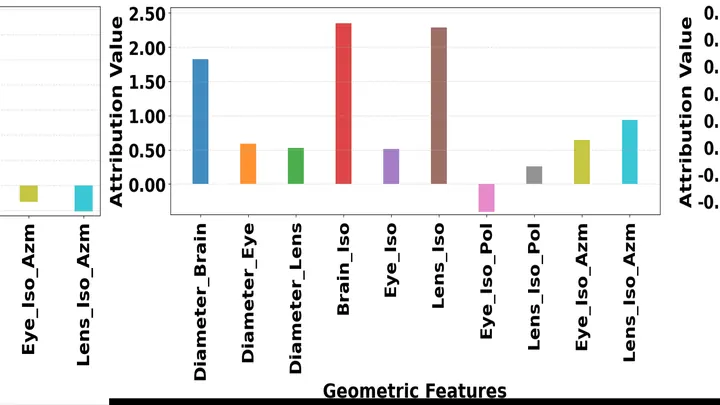
Brain Radiation Therapy: One Click Instead of Manual Setup
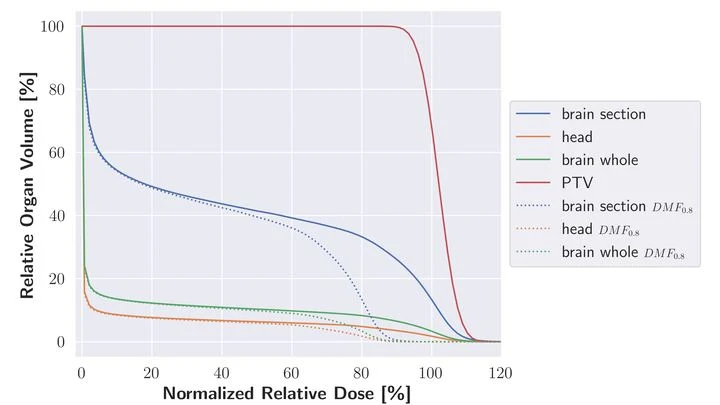
When a tumor affects the entire brain, doctors irradiate the whole organ. It's a reliable method, but setting up the radiation is painstaking: you need to adjust parameters so the tumor gets the right dose while the eyes and lenses suffer as little as possible. A specialist typically spends about 15 minutes manually tweaking settings in the software.
Machine Learning2026-01-111 minarXiv:2601.07035express
How MRI Predicts Chemotherapy Response in Glioblastoma
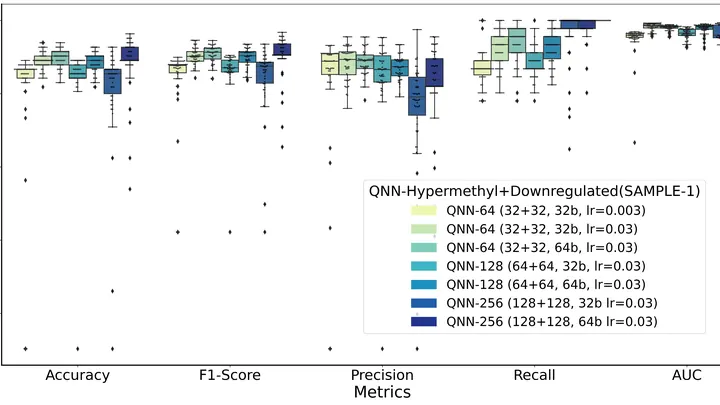
Glioblastoma, a brain tumor, is a tricky foe: in some patients, the drug temozolomide works, while in others it barely helps. The difference often lies in a small stretch of DNA — the MGMT gene. If this region is chemically switched off (methylated), the tumor is worse at repairing its cells, and the drug hits harder.
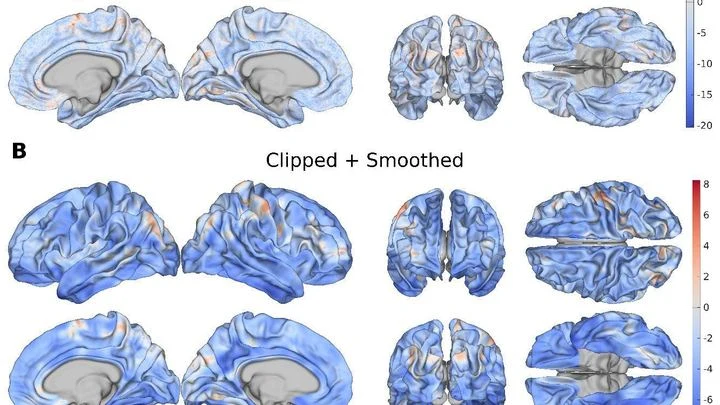
A Map of Brain Aging
The cerebral cortex is like a crumpled sheet of paper: it has thickness, curves, and folds of varying depth. With age, this sheet changes unevenly — thinning in some places, losing the sharpness of its folds in others. Previously, doctors assessed brain age as a whole, as if looking at the sheet from a distance.
Medical Physics2026-01-211 minarXiv:2601.14654express
A Crystal Keeps an Eye on the Proton Beam
Treating cancer with a proton beam is a bit like archery: you need to hit the bull's-eye without hitting anything else. Protons release their energy at the end of their path, so healthy tissues are largely spared. But to make the shot safe, every treatment plan is checked in advance — measuring the dose the tumor will get and what the surrounding organs will receive.
Machine Learning2026-01-213 minarXiv:2601.15530express
Catching Alzheimer's Without a Poke
A detective is looking for a criminal in a file of mugshots, but the portraits are mixed up. Usually, they expect a man with a gray beard, but the culprit is young and clean-shaven. Similarly, doctors often fail to recognize Alzheimer's disease in those who show unusual symptoms — not memory loss, but problems with vision or speech.
Computer Vision2026-01-242 minarXiv:2601.17504express
Brain Tumor on Scans: Where Certainty Ends
Brain tissue on a scan looks like a stormy sky: bright patches, dark hollows, blurred edges. The tumor hides among these patterns, and the doctor needs to outline its contour to plan surgery or radiation. One MRI mode highlights edema, another the tumor core, a third dead areas.
Medical Physics2026-01-261 minarXiv:2601.18219express
Diagnosis Without Lenses: Breast Cancer Seen Through Shadows
In a dark room, on a table, sit a laser pointer, a piece of glass with tissue, and an ordinary phone camera. Light passes through the sample, and the image shows not cells but a pattern of bright and dark stripes, like the shadow of leaves on a wall.
Medical Physics2026-02-052 minarXiv:2602.06212express
Rays That Heal and Harm
When a person receives radiation for a tumor in the head or neck, the rays pass through healthy tissue as well. Sometimes the jawbone starts to die afterward — a severe complication called osteoradionecrosis. The question isn't whether it happens, but how much the radiation dose itself increases the risk.
q-bio.CB2026-02-082 minarXiv:2602.08008express
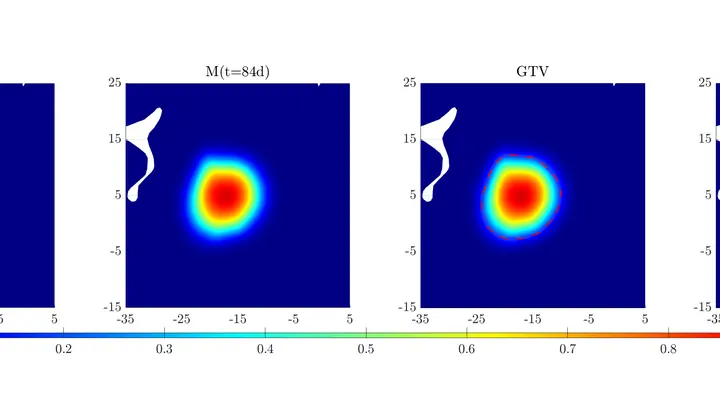
How tumor cells wander through the brain's maze
A brain tumor is like a traveler trudging through a dense forest: trees and bushes are the different types of brain tissue, some easier to traverse than others. Glioma cells don't move in a straight line; they constantly loop around, bumping into obstacles and going around them.
Statistical Mech2026-02-122 minarXiv:2602.11813express
How Cancer Chooses Its Path
A tumor doesn't stay put. Individual cells or whole groups break off and set off on a journey through the body. Some crawl solo, like scouts; others stick together, like a flock. Scientists built a computer model to understand how these cells pick a direction. In the model, cells respond to two signals.
Chemical Physics2026-02-201 minarXiv:2602.18284express
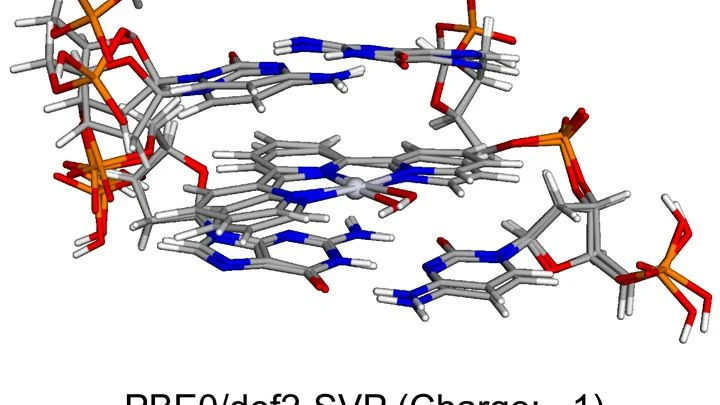
Glowing Probe for Cancer Detection
Standard chemotherapy hits the whole body like carpet bombing: both cancerous and healthy cells suffer. Scientists are hunting for more precise weapons — molecules that light up when they slip into a cancer cell's DNA, revealing its location. Such glowing probes could help doctors spot tumors early and even destroy them with pinpoint accuracy, leaving neighboring tissue untouched.
Medical Physics2026-02-241 minarXiv:2602.21354express
The Brain Under a Magnifying Glass: A Tomograph That Catches Every Detail
A camera that captures not your face but your brain itself — from the inside, layer by layer. Conventional tomographs often produce blurry images: fine details merge like letters on a fogged-up window. Engineers set out to build a device that sees clearly even what is smaller than a millimeter.
cs.CE2026-03-202 minarXiv:2603.19829express
The Brain as Clay: Why It Shrinks in Alzheimer's Disease
Alzheimer's disease begins quietly: deep in the brain, two proteins, tau and amyloid-beta, start to accumulate. They behave like weed seeds: one clump that appears causes neighboring cells to produce similar clumps. Gradually, the proteins spread along nerve fibers, like water through the capillaries of a paper towel, and invade new areas.
Biological Physics2026-03-211 minarXiv:2603.20764express
Artificial Intelligence Tracks Microbes
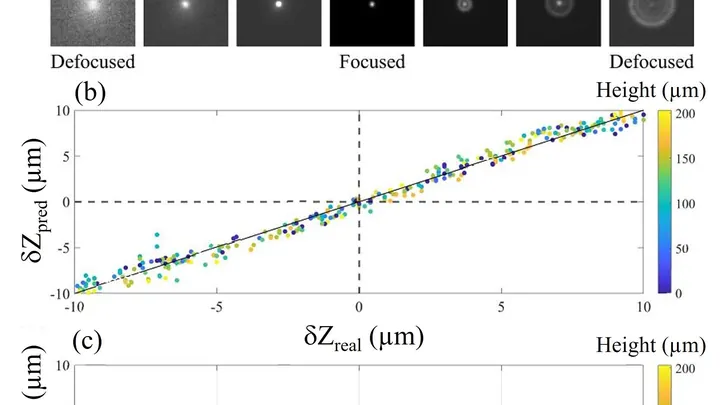
To avoid losing a fast soccer player in the frame, a drone doesn't need a bright beacon — recognizing the silhouette is enough. Similarly, a neural network now tracks microbes: the algorithm analyzes an ordinary microscope image and instantly finds a bacterium in a drop of water.
Machine Learning2026-03-272 minarXiv:2603.26994express
How T Cells Recognize the Enemy: A New Look at the Immune Passport
When a virus enters the body or a cancer cell appears, T cells, the immune system's fighters, take the stage. Each T cell has its own receptor, a lock-like molecule that searches for the right key: a piece of protein (peptide) on the surface of the diseased cell. If the key fits, the T cell activates and destroys the enemy.
A Virtual Brain Chooses the Right Treatment
The brain of a person with Parkinson's disease works like an orchestra where the conductor either freezes or waves the baton off-beat. Medications don't help everyone, so doctors turn to stimulation — weak electrical pulses that restore the rhythm.
Medical Physics2026-04-032 minarXiv:2604.03431express
A Fluorescent Flashlight for Surgeons
In the operating room, the surgeon illuminates the tumor with a special agent that makes it glow. But how do you know whether it glows brightly because there are many cancer cells or simply because it lies close to the surface?
Computer Vision2026-04-042 minarXiv:2604.03710express
How Graphs Find Melanoma on Your Skin
A mole on your skin looks like a mosaic of colored pieces. Each piece is a small patch of the image where color and texture barely change. Such pieces are called superpixels. If you connect them with lines, you get a network that looks like a subway map: stations are the pieces, and lines are the connections between them. The weight of each line shows how strongly two pieces are related.
cs.MM2026-04-102 minarXiv:2604.14216express
How to Predict the Outcome of Brain Surgery
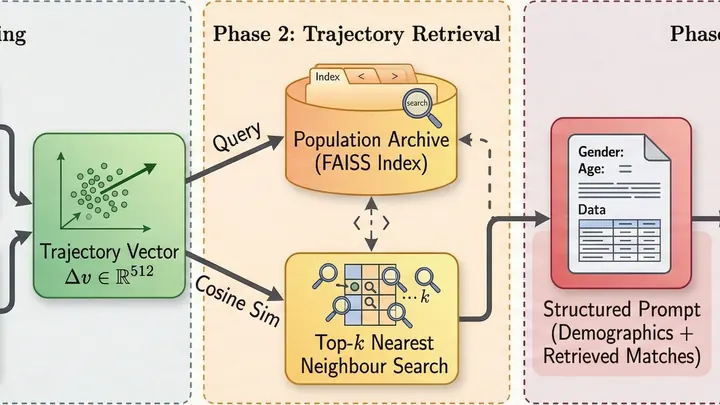
When medications fail to control epilepsy, doctors may suggest surgery: removing the brain region where seizures originate. But predicting whether it will help a particular person is tricky. Pre-surgery MRI scans show only the current state, not how the brain will change after the intervention. The new approach works like a librarian searching for similar medical histories.
Medical Physics2026-04-112 minarXiv:2604.10174express
Why the Brain Has a Weak Spot When It Comes to Radiation
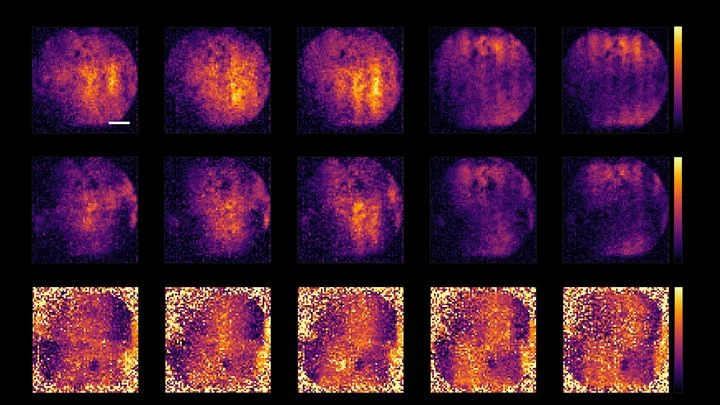
When a person's brain tumor is irradiated, some of the energy also hits healthy cells. A few months later, MRI scans of some patients show bright spots — places where tissue has changed due to radiation. Doctors call them "radiation-induced contrast enhancements." These spots aren't always dangerous, but they show where the brain took the hardest hit.
q-bio.GN2026-04-182 minarXiv:2604.18621express
A Quantum Magnifier for Lung Cancer
Two nearly identical locks are opened by the same pick. They look alike on the outside, but inside the mechanisms differ. Much the same can be said for the two main types of non-small cell lung cancer — adenocarcinoma and squamous cell carcinoma. Under a microscope, they can be confused, yet they require different treatments. That's where the quantum "magnifier" comes in.
Optics2026-04-231 minarXiv:2604.21636express
Microwaves Feel for the Edge of a Tumor
A surgeon removes a breast tumor, but how do you know no cancer cells are left at the edge? Right now, the tissue goes to a lab, and the answer comes back days later. If the margin is not clean, a second surgery is needed. The new method promises to give the answer right in the operating room, while the patient is still on the table.
The Brain in Milliseconds: Catching Hidden Trauma
When a soccer player heads the ball, the brain inside the skull jiggles slightly, like jelly in a sealed jar. A single impact leaves no trace, but hundreds repeat over the years. Doctors struggle to tell when these jolts start to cause harm: standard brain scans look normal, and the person may feel perfectly healthy. Scientists have found another way to peek into such a brain.
Medical Physics2026-04-241 minarXiv:2604.22666express
Ultrasound Opens the Gates to the Brain
The brain is a fortress. It's protected by a dense layer of cells that only lets in what it needs. Drugs can't get through this barrier, which is why many brain diseases are so hard to treat. Scientists have found a way to crack the fortress gates. They built a device that sends focused ultrasound into the brain. Tiny gas bubbles are injected into the blood.
Computer Vision2026-04-251 minarXiv:2604.23137express
Two Eyes Are Better Than One: How a Neural Network Learns to See Tumors
A doctor studies a brain scan: somewhere in the tangle of tissue, a tumor is hiding. One glance picks out small spots and edges, another takes in the overall shape and location. A person combines both, but across hundreds of scans that gets tedious. A new program does the same thing automatically.
q-bio.GN2026-04-261 minarXiv:2604.23679express
Tongue Cancer: How a Scan Reveals the Tumor's Personality
A tongue tumor is like a stranger in a crowd. On the surface, they all look much alike, but beneath the surface hide very different personalities. Some tumors behave aggressively, others grow slowly. Doctors need to understand who they're dealing with before surgery. Usually, this means taking a tissue sample — a biopsy.
Medical Physics2026-04-272 minarXiv:2604.24417express
Electrons at Light Speed Against Brain Tumors
A garden hose shoots a thin, powerful jet. If you sweep it across the yard, you can water the whole bed without flooding the path. That's roughly how the new approach to treating deep tumors works: instead of a broad radiation field, you take a narrow beam of electrons accelerated to nearly the speed of light and scan it across the tumor like a jet of water.
q-bio.QM2026-04-302 minarXiv:2605.00272express
The Protein of Forgetfulness: How Math Catches an Invisible Foe
Mold on bread: a spot today, half a loaf tomorrow. That's roughly how amyloid-beta spreads through the brain — a sticky protein that clumps up in Alzheimer's disease and disrupts neuron function.
cs.CE2026-05-012 minarXiv:2605.00730express
How the Brain Takes Out the Trash: A Map of Flows
Imagine a river that doesn't flow in an open channel but through the inside of a sponge, with its currents shifting from place to place. That's a good way to think about the brain's glymphatic system: a network of ultra-fine channels around blood vessels, through which cerebrospinal fluid seeps into the tissue and washes away the waste that has piled up during the day.
Medical Physics2026-05-031 minarXiv:2605.01918express
Water Exchange in Tumors: What MRI Can Reveal
Imagine a water park with many pools connected by narrow passages. Visitors, water molecules, splash around in each pool, but occasionally move to the next one. In a brain tumor, these "passages" are protein channels in cell membranes. Their abundance determines how quickly water moves between cells.
Signal Processing2026-05-201 minarXiv:2605.21350express
Radar Instead of a Scanner: How Antennas Hunt Tumors
When you need to see inside the brain, you usually lie in a tight tube of an MRI scanner or get zapped with X-rays. Both methods are costly, bulky, and not always available.
Image Processing2026-05-223 minarXiv:2605.24179express
Why Your Hand Trembles but Your Legs Won't Move
For one person, the disease begins with a tremor in the hand — the cup dances on its saucer as they carry it to the table. For another, the legs suddenly refuse to move smoothly: the step becomes short and shuffling, as if the floor were suddenly covered in a sticky layer. These are not two different diseases but two faces of the same one — Parkinson's disease.
Machine Learning2026-05-302 minarXiv:2606.00892express
How a Digital Twin Saves a Brain in Minutes
A plumber clears a clog in a narrow, winding pipe — by feel, without seeing inside. That's roughly how a surgeon feels during mechanical thrombectomy, the operation to remove a blood clot from a brain vessel. Time is short, and every move can either save a life or damage the vessel wall.
Medical Physics2026-06-051 minarXiv:2606.07851express
How to See Capillaries in a Living Brain
Photographing a delicate spiderweb trembling in the wind: that's roughly what it takes to look into the blood vessels of a living brain. Ultrasound localization microscopy (ULM) turns ordinary ultrasound into a tool capable of seeing individual capillaries, but only if you get the settings just right.
q-bio.QM2026-06-102 minarXiv:2606.11876express
When a Test's Silence Speaks Louder Than Numbers
When the canary in the coal mine falls silent, the miners know: the gas is already here, time to get out. Tumor DNA floating in the blood behaves much the same way. The drug bears down on the cancer, and the level of this DNA drops to nearly zero. The test stops seeing it. The doctor sees 'clean' and breathes easy. But silence can be deceptive.
Medical Physics2026-06-191 minarXiv:2606.21336express
A Magnetic Compass for the Brain, Without the Noise
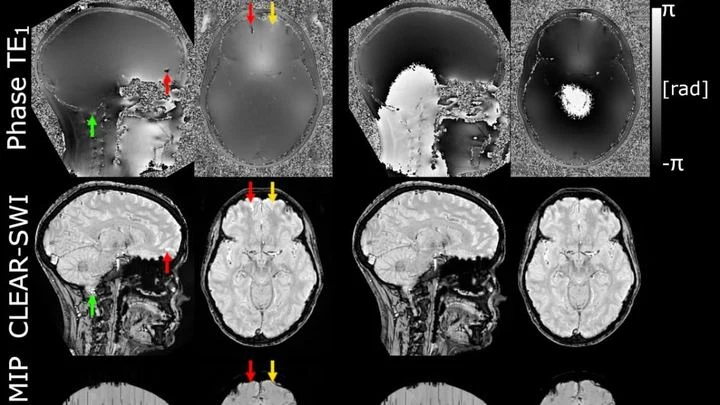
The powerful magnet of an MRI scanner induces weak electric currents in tissues. Their phase behaves like a compass needle trembling with every gust of wind — the slightest disturbance turns the map into a ripple, where instead of small vessels or iron deposits, all you see is noise.
Quantum Physics2026-06-251 minarXiv:2606.27411express
The Quantum Compressor: A New Way to Find Brain Tumors
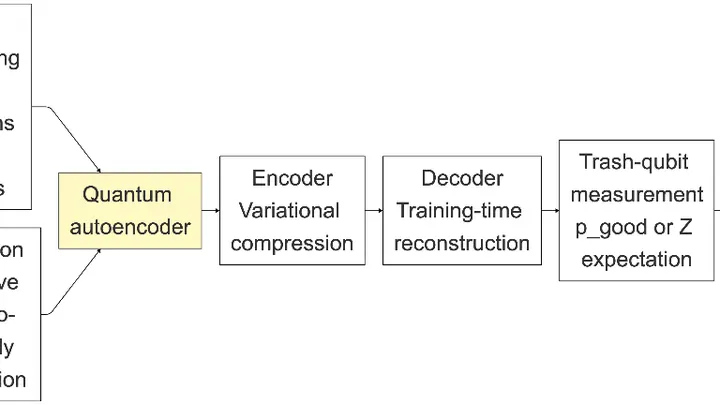
A cook spends years honing the skill of reducing a recipe to three or four essentials and recreating the dish from them. If the ingredients are familiar, the expected meal lands on the plate. A foreign ingredient disrupts compression, and you get something unrecognizable. The Quantum Compressor does the same with medical scans.
Medical Physics2026-07-102 minarXiv:2607.09401express
When Vessel Walls Distort the Picture
In the brain's white matter, the signal travels along axons — long neuronal processes wrapped in an insulating myelin sheath. Water fills the space inside axons and outside, in the narrow gaps between fibers.