Signal Processing eess.SP

70 articles

Theory, algorithms, performance analysis and applications of signal and data analysis: physical modeling, processing, detection, parameter estimation, learning, mining, retrieval, information extraction.

articles

Information Theory2025-11-281 minarXiv:2511.23406express
Quantum Entanglement Speeds Up Secret Computations
When a computer can't handle multiplying two giant tables of numbers, they're sliced into tiny pieces and sent out to dozens of helper servers. For secret data, mathematical tricks are used so the helpers never see the original numbers. Usually, the higher the secrecy, the more servers you need. The authors proposed using a special quantum property — entanglement between the servers.
Quantum Physics2026-01-101 minarXiv:2601.06524express
How to Make Quantum Computers More Accurate Without Extra Cost
A quantum computer is like an orchestra, where each qubit is a musician and the control signals are the conductor. If the conductor waves the baton imprecisely, the musicians fall out of sync. In a real device, signals pass through power amplifiers, like loudspeakers that add noise and distortion.
Quantum Physics2026-01-242 minarXiv:2601.17465express
Quantum sensor learns from its mistakes
The magnetic field you want to measure is like a melody played in a noisy hall. A quantum sensor is a microphone that can pick up the faintest notes, but it also hears more than just the music: rustles, creaks, the breathing of neighbors. All of that mixes into the signal and spoils the recording.
Machine Learning2026-01-312 minarXiv:2602.00670express
Emotions Under the Hood: How a Forest of Random Trees Reads the Brain
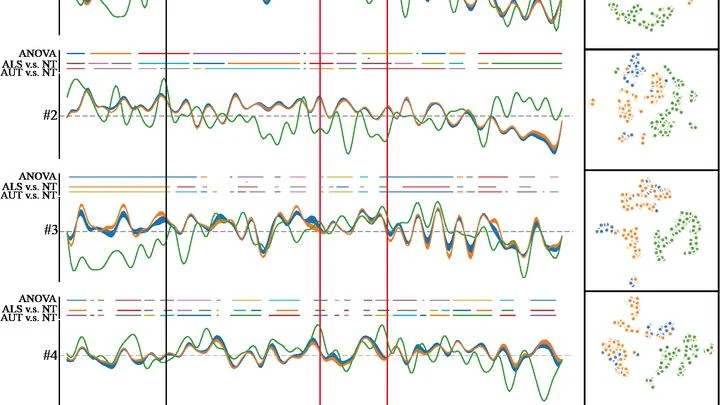
Every thought leaves a trace — a faint electrical blip on the scalp. A device with dozens of wires, resembling a swim cap, catches these traces and turns them into wavy lines. From those lines, you can guess what a person feels even if they stay silent. In a new study, three computer programs competed to see which could read such lines most accurately and determine whether the mood was bad, neutral, or good.
Quantum Physics2026-02-151 minarXiv:2602.14165express
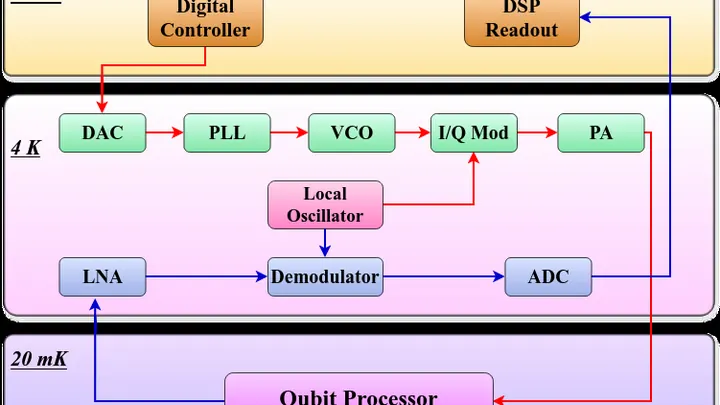
Cryoelectronics: Controlling Qubits at 4 Kelvin
Quantum computers promise to solve problems beyond the reach of classical machines, but their heart, the qubits, requires ultra-low temperatures near absolute zero. Controlling qubits and reading out their states typically means working from a warm room, running many cables through the refrigerator.
Signal Processing2026-02-281 minarXiv:2603.16891express
AI Reads Cardiograms Around the Clock
An electrocardiogram is like a long strip of paper on which the heart leaves its signature. A doctor studies it to catch rhythm disturbances, but when the recording lasts for days, the strip stretches for miles. The eye tires, attention wanders, and rare but dangerous irregularities can slip by. AI-HEART works like a tireless assistant that scans the entire strip without a break.
Applied Physics2026-03-012 minarXiv:2603.00995express
Antenna Grows in Volume
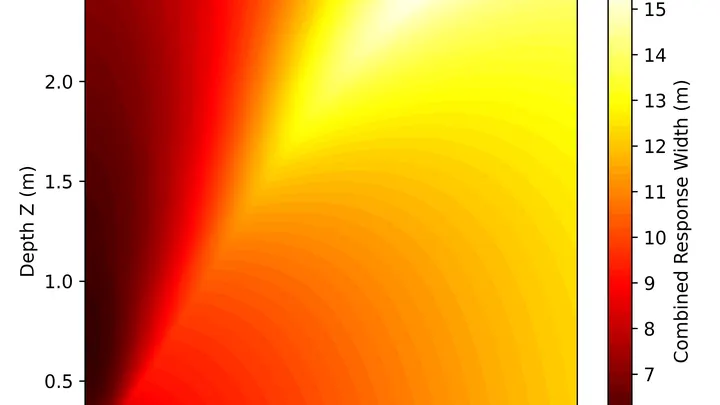
Two lanterns on a distant shore at night merge into a single blob of light. Likewise, a conventional flat antenna cannot tell apart two radio transmitters placed too close together: their signals mix, and the receiver sees only a jumbled mess. Engineers found a way out: they made the antenna not flat but like a stack of transparent plates.
cs.SD2026-03-071 minarXiv:2603.07215express
A Stethoscope That Listens to Your Gut
The gut talks to the doctor, but very quietly. Gurgles and rumbles last fractions of a second and easily get lost among the sounds of the lungs and heart. A stethoscope catches only a fraction, so the diagnosis depends on the experience and hearing of the individual doctor.
Signal Processing2026-03-192 minarXiv:2603.18714express
Sleep by Cardiogram: How a Single ECG Lead Could Replace a Night in the Lab
You sleep, but your heart keeps telling stories. The rhythm of beats, the pauses between them, the respiratory waves — all shift from one sleep stage to the next. In a sleep lab, this is read from a host of sensors on the head, face, legs, and chest. It's cumbersome, expensive, and not something you can do at home.
Applied Physics2026-03-291 minarXiv:2603.27711express
How Sound in a Crystal Became More Precise Than Quartz
You can launch sound in a crystal at a frequency so high that the human ear can't hear it, and make that sound run in circles, like a train on a loop track. Engineers took a thin film of silicon nitride, deposited it on a lithium niobate substrate, and carved waveguides for sound waves into it.
Quantum Physics2026-03-312 minarXiv:2603.30023express
Atoms Catch Radio Signals Without Extra Noise
A conventional radio receiver compares the incoming wave with a reference to extract information from it. Rubidium atoms can do this differently: they themselves act as both antenna and detector. But until now, they required an additional radio signal to set a reference point. The new scheme does without it.
Signal Processing2026-04-041 minarXiv:2604.24765express
The Brain Translator: How Different People Hear the Same Signal
A person looks at flashing letters on a screen, and a computer guesses which one they chose by a burst of brain activity. It's like an interpreter who catches not words but the brain's electrical signals. But different people's brains 'speak' with an accent: one person's signal is bright and clear, another's is quiet and smeared.
Geophysics2026-04-111 minarXiv:2604.10331express
How to Find an Underground Cable by the Noise of Traffic
Beneath city streets lies a web of fiber optics — hundreds of kilometers of glass threads carrying the internet. But accurate maps of this web are often lost or outdated. Finding a cable underground is like feeling for a wire inside a wall without knowing where it runs. This new method turns the cable itself into an ear.
q-bio.QM2026-04-142 minarXiv:2604.12671express
Stress Under the Skin: How the Body Betrays Anxiety
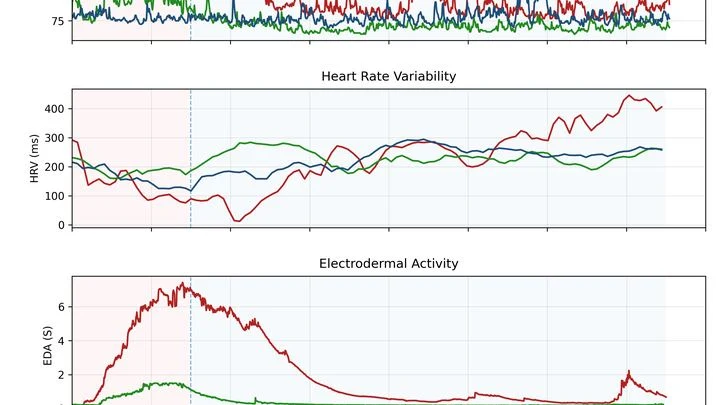
Six adults came to the lab on three consecutive days. On one day they simply rested, on another they pedaled a bike to exhaustion, and on the third they went through an ordeal that makes the heart race without a single movement: they had to give a speech and solve problems in front of a stern committee.
Stellar2026-04-151 minarXiv:2604.13670express
Mars Radio Signal Probes the Sun's Corona
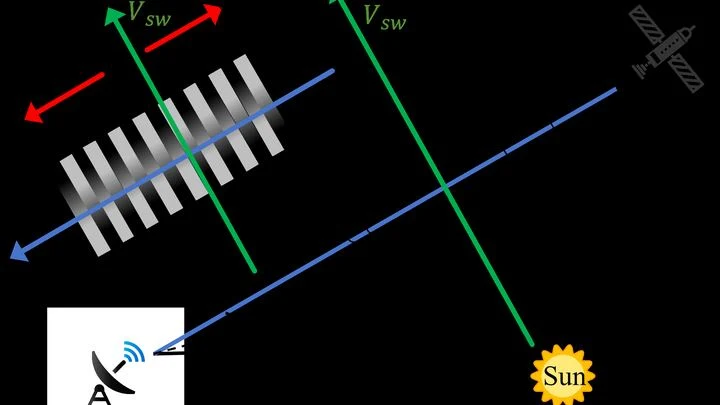
A radio signal travels from Mars to Earth, but on the way it has to push through the invisible "wind" of charged particles blowing from the Sun. This wind, like ripples on water, slightly distorts radio waves.
cs.ET2026-04-181 minarXiv:2604.17109express
The Machine That Doesn't Get in Its Own Way
An orchestra where each musician plays their own part but hears only the neighbor. One wrong note, and a wave of errors rolls through the hall. That's how Ising machines work — special devices for solving problems where you need to find the best option among many.
Ringing in the Ears: How the Brain Gives Itself Away on an EEG
A person hears a ringing that isn't there. The doctor asks them to describe it — loudness, pitch, persistence. But it's subjective: one might say "like a mosquito," another "like steam from a kettle." We need a way to see tinnitus directly, in the brain itself.
Signal Processing2026-04-241 minarXiv:2604.22695express
Breathing Decomposed into Simple Waves
When a person breathes, air doesn't flow in a steady stream but in waves. Previously, doctors and scientists only looked at overall numbers: how much air entered per breath, what the peak flow was. But within a single breath, there are nuances — small variations that speak to the workings of nerves and muscles. The new approach breaks a breath into parts, much like a musician breaks a chord into individual notes.
Signal Processing2026-05-201 minarXiv:2605.21350express
Radar Instead of a Scanner: How Antennas Hunt Tumors
When you need to see inside the brain, you usually lie in a tight tube of an MRI scanner or get zapped with X-rays. Both methods are costly, bulky, and not always available.
Signal Processing2026-07-052 minarXiv:2607.04211express
Light Coils: MRI over Fiber Optics
Dozens of copper coils in an MRI scanner pick up the faint response from tissues, like microphones trying to catch a whisper in a noisy hall. Each microphone drags a thick bundle of wires behind it. The wires press on each other, create electrical interference, heat up, and add risk for the patient.
Signal Processing2026-07-131 minarXiv:2607.11162express
Panels That Cancel Radio Interference
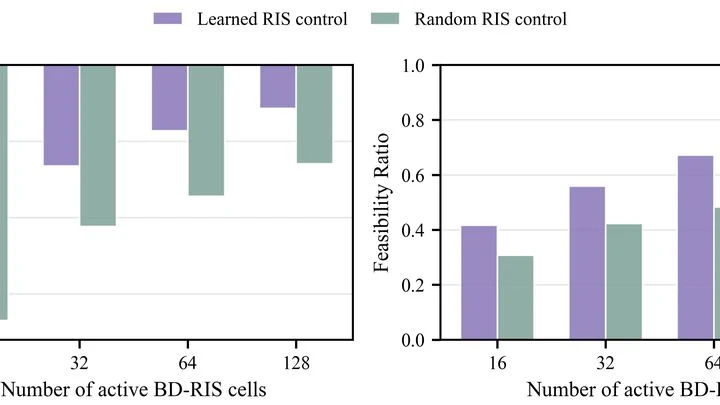
Wireless devices flood the airwaves with signals that blend into chaos — as if everyone in a room started talking at once. Scientists have proposed a solution: smart panels, reminiscent of acoustic tiles. Each cell can either reflect a radio wave on command, like a wall echo, or absorb it, as soundproofing dampens noise.
Signal Processing2026-07-131 minarXiv:2607.11574express
A Reference Antenna for 5G Smartphone Testing
When designing smartphone antennas, engineers need a reference — something like a tuning fork for adjusting musical instruments. As Maxwell showed, radio waves and light are of the same nature, and the new antenna module uses 5G millimeter waves traveling at the speed of light.
Signal Processing2026-07-141 minarXiv:2607.12321express
Smart Antennas Learn to Save Energy
A base station emits radio waves. Without a special nozzle, the antenna acts like a garden hose opened full blast: water flies everywhere, but only a little reaches the flower beds. Researchers created a system with two neural networks.
Signal Processing2026-07-141 minarXiv:2607.12431express
Why the 'Sharpest' Rotations Are Just Permutations
If you take a table of numbers where the sum of squares in each row and column is 1, and you want to maximize the sum of fourth powers, the answer will only be permutations of coordinates. The fourth power sharply penalizes division: 0.5 gives only 0.0625, while 1 remains 1. It's advantageous to give the entire weight of a row and column to one cell, filling it with +1 or -1, and the rest with zeros.
Signal Processing2026-07-141 minarXiv:2607.12491express
How to Hear Silence: Seeking Signals by Brightness
Conventional antennas for precise direction finding must work coherently: they capture not just volume, but also the wave's phase at a given moment. The slightest tuning mismatch, and the direction is lost. The new method relies solely on signal strength. It's like finding your way in fog, seeing only the brightness of lights, not their color.
Signal Processing2026-07-141 minarXiv:2607.12510express
How to Send More Data at Full Speed
In fast-moving vehicles, mobile internet slows down: the signal, traveling at the speed of light, blurs like the scenery outside the window. Engineers have found a way to pack data more densely without letting them mix up. It's like a multi-lane highway where packet-cars drive not with a safe interval, but almost bumper-to-bumper.
Signal Processing2026-07-141 minarXiv:2607.12514express
Smart Surface Kicks In Only When Needed
In a room with a dead corner, sound doesn’t travel. On the wall there’s a smart mirror: it catches the sound and re-reflects it, making the hidden audible. That’s how a reflective surface works in wireless communication. But if the source is right in front of you, the mirror only creates an echo.
Signal Processing2026-07-141 minarXiv:2607.12518express
Cellular Echoes: How Your Phone Navigates Without GPS
A city signal bounces between walls like a ball, and your phone catches dozens of its 'reflections'—echoes. Each microsecond of delay adds 300 meters to the path. The signal's speed is constant, like that of light (speed of light).
Signal Processing2026-07-141 minarXiv:2607.12546express
How to Hear a Seizure in the Brain's Noise
To find an epileptic seizure in brain activity recordings, scientists used an approach akin to picking out sharp sounds in a noisy room: instead of deciphering the entire chorus of brainwaves (EEG), they isolated only the strongest spikes.
Signal Processing2026-07-141 minarXiv:2607.12656express
Shrinking 3D Scenes 160x with Blazing-Fast Unpacking
Three-dimensional worlds are made of millions of semi-transparent specks, like a giant tapestry woven from glowing droplets. Transmitting such a canvas usually takes ages and a beefy data pipe. SpeedyGS squeezes it into a tiny file, and it unfurls in a flash, like yanking a drawstring from a pouch.
Signal Processing2026-07-141 minarXiv:2607.12744express
Position-savvy neural network improves connectivity
In a kitchen with gas burners, each heats differently. If the cook moves the pots, food may burn. Just so in a wireless network: the antenna-burners and user-pots require precise placement. Ordinary neural networks don’t distinguish positions, treating all burners as identical. So they struggle to estimate signal quality or adjust transmission.
Signal Processing2026-07-141 minarXiv:2607.12762express
Radiochorus: How Sensors Agree Not to Interfere
Passive sensors communicate by reflecting radio waves, like an echo. The energy savings are clear, but many reflections turn into a jumbled mess. It's like a choir where each singer repeats their own part without a conductor. A new approach assigns each sensor a specific rhythm — a digital code.
eess.AS2026-07-141 minarXiv:2607.12807express
How Headphones Learned to See the Source of Noise
Active noise cancellation creates 'anti-sound' to neutralize noise. But ordinary systems are blind: they don't know where the sound is coming from. In rooms with an echo, it's like boxing with a blindfold on — you're canceling blindly.
cs.ET2026-07-141 minarXiv:2607.12862express
Choosing a Recipe for a Neurochip: How to Best Fix Interference
Neurochips work differently from conventional computers, which are built according to the blueprints of von Neumann with separate memory and processor. At the core of these chips is a network of simple cells, similar to neurons, and, like water that evenly fills containers of any shape, they easily find a solution without unnecessary steps.
Signal Processing2026-07-141 minarXiv:2607.12921express
Reverse Light: How Direction Increases Fiber Optic Capacity
Fiber optics transmit data with light of different colors. These beams race at nearly the speed of light. Normally, all signals go the same way, creating a jam and interference, like an orchestra where musicians are trying to outshout each other.
Signal Processing2026-07-141 minarXiv:2607.13114express
AI completes the signal from noise: ultra-light communication for 6G
The transmitter sends only a rough sketch of the message — like an artist drawing contours without details. At the receiving end, the AI, like an experienced restorer, reconstructs the full picture, cleaning it of interference. This is how LiTCom technology works, changing the game in future 6G networks.
Information Theory2026-07-141 minarXiv:2607.13119express
Dual Hints: How Smartphones Learn Without Glitches
When you type 'salad' and the keyboard suggests 'Caesar,' behind the scenes millions of phones are jointly learning to predict words. They share not your messages, but only improvements to the common algorithm, like a coach who sends athletes only the tweaks to the plan: 'add 5 push-ups to yesterday’s routine.' Information entropy helps send only unexpected, valuable updates.
Information Theory2026-07-141 minarXiv:2607.13160express
Smart Mirrors for Signals: Balancing Energy and Speed
Radio waves from a smartphone, traveling at the speed of light, easily reflect off walls and corners, losing strength. Smart surfaces are programmable mirrors: they catch the scattered signal and redirect it precisely to its target, like a deft magician making a beam bypass obstacles.
Signal Processing2026-07-141 minarXiv:2607.13338express
Graphs Achieve Perfect Fourier Harmony
Data analysis on the internet or sensor systems has long resembled trying to conduct an orchestra where each musician is locked in their own booth, and the conductor cannot leave the podium.
Signal Processing2026-07-151 minarXiv:2607.13417express
Radio Waves Paint Portraits of Obstacles: How Diffraction and Fundamental Limits Reveal Hidden Objects
When a radio wave encounters a building in its path, it doesn't just reflect or get absorbed: it bends around it, much like ocean waves flowing around a rock, leaving calm water behind. In radiophysics, this phenomenon creates a radio shadow — a complex pattern of zones where the signal is amplified or attenuated, which scientists call a radio portrait.