Solar Cell with a Transparent Back express
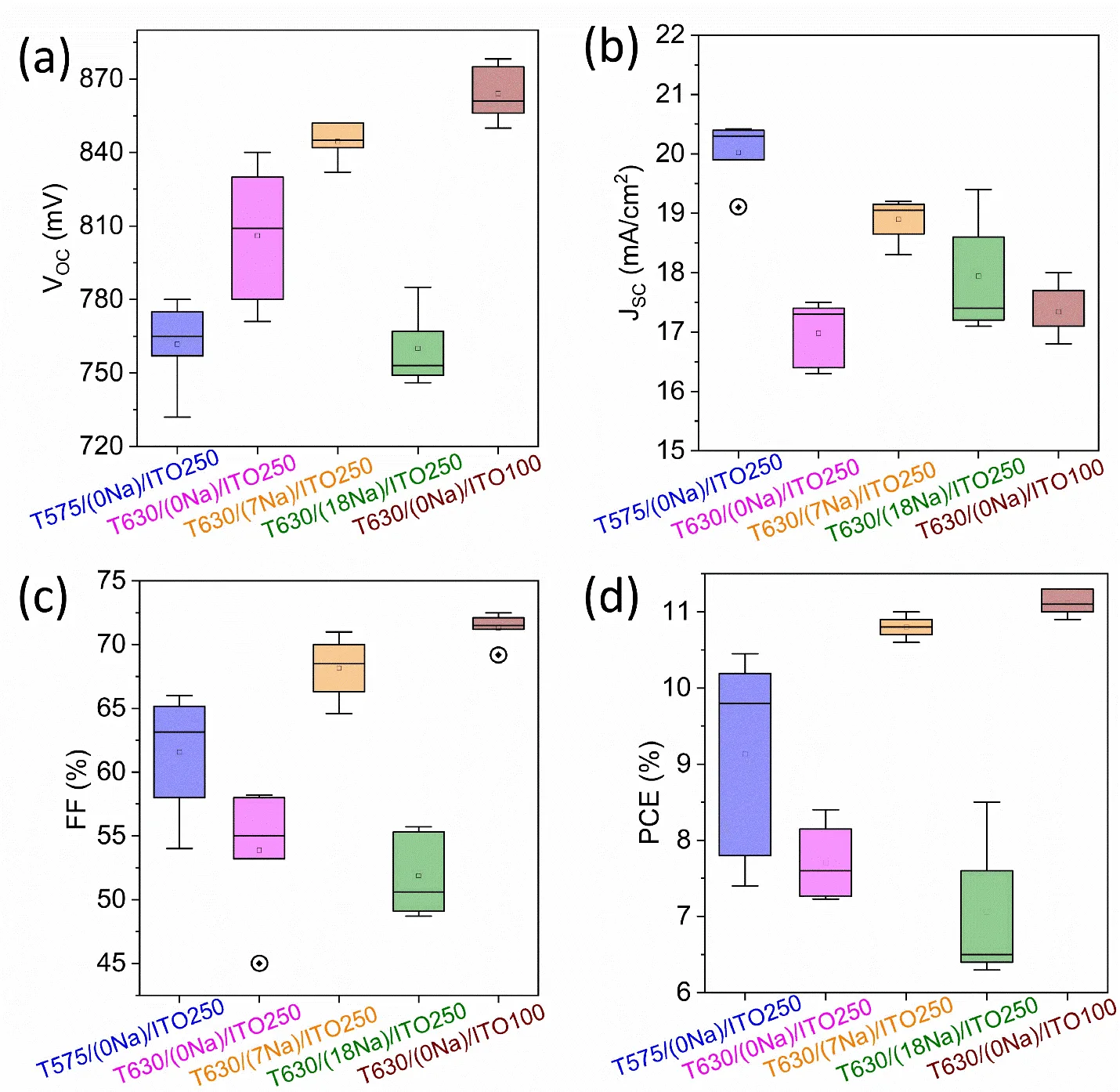
A solar cell usually catches light with one side, and at the back it has a solid metal substrate. Here, the back wall was made from a transparent conducting material — indium tin oxide. Light that the cell doesn't absorb passes through. Such a cell can be placed as the second from the top: the first one takes the blue part of the spectrum, and the lower one takes the red, like two sieves placed one after another.
The cell material is a compound of copper, indium, gallium, and sulfur. Its bandgap (the distance an electron must jump to create a current) is 1.6 electronvolts. This is just right for the top floor: it is transparent to red light but captures blue well. To make the cell work better, sodium is added — the same element found in table salt. Sodium fills defects in the crystal, like putty fills cracks in a wall, and current flows more freely.
At a high growth temperature (630 degrees Celsius), crystals come out more uniform, and the cell glows under ultraviolet light a hundred times brighter — meaning less energy is wasted. At the boundary with the transparent contact, a thin layer of gallium oxide forms. It works like polish on wooden furniture: it closes pores and prevents electrons from getting stuck at the edge. But if this layer is too thick, it starts to hinder the current, like a too-thick layer of varnish prevents opening a drawer. The thin back contact solves this problem.
Indium tin oxide is the same transparent conductor used in smartphone screens: it conducts electricity but doesn't block the view of the picture.