A solar cell is a device that converts light energy directly into electrical energy via the photovoltaic effect. When photons strike the cell, they excite electrons in a semiconductor material, creating free charge carriers that are separated by an internal electric field, generating a current. Solar cells are the building blocks of solar panels, which are a key technology for renewable energy. They are used in everything from rooftop panels to spacecraft, and their efficiency and cost have improved dramatically over the past decades.
History
The photovoltaic effect was discovered by Alexandre-Edmond Becquerel in 1839, and the first practical silicon solar cell was built at Bell Labs in 1954 by Calvin Fuller, Daryl Chapin, and Gerald Pearson.
How it works
Solar cells are typically made of semiconductor materials like silicon, which have a band gap—an energy range where no electronstates exist. When a photon with energy greater than the band gap is absorbed, it promotes an electron from the valence band to the conduction band, leaving a hole. The cell's built-in electric field, created by doping the material with impurities, separates these charges, driving them to opposite electrodes. This creates a voltage and, when connected to a circuit, a current flows.
In practice
Solar cells are used in residential and commercial solar panels, portable chargers, satellites, and calculators, and are increasingly integrated into building materials and vehicles.
Fun fact
The efficiency of a single-junction solar cell is fundamentally limited to about 33.7% (the Shockley–Queisser limit), but multi-junction cells can exceed 40% by stacking materials that absorb different parts of the spectrum.
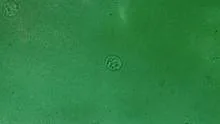
In a dark room, you can hold a glowing sphere without touching it: walls of light push it away but do not burn it. That is roughly how the trap built in Rio de Janeiro for yeast cells works. A conventional optical tweezer, that is, a focused laser beam, acts like tweezers made of light, but the light itself pierces the cell from side to side.
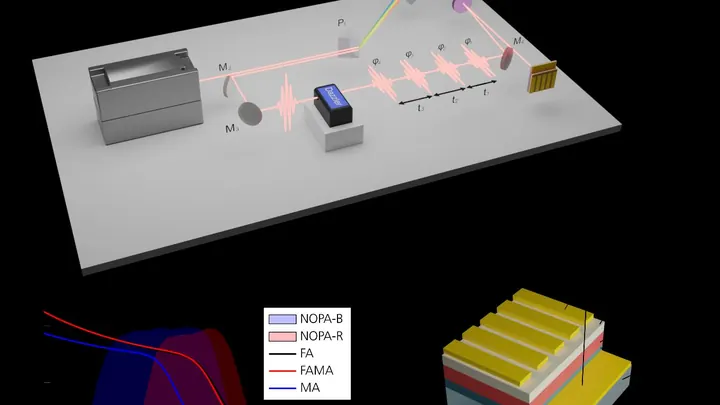
Light hits a solar cell, and inside, charges are born, hot and bothered. Like a person after a jog, they carry extra energy. To deliver current to an external circuit, they need to cool down and reach the edges of the crystal. If cooling drags on, part of the energy is wasted.
Perovskite is a mineral that scientists have learned to make artificially.
Catching light one particle at a time is like hearing a whisper in a roaring factory. An electron-multiplying camera (EMCCD) can do exactly that: it turns a single photon hitting a pixel into an avalanche of electrons that can be measured. These cameras are mounted on telescopes to spot a barely visible planet next to a dazzling star.
Solar neutrinos are tiny particles born in the Sun's core by the trillions every second. They pass through Earth almost without noticing it, and for a long time they were considered absolutely stable. But perhaps they too can "age"—decaying imperceptibly, vanishing on their way to us.
Imagine a carousel with two types of seats: some spin clockwise, others counterclockwise. If you push all of them at once, the carousel jerks but stays in place. That's how a Weyl semimetal crystal works: electrons are born in pairs—'left' and 'right'—and their contributions to current cancel each other, like two identical motors running in opposite directions.
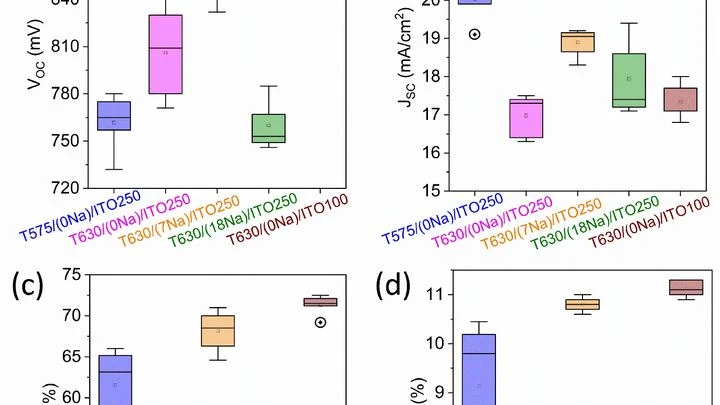
A solar cell usually catches light with one side, and at the back it has a solid metal substrate. Here, the back wall was made from a transparent conducting material — indium tin oxide. Light that the cell doesn't absorb passes through.
A solar panel is like a layered cake: a silicon base with thin metal strips on top that carry electricity to the wires. For a long time, these strips were made of silver: it conducts current excellently and doesn't harm silicon. But silver is pricey, so engineers are looking for alternatives.
A solar cell is like a heart: if you force it to beat out of rhythm, it tires quickly. Usually, cells are tested by applying reverse voltage, but in real life, a shadow from a leaf or a bird forces neighboring cells to pass foreign current through themselves.
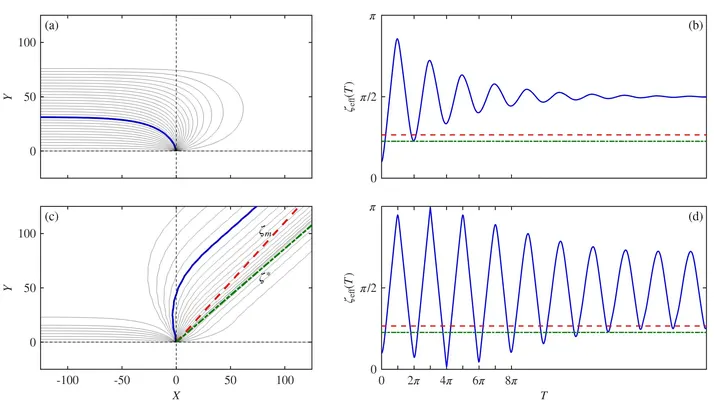
The tiny green alga Chlamydomonas spends its life rowing with two flagella toward light, like a swimmer heading for shore. It senses light with a photoreceptor protein, and behind it lies a red spot — the 'eyespot'—which casts a shadow and helps the cell figure out where the light is coming from.
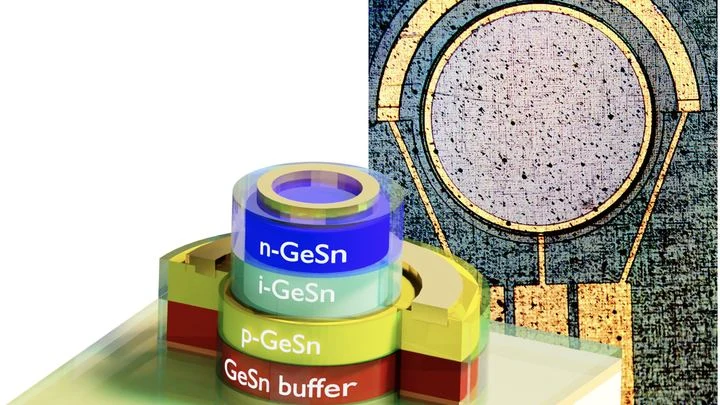
A blazing furnace in a workshop or the hot exhaust of a turbine is not just heat: it's light, invisible to the human eye. Regular solar panels catch visible light, but here you need a receiver for invisible thermal radiation.
Sunlight is a turbulent stream carrying inseparable pairs of droplets. That’s what quantum entanglement looks like: two particles are so connected that a fluctuation in one instantly resonates in the other. In the past, creating such pairs required a 'calm pool' — a perfectly tuned laser beam.
An ordinary solar cell does one thing: when the sun shines, current flows. Here, when the sun shines, the current flows differently depending on which side you bring the magnet.
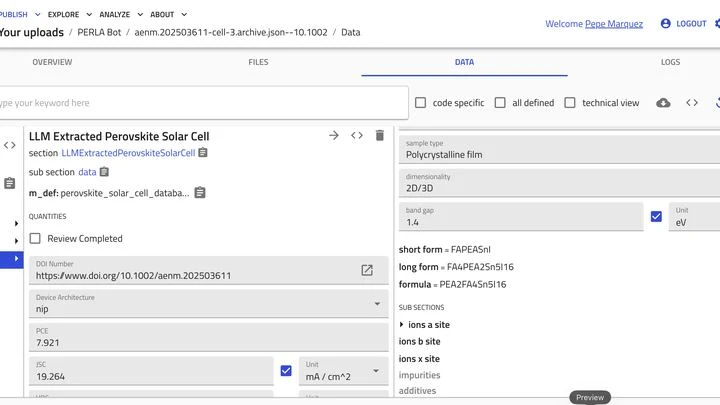
Scientific papers are published faster than people can read and organize them. In the field of perovskite solar cells, the main database has been stuck in 2021, even though research is in full swing. Now PERLA comes to the rescue — an autonomous living database that keeps an eye on the flow of publications on its own.
Over the Pacific Ocean, giant seesaws swing back and forth. Warm water pushes against the coasts of South America, and El Niño begins; a few years later, the ocean surface cools, and the seesaw tips the other way, into La Niña. These oscillations last for years and reshape cloud cover, rainfall, and wind across an entire continent.