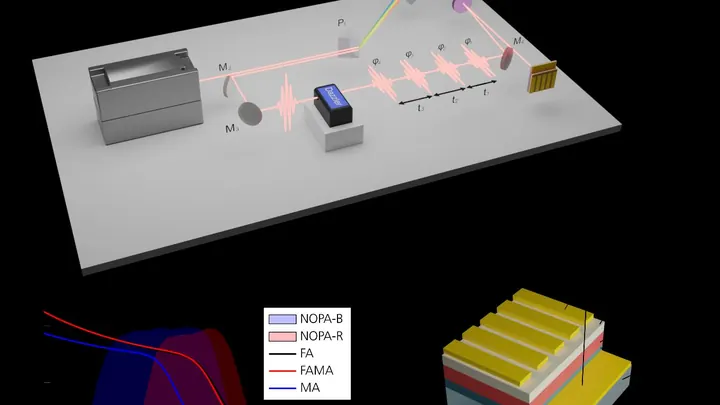
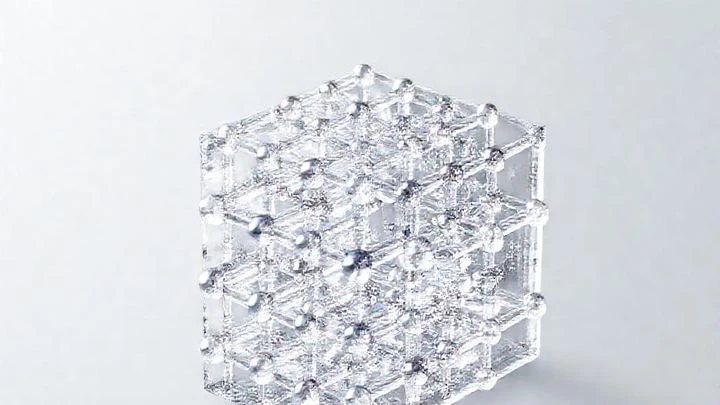
Perovskitesolar cells are a class of photovoltaic devices that use a material with a specific crystal structure — the perovskite structure — as the light-absorbing layer. This structure, named after the mineral perovskite (calciumtitanate), allows the material to efficiently absorb sunlight across a broad range of wavelengths. What makes these cells so exciting is their rapid rise in efficiency: in just over a decade, laboratory cells have gone from about 3% to over 25% power conversion efficiency, rivaling established silicon technology.
History
The modern era of perovskitesolar cells began in 2009 when Tsutomu Miyasaka and colleagues used a perovskite material as a sensitizer in a dye-sensitized solar cell, achieving 3.8% efficiency. Subsequent work by Nam-Gyu Park, Henry Snaith, and others rapidly improved stability and efficiency, establishing the field.
How it works
The perovskite layer absorbs photons, exciting electrons from the valence band to the conduction band, creating electron-hole pairs. These charges are then extracted by adjacent transport layers — an electron transport layer and a hole transport layer — and collected at electrodes to produce an electric current. The crystal structure's high defect tolerance and long carrier diffusion lengths allow efficient charge collection even in thin films, which is key to their performance.
In practice
Perovskitesolar cells are used in research and pilot manufacturing, often in tandem with silicon to boost efficiency beyond single-junction limits, and are being developed for lightweight, flexible, and semi-transparent applications.
Fun fact
The perovskitecrystal structure is so versatile that the same family of materials is used in light-emitting diodes, lasers, and even radiation detectors.
A thin section of eucalyptus lies under the microscope objective, and white light, passing through two polarizing filters, turns the wood into a mosaic of purple, yellow, and blue patches. These colors are not random: like letters on a map, they show the direction of the invisible cellulose threads inside the cell walls.
Light hits a solar cell, and inside, charges are born, hot and bothered. Like a person after a jog, they carry extra energy. To deliver current to an external circuit, they need to cool down and reach the edges of the crystal. If cooling drags on, part of the energy is wasted.
Perovskite is a mineral that scientists have learned to make artificially.
In a thin perovskite film, a material for cheap solar cells, light creates pairs of charges: an electron and a "hole." They need to reach the electrodes and produce current, but many vanish along the way. Where exactly they go is the question that determines how efficient the cell will be.
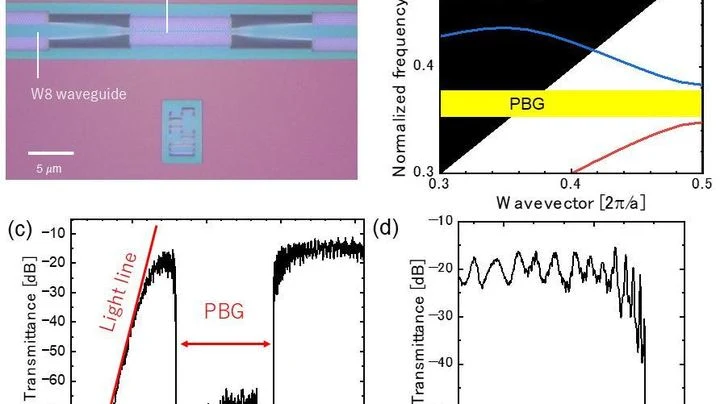
In an ordinary room, light vanishes the moment you switch off the lamp. In a tiny silicon nitride cavity, a photon can bounce between the walls 80,000 times before it gets lost. It's like a ball thrown into a room that rebounds off the walls with almost no loss of speed.
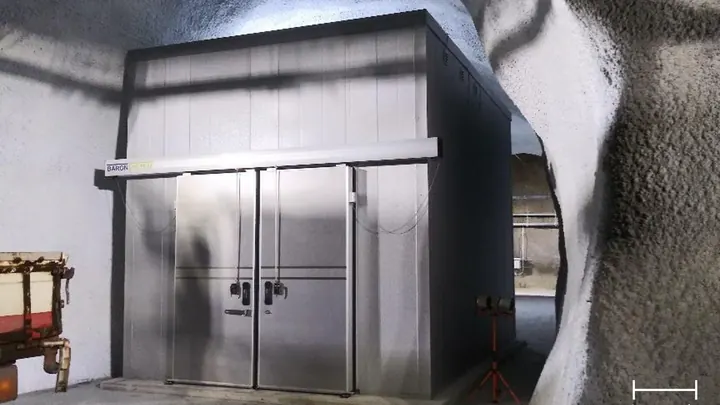
Dark matter doesn't emit or reflect light, but its presence is revealed through gravitational effects. To catch even a single particle, physicists build detectors that are like very quiet rooms: inside lie crystals that flash when a particle hits them. But the flash is faint, and if light is lost along the way, the signal can be missed.
A perovskite solar cell is like a young athlete: it performs brilliantly at first, but tires with age. Over eight hours, its performance drops noticeably, with no visible cause like cracks or dust. Scientists took one cell and recorded its performance at 0, 90, 280, and 480 minutes of its life.
In a pot of water, microscopic spheres, colloidal particles, are floating. Each sphere is coated with long polymer chains that look like a brush and carries an electric charge. If you get the temperature and solution composition right, the spheres start arranging themselves into ordered patterns — crystals.
Every battery or supercapacitor has an unassuming player — the polymer glue. It binds the active material particles together and helps them stick to the current collector. Previously, it was considered just inert mass: it's there, as long as it doesn't get in the way. But in this work, the glue takes center stage.
The lifetime of the entangled triplet pair in the protein is about 60 picoseconds, which is eight times longer than in solution.
Sunlight is like a continuous stream of balls flying at a wall.
One hundred forty parsecs, a distance light traverses in four and a half centuries, separate us from the Taurus molecular cloud. Within its depths hide dark condensations: prestellar cores, where gas and dust slowly contract under their own weight.
In extreme cold — minus 268 degrees — a crystalline perovskite film starts transmitting light differently depending on its polarization. The beam seems to split in two: one part travels slightly faster, the other slightly slower.
The Sun is a giant cauldron where light struggles through a thick layer of scorching matter. On its way out, photons (light particles) constantly bump into atoms and lose energy. How strongly matter holds back light is called "opacity," and it determines how quickly heat escapes.
Iron is one of the main culprits for opacity in the Sun's interior.
Hybrid perovskites are the rising stars of photovoltaics: their efficiency is growing so fast it feels like we're on the brink of a solar revolution. But these materials, like intricate atomic mosaics, are extremely vulnerable — moisture, heat, and light quickly turn them to dust.
Engineers create an alloy for solar concentrators by adding hard particles — like raisins in dough, to help it hold its shape under extreme heat. Too big a raisin and the material cracks. Previously, scientists manually counted these particles on microscope images.
Generative neural networks that create images typically rely on digital randomness. But a team of researchers built a system where randomness is born not in code, but in a tiny optical cavity filled with an organic dye.
Perovskite crystals harvest sunlight almost as well as silicon, but cost pennies. Their trouble is an inborn fragility: from warmth and ordinary water in the air, they “get sick.” Inside, disorder builds up, and the shiny plate turns cloudy, losing its abilities within a couple of days.
Two white sheets lie in the sun — one rough, one smooth. Which one heats up less? The rough one scatters light more strongly, so it seems it would stay cooler. But if the coating is made of many transparent glass beads, the logic changes. Light wanders through it like in a thick fog, and at some point it stops noticing individual droplets.
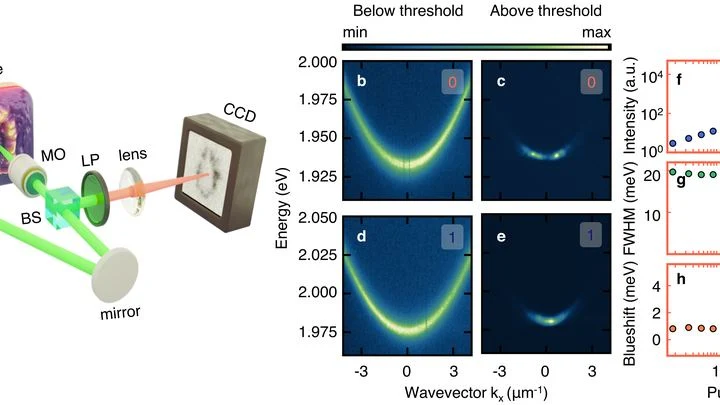
A conventional laser is like an orchestra where musicians must warm up before playing in unison. You first need to pump enough atoms with energy so they 'flip' and are ready to emit light: this is called population inversion. Only then does the beam flash. A polariton laser plays by different rules: its 'musicians'—a mix of light and matter — join in almost without preparation.
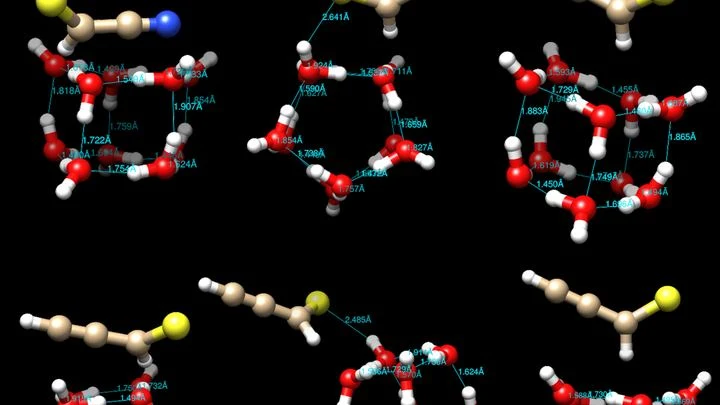
In a cold cloud of gas and dust that astronomers call TMC-1, two sulfur-bearing compounds were recently found: one smells like bitter almonds, the other like rotten eggs. But such a cloud contains less sulfur than it should. Where does it go? It seems to hide in tiny icy pockets on the surface of dust grains.
Space ice is not like a skating rink. It is fluffy, like snow, and full of crevices and hollows.
A laser beam as faint as a whisper of light has stirred a thorium-229 nucleus into a higher energy state. Most nuclei demand a blast of energy, but thorium-229 has such a tiny energy gap that even this gentle nudge works.
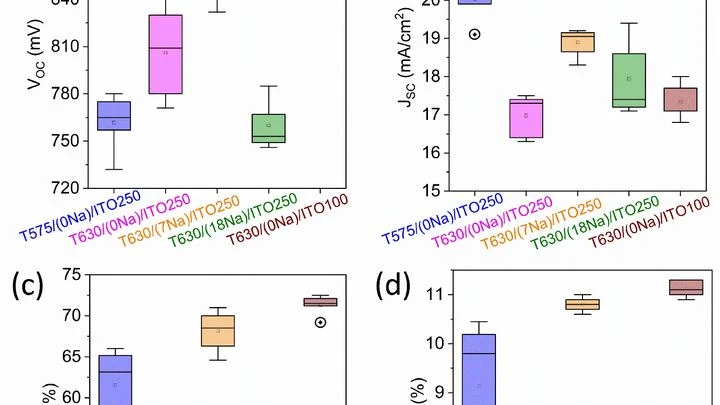
A solar cell usually catches light with one side, and at the back it has a solid metal substrate. Here, the back wall was made from a transparent conducting material — indium tin oxide. Light that the cell doesn't absorb passes through.
A barium titanate crystal is like a crowd where everyone holds a pointer. Normally, the pointers face in random directions, but when you apply an electric field, they all snap to point the same way. This ordered state is called ferroelectric: it stores information the way a compass needle stores direction.
A solar panel is like a layered cake: a silicon base with thin metal strips on top that carry electricity to the wires. For a long time, these strips were made of silver: it conducts current excellently and doesn't harm silicon. But silver is pricey, so engineers are looking for alternatives.
A solar cell is like a heart: if you force it to beat out of rhythm, it tires quickly. Usually, cells are tested by applying reverse voltage, but in real life, a shadow from a leaf or a bird forces neighboring cells to pass foreign current through themselves.
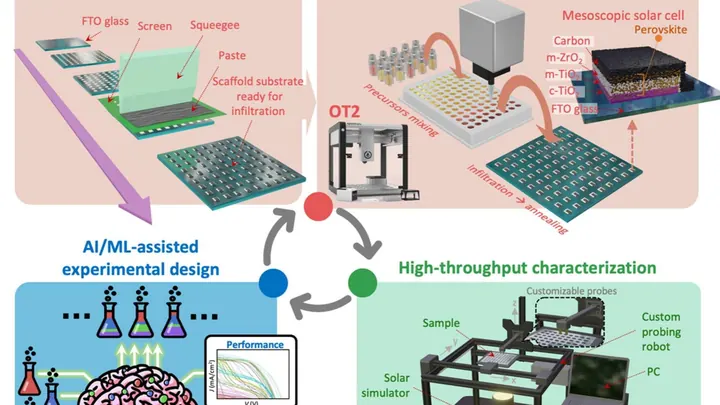
Testing molecules for solar cells is like trying a new sauce in a restaurant where the chef changes every five minutes. Disturbances (humidity, substrate cleanliness, deposition method) hide the true effect. To extract real benefit from noisy data, scientists created a 'smart sieve'—an algorithm that sifts through the results and leaves only reliable improvements.
A blazing furnace in a workshop or the hot exhaust of a turbine is not just heat: it's light, invisible to the human eye. Regular solar panels catch visible light, but here you need a receiver for invisible thermal radiation.
Silver niobium oxide, AgNbO₃, is a layered pie of silver, niobium, and oxygen atoms. At room temperature, it behaves like an ordinary dielectric, but when cooled, the atoms start to shift, and the crystal gains electric polarization, like a compass needle, but instead of pointing north, it points in the direction of the internal…
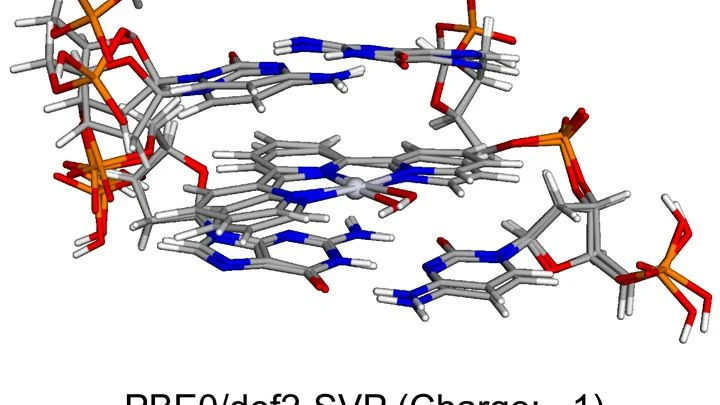
Standard chemotherapy hits the whole body like carpet bombing: both cancerous and healthy cells suffer. Scientists are hunting for more precise weapons — molecules that light up when they slip into a cancer cell's DNA, revealing its location. Such glowing probes could help doctors spot tumors early and even destroy them with pinpoint accuracy, leaving neighboring tissue untouched.
Light from tiny perovskite crystals is like a choir performance, where voices sound sometimes solo, sometimes in a tight duet. Previously, such a duet could only be heard under extreme cooling, nearly to the chill of outer space. Now the choir sings at room temperature.
At the bottom of lunar craters, where sunlight never reaches, an eternal cold reigns — about minus 240 degrees Celsius. In these icy pockets, known as permanently shadowed regions, plans are underway to install a mirror resonator made of monolithic silicon.
A flashlight beam in fog spreads out within a couple of meters. Light particles scatter in all directions, like a crowd in a square. But sometimes they can march in formation — without spreading, without mixing. That's exactly the kind of march achieved in a tiny perovskite crystal.
The crystal was placed between two mirrors.
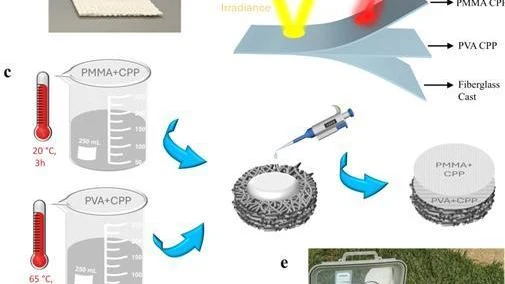
The sun blazes, but the cast on your arm stays cool. The secret lies in a thin coating made from recycled animal bones.
Typical cooling surfaces are often rigid and brittle: you can't stick them onto a curved bandage. Here, they took a commercial fiberglass cast that hardens quickly and added two polymer layers. Inside are ceramic particles of calcium pyrophosphate derived from bone waste.
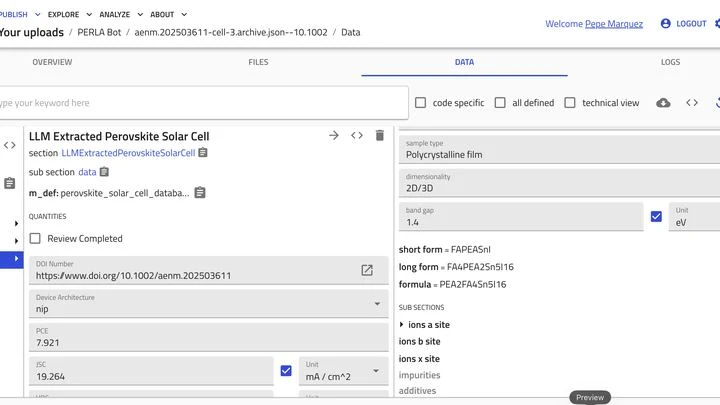
Scientific papers are published faster than people can read and organize them. In the field of perovskite solar cells, the main database has been stuck in 2021, even though research is in full swing. Now PERLA comes to the rescue — an autonomous living database that keeps an eye on the flow of publications on its own.
A cube of potassium tantalate behaves like an ordinary dielectric: it doesn't store an electric field. But grow this material as a thin film on a substrate of another crystal, and everything changes.
A solar cell is like a layered cake: thin films of different materials are stacked on top of each other, and when light enters, it knocks out an electric current. One promising material for such films is a compound of cesium, lead, and iodine.
Perovskite crystals are building blocks where metal atoms and halogens arrange into a neat lattice. Swap one halogen for another, and the crystal glows in a different color. But there's a catch: chlorine and iodine don't like to be neighbors in the same lattice, and in large crystals the mixture separates into distinct zones, like oil and water in a glass.
Throw pebbles along a tight row of posts: they ricochet into a dense spray. Throw at an angle, and they scatter. Gamma rays in a crystal do the same: they spawn particle cascades that spread out unless the crystal’s atomic rows are perfectly aligned. Align them within a hair’s width, and the cascade sharpens into a tight beam. A small crystal then outperforms a large one.