How a Clot Becomes Strong: The Puzzle of Density express
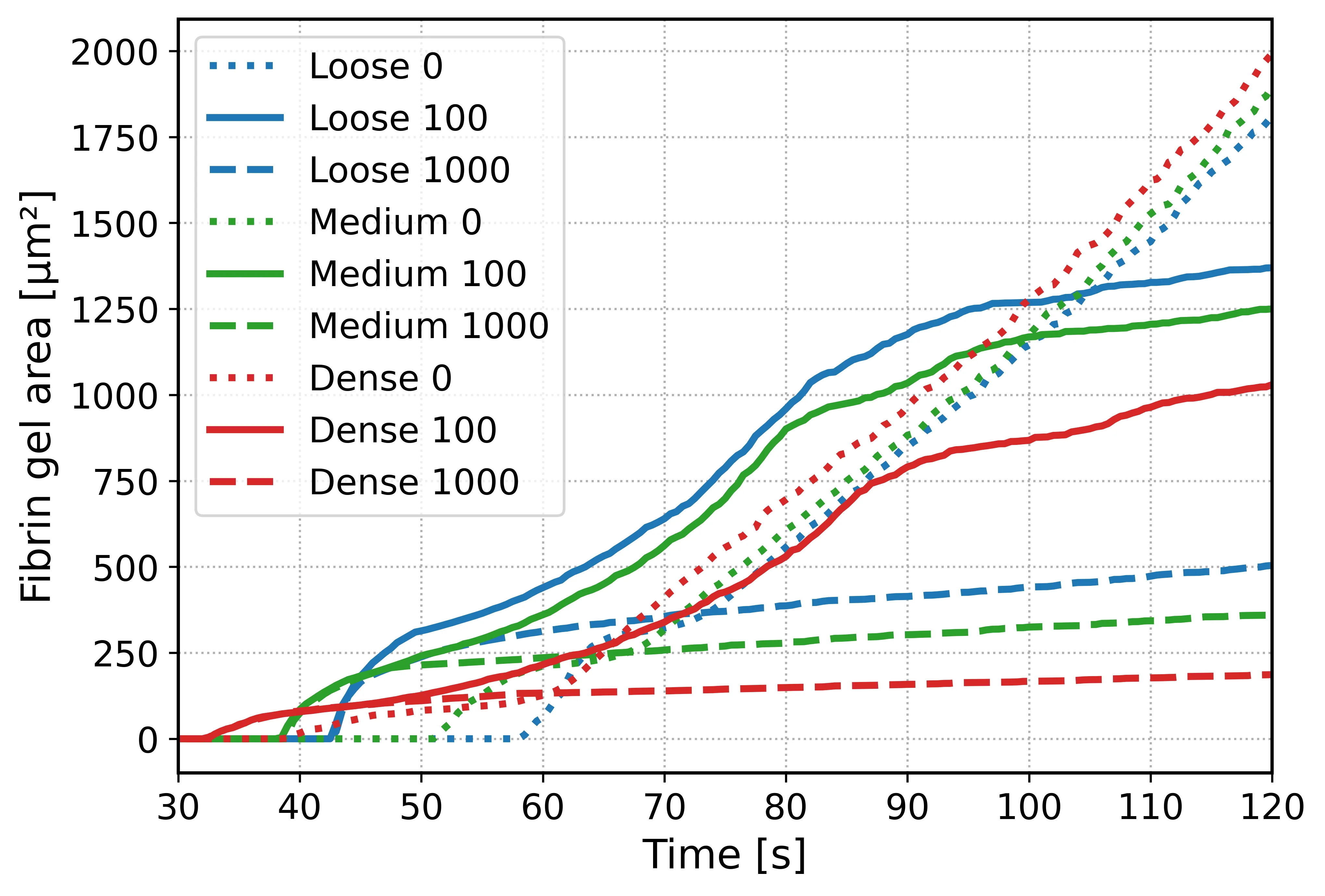
A thrombus is not just a clump of cells. When a vessel wall is damaged, platelets stick together into a plug, but it is still fragile. What makes it strong is fibrin — a protein that forms a network of fibers, like rebar in concrete. The model showed that the plug's density decides where this network appears.
In a dense plug, platelets are packed tightly, and the substances that trigger clotting accumulate between them. Fibrin starts to grow at the edges, where blood can still flow. In a loose plug, blood seeps deeper, bringing the building material — fibrinogen. So fibrin fibers grow throughout the plug, although the start is delayed.
It's a trade-off: quickly block the vessel or make the clot strong right away. A dense plug wins minutes but loses in reliability. A loose plug is slower but more thorough. This explains why some clots dissolve on their own, while others lead to a heart attack.
Fibrin is a protein that forms fibers just 3 nanometers thick. If you stretched all the fibers from one clot into a line, it would be several meters long.