Patterned fluid dynamics explores how structured patterns — such as vortices, waves, filaments, or cellular structures — emerge spontaneously in fluids, gases, and plasmas under specific conditions. The corpus titles illustrate a wide range: crowd dynamics modeled as a fluid, plasma turbulence with long-term memory, noise-induced order in filaments, ice ridge formation from waterflow, changing rainfall patterns, magnetic lattices filtering waves in plasma, and bubble deformation. These patterns arise from the interplay of nonlinearity, dissipation, and external forcing, and they are ubiquitous in nature, from atmospheric flows to astrophysical jets.
History
The systematic study of pattern formation in fluids dates back to the 19th century with experiments on convection by Henri Bénard and theoretical work by Lord Rayleigh. The field advanced significantly in the mid-20th century with the development of nonlinear dynamics and chaos theory, notably by Edward Lorenz and others.
How it works
The emergence of patterns is governed by nonlinear differential equations, such as the Navier-Stokes equations for fluids or magnetohydrodynamic equations for plasmas. Under certain conditions, small perturbations grow and interact, leading to self-organization. For example, in a crowd, individual movements can synchronize into collective vortices due to local interactions. In plasma, turbulence can organize into large-scale structures that persist over time. The specific mechanism depends on the system: instabilities (e.g., Rayleigh-Bénard convection), wave-wave interactions, or noise-driven processes can all seed patterns. The balance between energy input and dissipation determines whether patterns remain stable, oscillate, or become chaotic.
In practice
Understanding patterned fluid dynamics is crucial for predicting weather systems, designing efficient mixers and heat exchangers, controlling plasma instabilities in fusion reactors, and managing crowd safety in public spaces.
Fun fact
The 'bubble becoming a pear' phenomenon, as mentioned in one title, refers to the deformation of a rising bubble in a viscous fluid, which can develop a characteristic teardrop shape due to pressure gradients.
A wave packet is like a traveler who either loses steam and spreads out along the way, holds a steady pace, or gathers into a fist. In a 50-meter flume with water 5 meters deep, scientists tracked how a bell-shaped group of waves behaves when its height is changed but not its width.
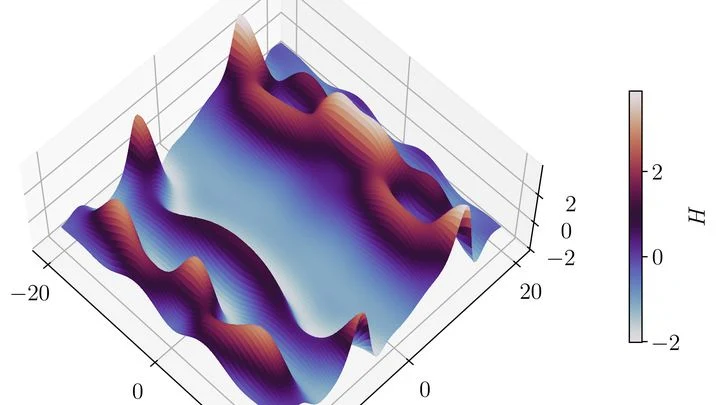
Plasma is a gas in which electrons are stripped from atoms and roam freely. Sometimes, regions where electrons are almost absent spontaneously appear in such a gas; they are called holes. It is like a whirlpool forming in a stream, pulling everything around it in. But exactly how such a whirlpool is born has long remained a mystery.
Microwave plasma in a vortex is like a kitchen mixer that simultaneously heats and stirs the gas. In the reactor, the gas is swirled, and microwaves heat it to thousands of degrees, tearing carbon dioxide molecules apart. Scientists created a computer model of such a reactor to understand how pressure affects the process.
A superfluid gas is like a crowd of people marching in step: each atom knows where to go and doesn't fall out of the common rhythm. But this crowd has three 'valleys'—three different directions it can take. In a new experiment, physicists made one valley slightly more 'favorable' than the others and watched how the crowd darted between them.
The universe right after the Big Bang was like a boiling cauldron: bubbles of a new state of matter were bursting and growing everywhere. These were first-order phase transitions — exactly like water boiling, only at temperatures reaching trillions of degrees.
In a world where Reynolds numbers are minuscule, water turns into thick syrup, and the swimming tricks we know stop working. Here reigns the insidious scallop theorem: reciprocal motions produce no net displacement. Microorganisms found a way out: they grow polymer tails.
In the intricate dance of active turbulence, where invisible engines spawn chaos, a soft droplet takes on the role of a detective. Its shape is not merely an outline but a sensitive cipher: it reads the hidden signals of its environment.
The paradox of the young solar wind has long puzzled heliophysicists. Measurements showed that near the Sun, proton beams aren’t smeared out but sharply compressed, as if someone had neatly hammered them into the shape of a hammerhead.
Mountain river water doesn't flow smoothly: it churns, swirls into eddies, and suddenly accelerates. This chaotic motion is called turbulence. But even within it, there are hidden rhythms — rare and intense bursts that briefly alter the entire flow pattern.
A pot of water has just been stirred: the whirlpools and eddies gradually calm down, and the liquid becomes smooth. A similar process, but in the quantum world, occurs in superfluid helium or in a cloud of ultracold atoms.
A superfluid gas behaves like a frictionless liquid. Two clouds of such gas are connected by a narrow bridge, and a stream of particles flows through it. This resembles the Josephson effect in superconductors, but here the particles are neutral atoms instead of electrons.
A cell about to divide first marks its waist. Beneath its membrane, in a thin gel of protein filaments, movement begins. The filaments flow like a slow river, and a belt forms in the middle of the cell. This belt tightens more and more until the cell is pinched in half.
Scientists built a computer model of this process.
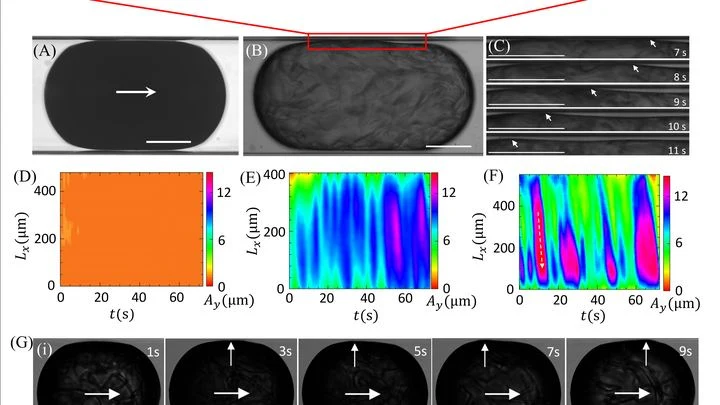
A tiny oil drop squeezes through a water channel narrower than itself. In pure water, it crawls along calmly, like a round bead. But add a little soap to the water, and the drop begins to bend, like a caterpillar.
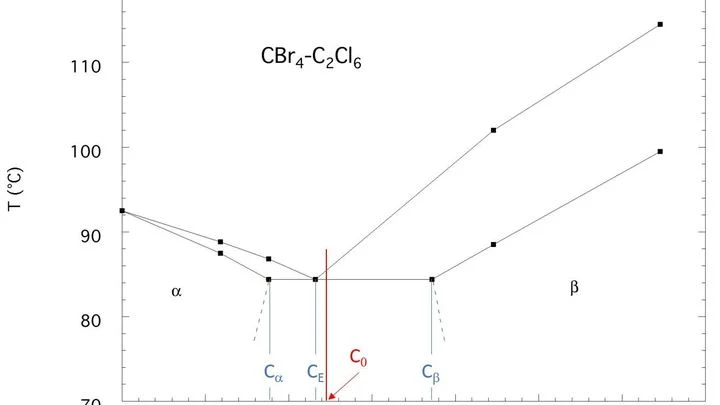
In a solid piece of tin-lead alloy, the layers of the two metals lie like pages in a book. When heated from one side, the layers don't melt uniformly but in whimsical tongues and fingers. Scientists studied this process using a transparent alloy that can be seen through under a microscope and compared it with a computer model.
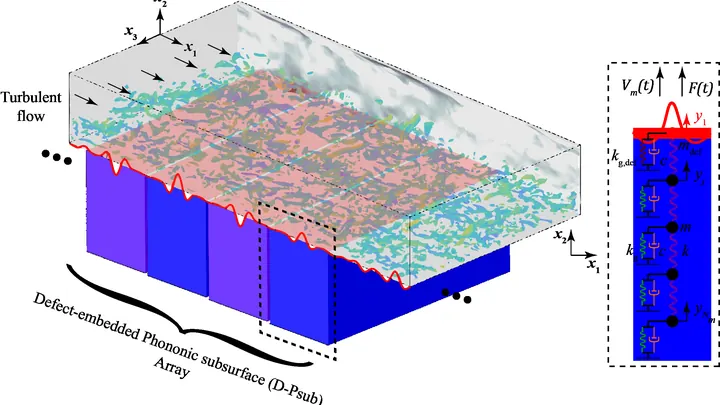
Turbulent flow near a wall resembles a crowd where everyone pushes in their own direction. Vortices form and break apart, creating chaotic jolts. If you embed a defective acoustic lining into the wall, like a tuning fork that rings only on one note, it starts responding only to a narrow range of frequencies.
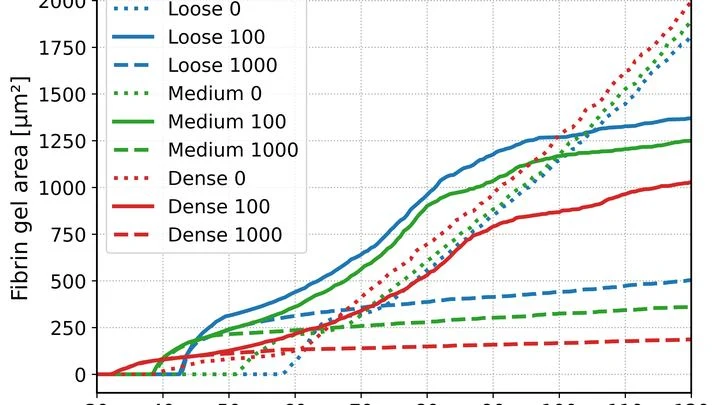
A thrombus is not just a clump of cells. When a vessel wall is damaged, platelets stick together into a plug, but it is still fragile. What makes it strong is fibrin — a protein that forms a network of fibers, like rebar in concrete. The model showed that the plug's density decides where this network appears.
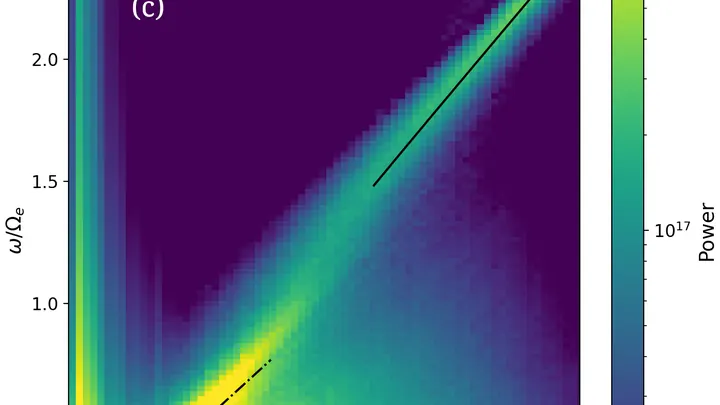
When water boils in a kettle, waves of steam ripple through the kitchen. A similar process happens in space, in plasma — gas so hot that electrons are stripped from atoms. Around black holes and neutron stars, this plasma isn't just hot: its particles zip around at nearly the speed of light.
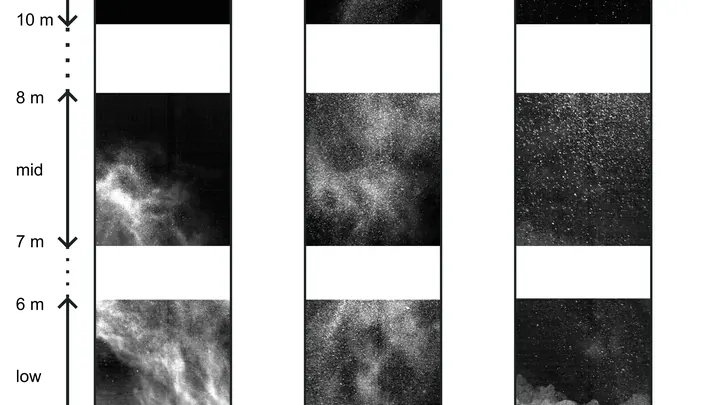
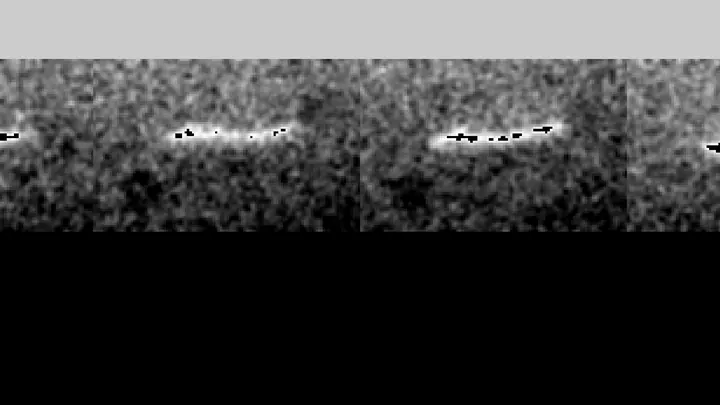
A powder avalanche isn't just a pile of snow sliding down a mountain. It's a cloud racing downhill at car speed. Inside, snow doesn't lie still: it flies: thousands of tiny particles are caught up in air vortices. Until now, no one had seen what actually happens to each snowflake in this chaos. Now scientists have the first footage.
In ordinary water, ripples from a thrown stone spread in even concentric circles. But imagine a liquid whose molecules are like tiny screws with a right-handed thread. In such a medium, the surface acts like a one-way street: waves can only travel in a certain direction.
A piece of dough, when pulled from the sides, doesn't stretch evenly: in one spot it thins and tears. Living tissue behaves similarly, but instead of a tear, shear bands appear — narrow zones where cells begin to slide past each other, like cards in a deck when cut.
A thin stream of water on a shower glass gathers into winding rivulets that quiver and shift before your eyes. Such a liquid film flowing down a vertical surface is a classic example of chaos in nature: it all flows downward, sure, but the surface lives its own unpredictable life.
An octopus tentacle bends, grabs, and stretches — all without a single bone. The secret is that inside it, sections that contract alternate with sections that remain passive. Scientists have long tried to replicate this trick in artificial materials, but until now they couldn't precisely dictate how a material would change shape.
Now researchers have proposed 3D-printing elastic threads from two materials at once.
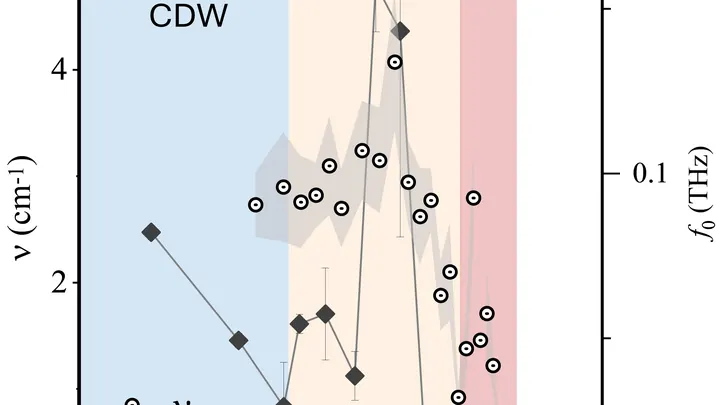
A cooled layered crystal resembles a stack of thin sheets, with electrons wandering between them. At around 17 K, tiny regions appear where electrons line up into a wave, like ripples on water frozen in place. These regions are called charge puddles, and they were previously thought to be static.
Hot plasma in a tokamak is like a temperamental beast: you need to hold it in, but not let it overheat. In the ASDEX Upgrade reactor, researchers found a regime where plasma eddies solve this problem on their own. Stochastic modeling showed that oscillations at the plasma edge fling out blobs, like bubbles from a boiling pot.
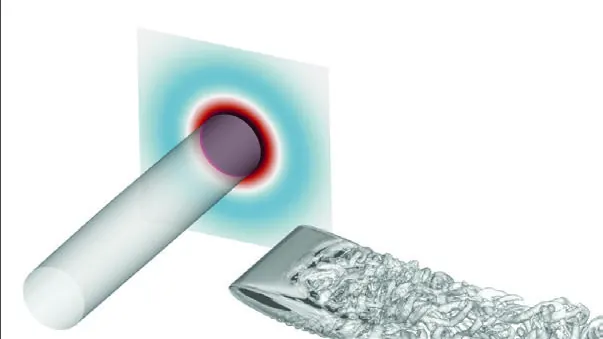
A sudden gust hits a wing, and a huge vortex swirls above it. Such a vortex can abruptly change lift, making the plane's nose dip. Engineers have long sought ways to predict these vortices, but complexity gets in the way: fast airflow is full of small chaotic eddies.
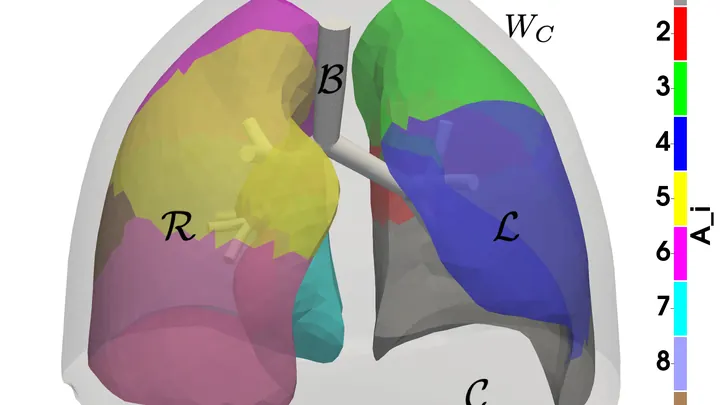
A lung scan reveals a tree: the trunk is the trachea, branches are the bronchi, and leaves are the alveoli. But how does air spread through these branches? Scientists built a computer model that replicates the lung's shape from images obtained via computed tomography.
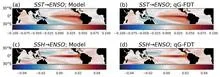
Every few years, the warm current off the coast of Peru shifts, and fishermen come home empty-handed. This is El Niño, the breath of the tropical Pacific, which affects weather from Indonesia to California. Predicting its arrival is as hard as predicting where a stone thrown into a raging river will roll.
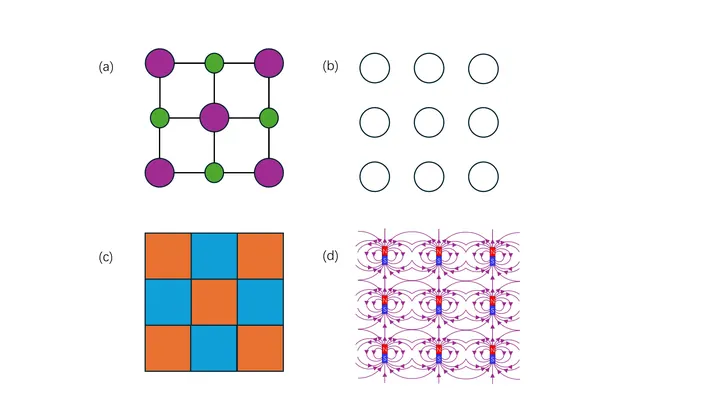
Plasma is a gas heated so intensely that electrons are stripped from atoms. Waves run through it, akin to sound in air, but they are governed by the magnetic field. When the magnetic field becomes periodic rather than uniform, like a fence with alternating slats, waves behave differently. Some frequencies simply vanish: the wave cannot propagate and is reflected back.
The wind blows steadily, but suddenly a gust hits, and leaves swirl up in a vortex. Inside such a gust, the air speed changes not smoothly but in jumps — sometimes sharply forward, sometimes sideways. These rare and strong bursts are called intermittency, and they are the main mystery of turbulence.
A thin thread in a water flow is like a hair in a shower stream. If you jerk the water back and forth, the hair either stretches out with the flow or crumples up. The researchers took real protein threads (actin, which makes up muscles) and placed them in a microscopic channel where the fluid oscillated at different frequencies.
In superfluid helium, a state where liquid flows without friction, quantized vortices spontaneously arise: microscopic funnels resembling whirlpools in ordinary Water, but governed by quantum mechanics.
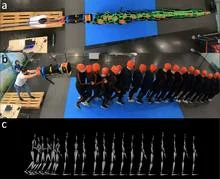
A density of four people per square meter is the threshold beyond which a crowd ceases to be a sum of individual pedestrians and becomes something else. In Pamplona's Plaza Consistorial during the San Fermín festival, local density reached nine people per square meter.
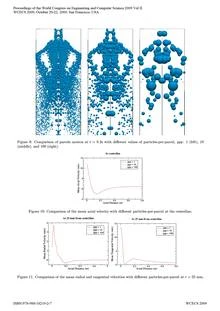
A vertical pipe with a sudden expansion is a classic testbed for turbulence. Air swirling like a tornado rushes into a wider chamber and spawns vortices, recirculation zones, and regions where glass particles 45 μm in diameter, about half the thickness of a human hair, dart along intricate paths.
A translator who learns to correct their own slips works more accurately. In the world of forecasting noisy processes, a new method takes on this role: a reservoir computer that adds a random correction to its prediction at each step.