Mars's dense layer reveals the fate of rocky planets ⚡ экспресс
Original: "Earth and Mars interior structures set by re-melting of the first solid mantle"
The fate of a liquid rock ocean in a planet's youth determines whether a hidden dense layer will form in its interior.
Links in the knowledge graph 1
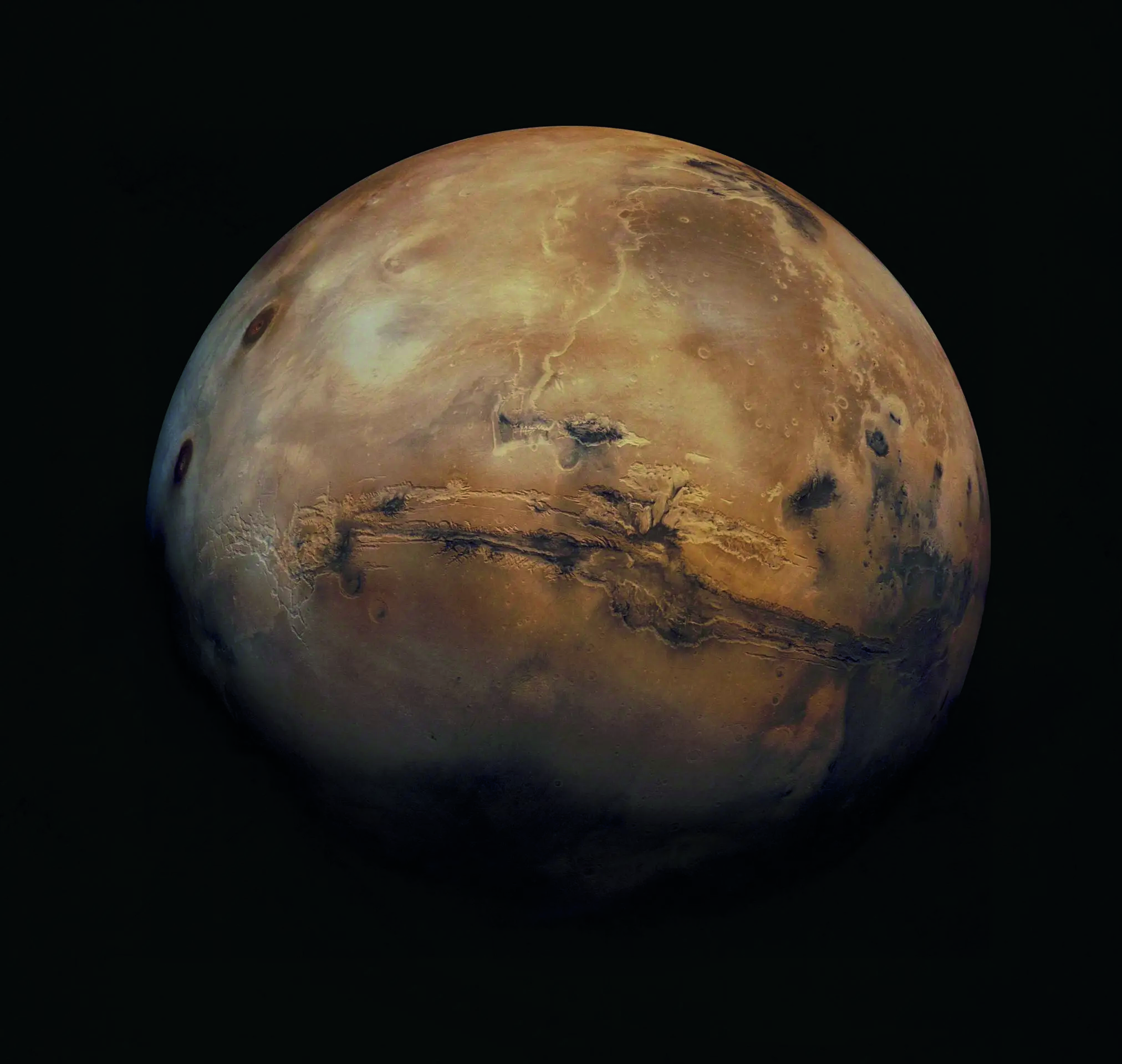
Young planets are covered in a magma ocean. Heavy minerals sink, but light droplets from the melting mantle mix everything up. On a large world, convection is strong—the interior stays homogeneous. On small Mars, a layer forms anyway. That’s how we learn about the insides of distant exoplanets.
🎯 If Earth's interior had been as calm as Mars's, we would have formed a hidden dense layer too—and that would have completely changed the planet's look: continents would have moved differently, volcanoes would have erupted differently.