Mars's dense layer reveals the fate of rocky planets express
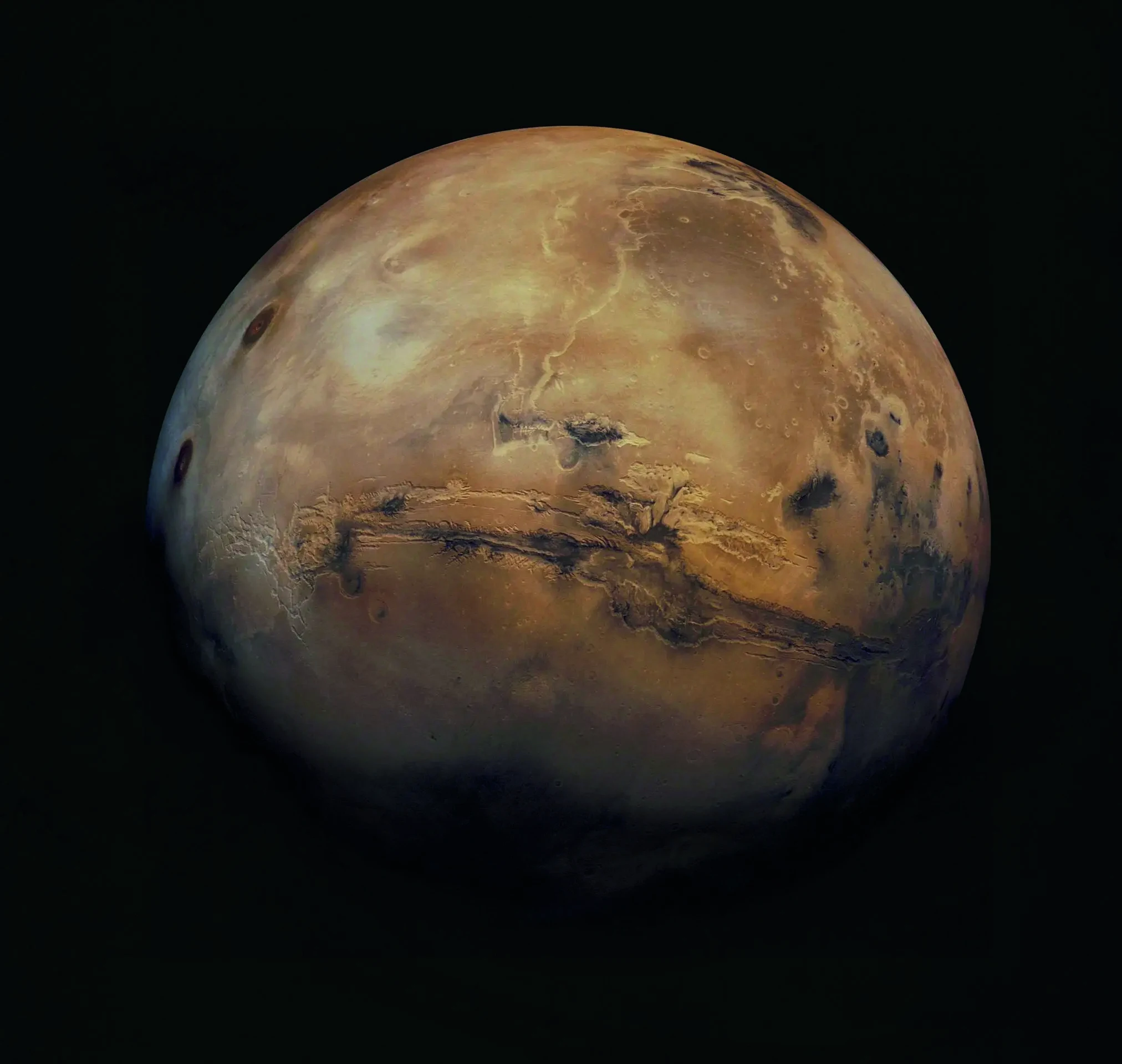
If you don’t stir a layered cocktail, the heavy syrup sinks to the bottom. A young planet is much the same — a seething ocean of molten rock. As it cools, minerals crystallize: some, like iron, get heavy and sink, while others float. You’d think a dense layer would pile up at the core.
But from below, out of the solidifying depths, melts rise: light droplets, like oil in water, float up and churn the ocean. The bigger the planet and the hotter the 'stirring,' the harder it is for iron to settle.
The Martian ocean was shallower, the heat-driven motion weaker, and the iron quietly flowed to the bottom. This layer was recently detected through the echoes of marsquakes: it acts like a sponge, damping seismic waves.
The discovery explains the inner structure of many rocky exoplanets. In essence, we’ve read the recipe nature uses to cook up planetary interiors: some it stirs, others it lets separate into layers.
If Earth's interior had been as calm as Mars's, we would have formed a hidden dense layer too, and that would have completely changed the planet's look: continents would have moved differently, volcanoes would have erupted differently.