American astronomer, one of the pioneers of the transit method for detecting exoplanets. He led the group that first recorded the transit of an exoplanet across the disk of a star (HD 209458 b), opening a new era in the study of planetary systems.
Biography
He studied at the University of Toronto and Harvard University. He is a professor at Harvard University, a leading researcher in the field of exoplanet transits and atmospheres.
Key discoveries
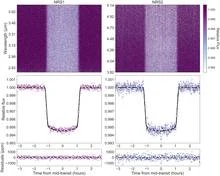
First detection of the transit of exoplanet HD 209458 b (1999)
Research on exoplanet atmospheres
💡 He earned the nickname 'planet hunter' because his work on transits led to the discovery of hundreds of new worlds.
Quote: "When we look at transits of exoplanets, we see the shadows of alien worlds."
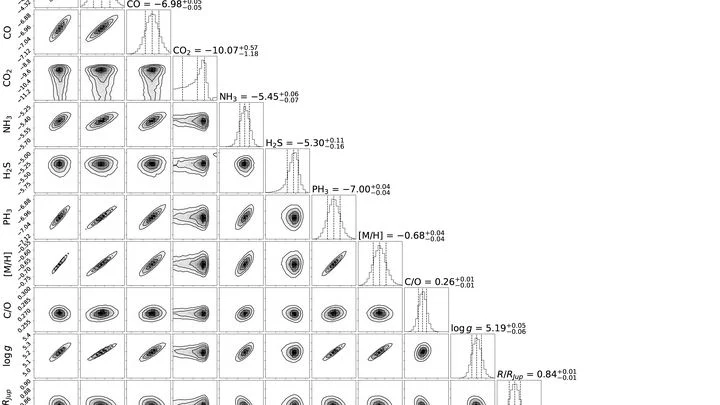
Webb studied the planet HAT-P-26 b and found water, carbon dioxide, and sulfur dioxide in its air. Previously, SO₂ had only been spotted on scorching hot giants or chilly sub-Neptunes; now it's clear that photochemistry works across a wide temperature range. A trend emerged: the higher the atmospher
LTT-9779 b is a planet from the 'hot Neptune desert', a region where worlds usually perish. But it survived thanks to a carbon cocoon: an atmosphere of carbon monoxide and carbon dioxide turned out to be so thick that it doesn't evaporate even at 2000°C. On top of that, this exoplanet reflects 80% o
Scientists have figured out how rocky planets hold onto lightweight hydrogen: stellar tidal forces heat up their interiors, triggering non-stop eruptions. Volcanoes belch out gases, replenishing the loss. Such a planet gives itself away by an unusually thin hydrogen envelope — which the James Webb S
Around dim stars like TRAPPIST-1, photosynthesis barely produces oxygen—visible light is scarce. Infrared bacteria, on the other hand, thrive, gobbling up nearly all the available energy. As a result, an oxygen atmosphere may never form, and complex life never arise.
Gravitational kicks from distant giant planets knock small rocky worlds (super-Earths) near the star out of the system. The ejected planet becomes a lonely wanderer. This same mechanism can shuffle the orbits of the remaining planets and even send them plunging into the star.
Comparing 1.6 million brightness measurements over five years, astronomers noticed opposite trends: Starlink satellites with sun visors (VisorSat) became 0.6 magnitudes brighter, while OneWeb spacecraft became 0.4 dimmer. Both changes are statistically significant with an error probability below 0.3
Astronomers have for the first time found an atmosphere on a small object (612533) 2002 XV93 in the Kuiper Belt. Previously, it was thought that only large bodies could retain gases, but this icy ball 250 km in diameter proved otherwise. The discovery forces a fresh look at the hidden activity of sm