Why Early Galaxies Shine So Bright: The Secret of Transparent Dust ⚡ экспресс
Original: "Stardust Galaxies at z>9: A Dust-Origin Transition Behind the Excess of UV-Bright Galaxies"
The JWST telescope revealed that dust in ancient galaxies barely blocks light — a discovery that reshapes our understanding of cosmic evolution.
Links in the knowledge graph 1
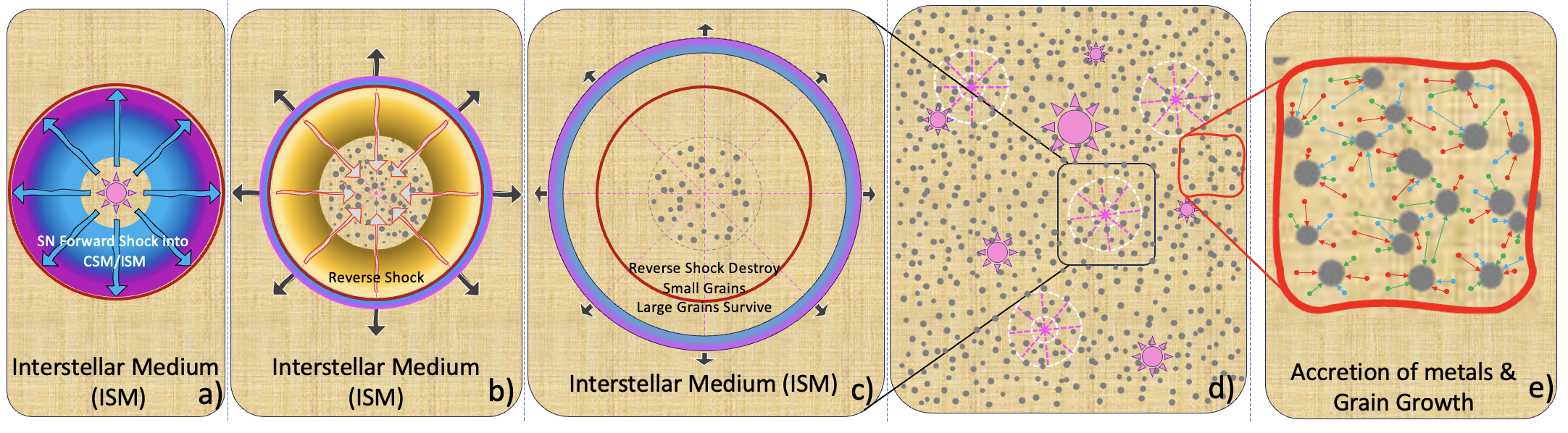
In the early universe, dust from stellar explosions was nearly transparent, like a faint haze, letting ultraviolet pass. This explains why the James Webb Telescope sees so many brilliant galaxies at the dawn of time — they shine through the mist rather than drowning in the smog of later dust.
🎯 Dust grains from supernovae are hundreds of times smaller than UV waves: light slips through them like water through a coarse sieve, meeting no resistance.