Popular

Subrahmanyan Chandrasekhar

1910–1995 · astrophysics, theoretical physics
Indian-American astrophysicist who made fundamental contributions to understanding stellar evolution. He developed the theory of white dwarfs and introduced the Chandrasekhar limit — the maximum mass at which a star can remain a white dwarf. His ideas led to the recognition of the existence of neutron stars and black holes, and to the development of relativistic astrophysics.

Biography

Born in Lahore (British India). Graduated from Presidency College in Madras, then Cambridge. Worked with Ralph Fowler. After a conflict with Eddington, he moved to the USA, where he spent his entire career at the University of Chicago. Winner of the 1983 Nobel Prize in Physics for research on stellar evolution. Also awarded the Copley Medal and other prizes.

Key discoveries

💡 He was the nephew of Nobel laureate C. V. Raman. His theory of the collapse of massive stars was ridiculed by Sir Arthur Eddington but was later fully confirmed. Chandrasekhar methodically worked on new topics each decade, publishing seminal monographs.
Quote: "Simplicity is the seal of truth. And beauty is the radiance of truth."
Links in the knowledge graph 1
Related tags
black holeneutron stargalaxy
Related laws
Chandrasekhar limit
Related scientists
Fritz ZwickyJacob BekensteinJocelyn Bell BurnellRainer WeissStephen HawkingKarl SchwarzschildWolfgang PauliAdam Riess

Related articles

Silent Explosion: The Faintest Supernova in the Galaxy

In 1181, Chinese astronomers spotted a flash — likely the merger of two white dwarfs. Modern observations of the Pa 30 nebula barely pick up a radio signal. This means the explosion’s energy was extremely low, or particle acceleration works differently. The discovery forces us to rethink the nature
arXiv:2509.15792 · 2025-09-19

Dark Stars: Cradle of Giant Black Holes

Dark stars, shining from collisions of dark matter particles, became the progenitors of the largest black holes in the Universe. They grew to millions of solar masses, then collapsed, leaving behind seeds for future giants.
arXiv:2511.08578 · 2025-11-11

Star Duet Spawns Ripples in Spacetime

A pair of white dwarfs whirls in a deadly dance: one star steals helium from its neighbor, spinning up a glowing disk. The orbit shrinks, energy leaves as gravitational waves. The rate of approach has been measured — the future LISA detector will catch the signal in four years.
arXiv:2601.07925v4 · 2026-01-12

How Earthly Atomic Nuclei Reveal the Size of Neutron Stars

Neutron stars are among the densest objects, but their exact size long remained a puzzle. Now physicists have found a universal link: the easier it is to deform a lead nucleus in the lab, the softer the matter inside a neutron star and the smaller its radius. Using lab data, scientists calculated th
arXiv:2601.16894 · 2026-01-23

Dyson Spheres Around White and Red Dwarfs: Calculating the Search

A Dyson sphere is a cosmic blanket that captures all of a star's energy. Scientists have figured out how such a blanket glows around white and red dwarfs: the bigger it is, the cooler it gets. Surprisingly, the hottest blanket comes from the dimmest star. These clues will aid telescopes in the hunt
arXiv:2602.23270 · 2026-02-26

Mystery of Cassiopeia star solved after 50 years

X-rays from Gamma Cassiopeiae moved in sync with an unseen white dwarf. This showed that the energy flares when the dwarf pulls matter from the larger star. One in ten such systems hides such a companion, shaping stellar fates.
arXiv:2603.22938 · 2026-03-24

Neutron Star Glitches: Solved in the Lab

Neutron stars sometimes abruptly speed up on their own. Experiments with superfluid helium in aerogel replicated the mechanism: in the star's crust and core, quantum whirlpools either break loose or are born in avalanches, nudging the star forward.
arXiv:2604.18016 · 2026-04-20

How a Supernova Shoots Out a Lone Spinning Star

A new study explains the origin of lone spinning stars: in a binary pair, a donor star spins up its companion, then explodes, hurling it into space at enormous speed.
arXiv:2604.21402 · 2026-04-23

Breath of the Abyss: How a Black Hole's Horizon Pulsates to the Rhythm of Accretion

Analog gravity doesn’t freeze in weak perturbations. When gas roars onto a black hole, it gives birth to a living acoustic spacetime—a horizon that oscillates and shifts. Using an equation of state for ultrahot plasma with a variable adiabatic index, the authors showed that the horizon radius dances
arXiv:2605.04158v2 · 2026-05-05

Stellar Echoes: What Neutron Stars Conceal

When ripples in spacetime strike a neutron star, it doesn't respond right away. First comes a sharp reflected pulse, then a series of fading echoes: the wave bounces around inside the ultra-dense sphere and emerges with a delay. A new method breaks this smeared signal into clear steps. From them, li
arXiv:2605.15429 · 2026-05-14

Magnetars: How Magnetic Fields Fool Light

Magnetars are neutron stars with a magnetic field a quadrillion times stronger than Earth's. Turns out, their field isn't just powerful—it adds its own bend to light, independent of gravity. Ignoring this effect can skew radius measurements by up to 10%—critical for telescopes probing ultra-dense ma
arXiv:2605.17048 · 2026-05-16

Where Do Intermediate-Mass Black Holes Hide?

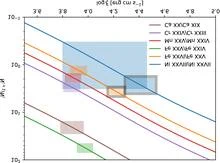
Researchers trained a neural network on computer twins of star clusters to guess the main black hole. Comparison with real objects showed: giants are rare in globular clusters, while central clusters of galaxies might harbor middleweights. Unexpected twist: many black holes get a kick from the merge
arXiv:2605.21593 · 2026-05-20

A Polygraph for Flashes: How the Pincus–Lyapunov Diagram Uncovers FRBs

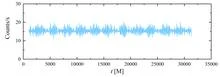
To unravel the nature of fast radio bursts (FRBs), astrophysicists applied methods from nonlinear dynamics and constructed the Pincus–Lyapunov diagram, comparing them with pulsar glitches, solar flares, and earthquakes. It turned out: repeating FRBs form a compact cluster on the border between stoch
arXiv:2606.01855v1 · 2026-06-01

The Kilometer Barrier: Why Tidal Disruption of Asteroids Leaves Only Boulders

When a white dwarf tears apart a passing asteroid, we expect a dust cloud. But new analysis flips the picture: particle cohesion — those very van der Waals forces that hold sand grains in your palm — erects a kilometer barrier. Fragments smaller than hundreds of meters simply cannot be born during t
arXiv:2606.02457v1 · 2026-06-01

Cradle for a Black Hole: Dark Matter and the Mystery of Red Dots

Observations by the JWST have revealed a population of compact, anomalously red and bright sources in the early Universe — the so-called 'little red dots' (LRDs). Their nature remains a mystery: standard models of stars or active galactic nuclei cannot explain their spectra. One candidate is quasi-s
arXiv:2606.02539v1 · 2026-06-01

Fading Black Hole Flares: The Key Is the Star's Rapid Spin

Some repeating partial tidal disruption events show flares that fade from one to the next—a phenomenon that contradicted old models. Hydrodynamic simulations reveal that the culprit is the rapid initial prograde spin of a star captured via the Hills mechanism: the tidal torque is inefficient, and ma
arXiv:2606.02692v1 · 2026-06-01

Smoldering Ember in a Star’s Heart: Two Apocalypse Scenarios

These objects are one of the biggest mysteries and a possible key to dark matter. New modeling has revealed a rare but spectacular scenario with two outcomes for capture by a binary system. Without an accretion disk, the star fades unnoticed; with a disk, it is torn apart by relativistic jets in min
arXiv:2606.02700v1 · 2026-06-01

Ghost Wind of the Cosmic Dawn: How Lyman-alpha Destroys Stellar Cradles

The first two-dimensional radiation-hydrodynamic simulations prove that the radiation pressure in the Lyman-alpha (Lyα) line can exceed the direct stellar light force by up to 16 times and serve as the main feedback mechanism even before the explosion of supernovae in environments poor in dust. This
arXiv:2606.02711v1 · 2026-06-01

Quiet Quark Waltz: New Data Tighten Bounds on Color Superconductivity

Weaving together NICER, LIGO, and heavy pulsar observations with neural networks and quantum chromodynamics equations, scientists have for the first time imposed a tight constraint on the color-flavor locking parameter (ΔCFL < 66 MeV) — half as wide as previous model estimates. It turns out that col
arXiv:2606.03707v2 · 2026-06-02

Dance of Vortices in the Magnetic Heart of a Pulsar

Why do pulsars—rapidly spinning neutron stars—fall silent for tens of periods, then emit modulated pulses one after another? New three-dimensional modeling unveils the dance of non-axisymmetric plasma vortices: the diocotron instability makes charges break into a dance across magnetic field lines, r
arXiv:2606.03984v1 · 2026-06-02

Cosmic Waltz: How a White Dwarf Became a Radio Beacon

The system ASKAP J1745−5051 is a close binary where a magnetic white dwarf strips material from a red dwarf every 1.37 hours. The resulting radio bursts are so powerful that their brightness temperature exceeds 10^12 K, requiring a coherent emission mechanism — a cosmic analog of a laser. Spectrosco
arXiv:2606.04232v1 · 2026-06-02

Gaia Sausage — A Palimpsest: Four Ancient Mergers that Rewrote the Galaxy's Heart

Like a restorer examining an ancient manuscript under different lights, astronomers used DESI spectroscopy and the GS3 Hunter algorithm to peer beneath the surface of the Gaia Sausage. They found not a monolith, but a palimpsest: four substructures aged 7 to 12 billion years, differing in chemical c
arXiv:2606.04462v1 · 2026-06-03

Dance on the Razor's Edge: How the Star-Black Hole Balance Is Decided by Seven Percent

In tight binary systems, a star on an elongated orbit sheds mass—and this shedding either brakes the catastrophe or triggers a chain reaction of disruption. The key is the duel between two radii: the tidal radius and the Roche lobe. If the pericenter is below 3.45 tidal radii, adiabatic expansion in
arXiv:2606.04966v1 · 2026-06-03

Magnetic Thermos of Stars: Birth of a Micronova

In the tight binary system IGR J17014-4306, astronomers recorded an optical flare of a micronova — a localized thermonuclear explosion on a white dwarf. Over 1.56 days, it released 3.25×10³⁸ erg of energy, equivalent to burning a hydrogen column the mass of a small asteroid. This brought the rare cl
arXiv:2606.06305v1 · 2026-06-04

Neutrino Lighthouse: The Hidden Heart of Supernova SN 2021foa

For the first time, a collapsing supernova is reliably linked to high-energy neutrinos. IceCube detected four neutrino events clustered in time and space near the peak brightness of SN 2021foa, a rare Type IIn supernova. The energy of the neutrino burst exceeded the optical by two orders of magnitud
arXiv:2606.06409v1 · 2026-06-04

The Neutrino Chord: How a Supernova Will Unveil the Hidden Mass Order

The next galactic supernova is a rare gift to astrophysics, capable of answering a key particle physics question in a fraction of a second. Analysis of two independent signals—the sharp peak of electron neutrinos in the first milliseconds and the rise rate of the electron antineutrino flux—points to
arXiv:2606.06580v1 · 2026-06-04

The Dusty Truth: Why Supernovae Finally Spoke with One Voice

An international team led by Marco Giunto analyzed nearly a thousand Type Ia supernovae from the ZTF survey and showed that the differences in their color and brightness are almost entirely caused by dust in their host galaxies, not by the physics of the explosions themselves. This settles a long-st
arXiv:2606.06593v1 · 2026-06-04

Roots of the Cosmic Banyan: How Black Holes Feed

New data from the JWST telescope on galaxy NGC 4696 in the Centaurus cluster have for the first time traced the kinematic connection between large-scale filaments and a compact circumnuclear disk with a radius of about 120 parsecs. The S-shaped structure, familiar from Hubble images, turned out to b
arXiv:2606.06620v1 · 2026-06-04

Dark Matter's Invisible Sparks: Tiny Black Holes as Stellar Detonators

What if dark matter isn’t just passive, but can actually ignite stars? New research simulates white dwarf explosions triggered by the passage of a primordial black hole—a candidate for dark matter. Hydrodynamic simulations and nucleosynthesis calculations of 495 isotopes show that such Type Ia super
arXiv:2606.07505v2 · 2026-06-05

A Lens in the Depths: Why the Axion Limit Isn't Afraid of Exotics

Neutron stars are ultra-dense laboratories where matter is compressed to its limit, and hypothetical axions can reveal themselves through accelerated cooling. Even the addition of exotic baryons in the core hardly shifts the tight constraint on the axion mass; in some models, the limit brushes again
arXiv:2606.07742v1 · 2026-06-05

Dark Blizzard on the Edge of the Abyss: How Invisible Particles Ignite Stars

Star S4714 orbits the supermassive black hole at the center of the Milky Way on an extremely tight path, dipping into a hypothetical dark matter density spike. Scientists have shown that elastic scattering of dark matter particles off hydrogen nuclei and electrons can transfer energy to the star com
arXiv:2607.00840v2 · 2026-07-01

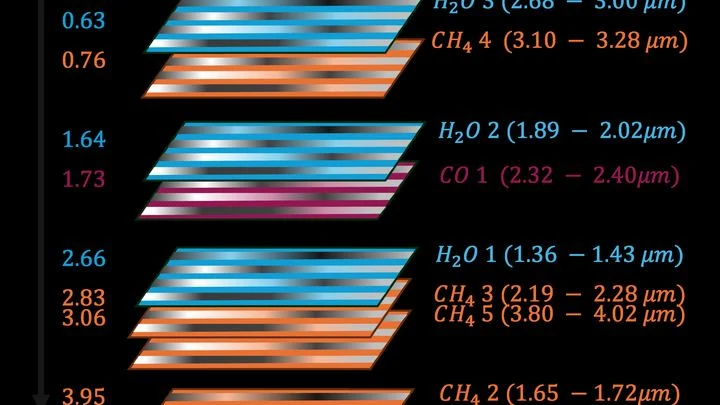
Smoldering Giant: Methane and Haze over a Dead Star

The James Webb Space Telescope has peered into a previously unseen world: the atmosphere of the giant planet WD 1856 b, orbiting a white dwarf. The transit spectrum from 0.5 to 5.0 μm revealed hydrocarbons, including methane with a significance of 17:1 to 30:1, thick aerosols, and thermal glow from
arXiv:2607.01316v1 · 2026-07-01

Black Hole Cardiogram: NICER Records X-ray Heartbeat

In 2025, the NICER X-ray telescope aboard the ISS monitored the outburst of black hole 4U 1630−47, a binary system where matter from a companion star falls onto the compact object. Analysis revealed quasi-periodic oscillations (QPOs)—rhythmic flux variations with frequencies from 0.24 to 3.43 Hz—and
arXiv:2607.02228v1 · 2026-07-02

Pendulum without heating: X-ray mystery of PSR J0901-4046

Observations by the Chandra space observatory set a record-low upper limit on X-ray luminosity for the periodic radio pulse source PSR J0901-4046. Its period—75.9 seconds—is too long for a classical pulsar: there isn't enough electric potential to pull particles out of the vacuum. It was thought tha
arXiv:2607.03848v1 · 2026-07-04

Triple Black Hole Waltz: How Chaos Spawns Mergers

Astrophysicists embedded the behavior of three massive black holes directly into hydrodynamic simulations of galaxies. It turned out that even a slight tilt of the third body's orbit turns billions of years of waiting into a rapid merger. The chaotic dance of three gravitational wells not only solve
arXiv:2607.04121v1 · 2026-07-05

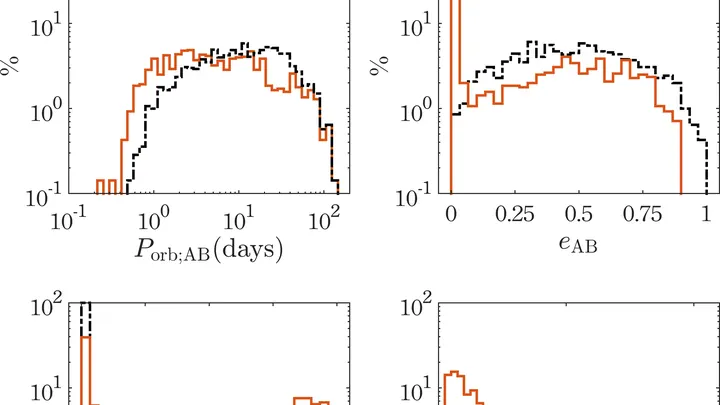
Cosmic Metronome: Binary Stars Search for Axion Dark Matter

Astrophysicists have proposed a method to search for ultralight axions — dark matter candidate particles — using high-precision polarimetric observations of close binary stars. In such systems, light reflected from the companion star's atmosphere creates a weak linear polarization strictly tied to t
arXiv:2607.04550v1 · 2026-07-05

The Unmixed Cocktail: Why Double Diffusion Is Powerless in the Interiors of Giant Planets

A new study has, for the first time, self-consistently incorporated the recipe of double diffusion into an evolutionary code of planets and traced the fate of Jupiter and Saturn from the moment of formation. It turns out that even a thousandfold enhancement of mixing does not lead to significant sme
arXiv:2607.04629v1 · 2026-07-06