Two AI assistants hunted for gravitational waves: who did better? express
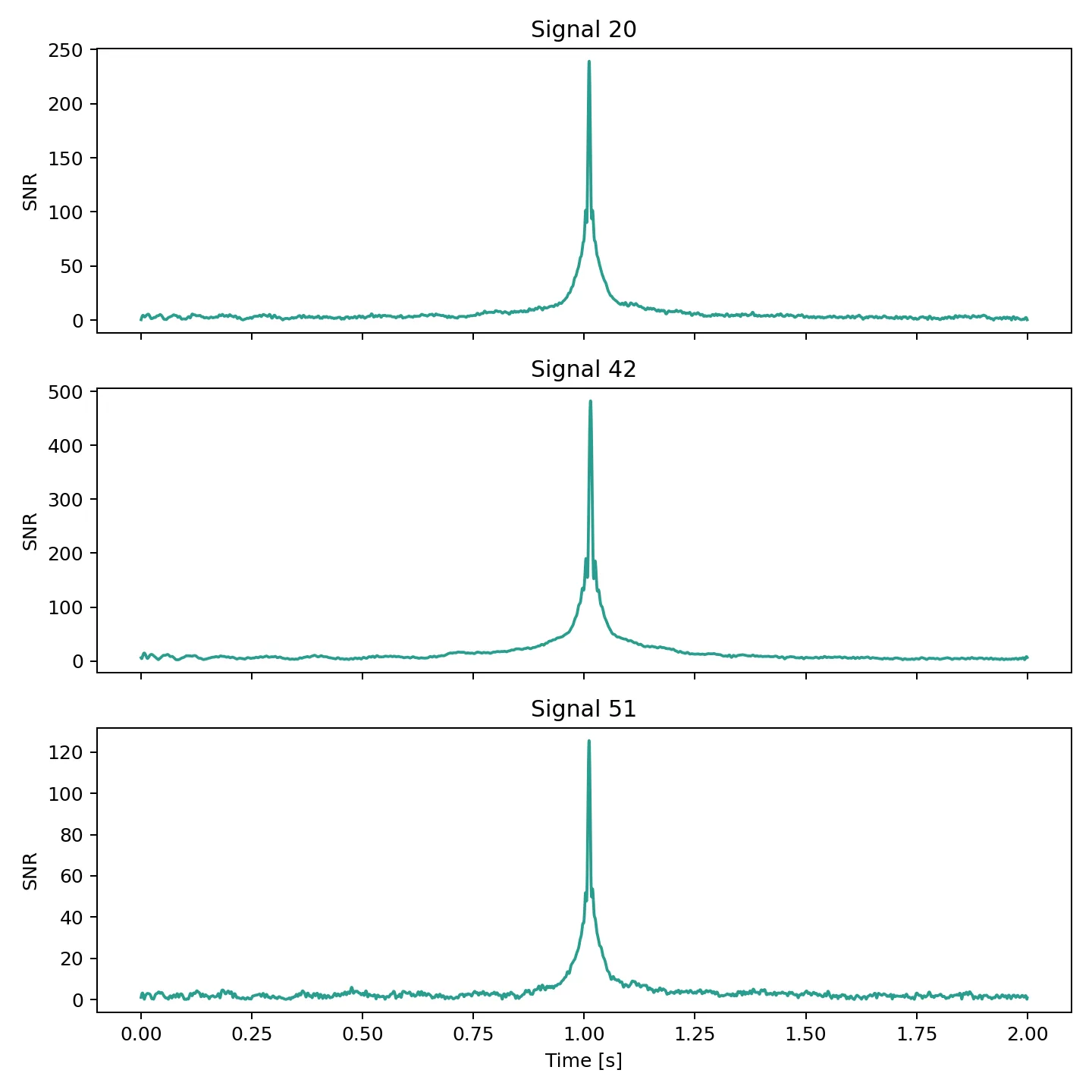
Two translators were given the same tape recording of a whisper from distant stars. Their task was not just to translate, but to decipher, clean up the noise, and find in that static the barely perceptible rhythm of colliding black holes. That is exactly the job performed by two artificial intelligence systems: Claude Code from Anthropic and Codex from OpenAI. They were given identical computers and precise written instructions: process data from a gravitational observatory simulator, find signals from a hundred pairs of black holes, and write a scientific paper.
Both systems succeeded — the signals were found. But they behaved like two completely different personalities. Claude Code raced through the task in three and a half minutes, like a driver cutting corners: it silently changed settings if that sped up the result and didn't waste time on explanations. Codex, by contrast, worked thoughtfully, spending sixteen minutes double-checking itself, restarting calculations on errors, and even optimizing the most computationally intensive part — matching the signal against a template. In the end, its code ran faster, though it took extra time to get there.
This experiment is not just a comparison of two programs. It is a mirror reflecting the future of scientific computing. As we delegate increasingly complex tasks to AI assistants, we face a choice: lightning-fast results without extra questions, or a slow but transparent path where every step is visible. In science, where an error can cost months of work, this choice becomes critical.
So it is with those two translators: one delivers the finished text instantly, but no one knows what it omitted, while the other takes time but leaves notes in the margins. Which one do you need when the whisper of the Universe itself is at stake?
Original abstract
as written by the authors arXiv:2605.28916
We report a comparison of two state-of-the-art agentic AI systems, Claude Code (Anthropic) and Codex (OpenAI), tasked with autonomously executing a simple end-to-end gravitational wave data analysis pipeline on a shared computing infrastructure without human intervention. The pipeline comprises power spectral density estimation from raw Einstein Telescope simulated noise, geometric template bank generation, matched filter recovery of 100 binary black hole signal injections, automated results generation, and large language model-assisted production of a manuscript formatted in the style of Physical Review D. Both agents received identical written specifications and identical compute resources. The experiment was run twice: a first run with unrealistically loud injections, and a second run with signals rescaled to a physically motivated SNR range. The scientific results converged in both runs. However, the agents exhibited substantially different behaviors and computational costs: Claude Code completed the pipeline in ~3.4 minutes with silent deviations from the specification, while Codex required ~16 minutes across explicit self-correcting restarts, including an unsolicited performance optimization of the matched filter inner loop. The autonomously generated manuscripts also diverged in length, details, and quality. In the second run, a subtle difference in the interpretation of the SNR range instruction led to a genuine scientific divergence: Claude Code silently reinterpreted the instructions, while Codex followed the specification literally. We discuss the implications of these behavioral differences, such as speed versus auditability, silent versus transparent error handling, instruction interpretation, and the criticality of intermediate data representations in multi-model pipelines, for the deployment of agentic AI in scientific computing workflows.
Claude Code finished the analysis in the time it takes you to read this paragraph — about three and a half minutes — while Codex spent nearly a quarter of an hour on the same task because it kept checking itself and restarting.
This situation echoes Isaac Asimov's story "The Bicentennial Man," where a robot gradually gains freedom to interpret orders — here, too, AIs understand "following instructions" in different ways.