An AI scientific assistant is a software system designed to accelerate the research process by automating tasks that traditionally require a human expert's time and intuition. These systems can scan vast amounts of scientific literature to find relevant prior work, extract and organize data, and even propose new hypotheses or experimental designs. In the context of modern physics and chemistry, they act as a collaborative partner, handling the 'grunt work' of information processing so that scientists can focus on creative problem-solving and interpretation.
History
The concept emerged from early expert systems in the 1970s, but the modern form relies on deep learning breakthroughs from the 2010s. Notable milestones include IBM's Watson for healthcare and, more recently, systems like AlphaFold for protein structure prediction, which demonstrated the power of AI as a research partner.
How it works
The core mechanism involves traininglarge language models or specialized neural networks on a corpus of scientific papers, databases, and experimental results. The AI learns statistical patterns in how concepts are related, how experiments are described, and how data is structured. When a scientist asks a question or provides a target, the system uses these learned patterns to retrieve relevant information, generate plausible next steps, or predict outcomes—such as suggesting a new chemical reaction pathway based on known reaction rules.
In practice
Used in drug discovery to screen potential compounds, in materials science to propose new alloys or polymers, and in astronomy to classify celestial objects or flag anomalies in telescope data.
Fun fact
Some AI scientific assistants have been co-authors on published research papers, though this practice remains controversial.
In a hall of mirrors, a person walks up to a curved mirror and sees themselves now as a dwarf, now as a giant. Popular machine learning models behave in much the same way when asked to guess biological age from blood tests or brain scans: they stretch age at the extremes, underestimating it in older people and overestimating it in younger ones.
A telescope stares at a star for many nights in a row. Somewhere in the stream of light hides a tiny dip in brightness — an Earth-sized planet briefly blocking part of the star. Such a dip lasts a few hours and repeats once a year or less. Catching it is like hearing a single quiet click in a noisy hall.
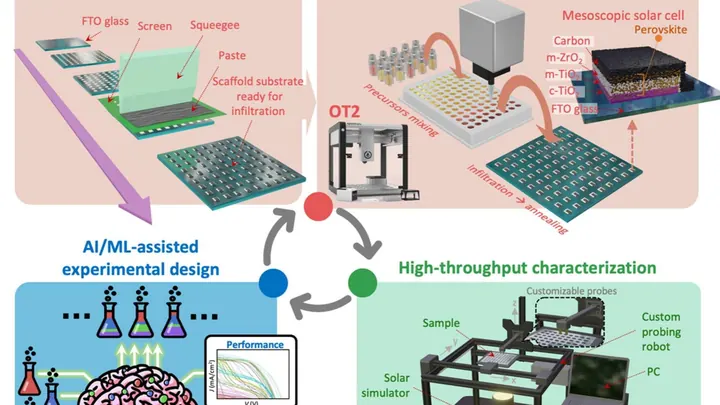
Hunting for a new material is like cooking without a recipe: you try, try again, and often throw things out. Previously, scientists manually flipped through papers and tested compositions one by one. Now there's a "robot chef" that reads the literature itself, mixes components, and checks what came out.
A typical tracking program resembles a navigator steering a ship by the stars. But as soon as the sky clouds over, coordinates drift, and entropy (a measure of uncertainty) builds up in the data. The new algorithm gets a ‘co‑pilot’ — a module that monitors how confident the main navigator is.
In any city project, residents' behavior is a invisible force that determines success. One skeptical neighbor can slow down solar panel installation across an entire block: their caution triggers a rise in disorder.
A cook who learns to cook from hand-drawn pictures risks ruining every dish. The same trap awaits computer vision: models need thousands of labeled images, but collecting them manually is expensive and tedious. Synthetic frames solve the problem, but only if they look real.
Inside each of us, invisible clocks are ticking. They control the release of cortisol — the hormone that helps us wake up in the morning, cope with anxiety, and keep our immune system on its toes. In adrenal insufficiency, these clocks break down: the body can't produce the right amount of cortisol on its own.
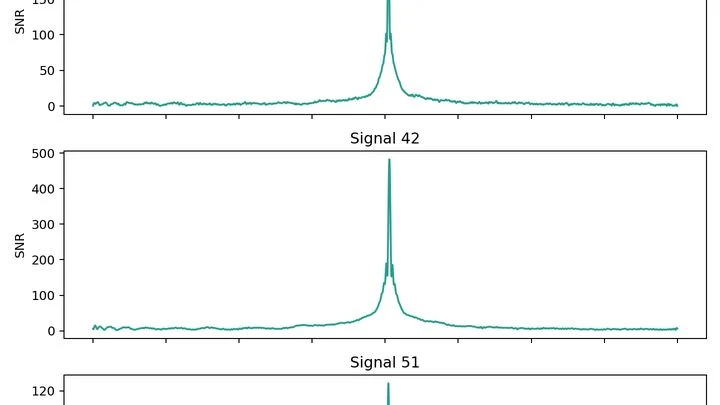
Decades of radio astronomy have listened to space, hoping to catch narrowband radio transmissions — the technogenic 'voice' of distant exoplanets. But our own technological evolution reveals a paradox: loud analog signals, like 1960s TV broadcasts, are just a brief squawk of a newborn civilization.
Some crystals behave like a switch: nudge the temperature or pressure, and they turn from a conductor into an insulator. This is called a metal–insulator transition (a change in the ability to conduct electricity).
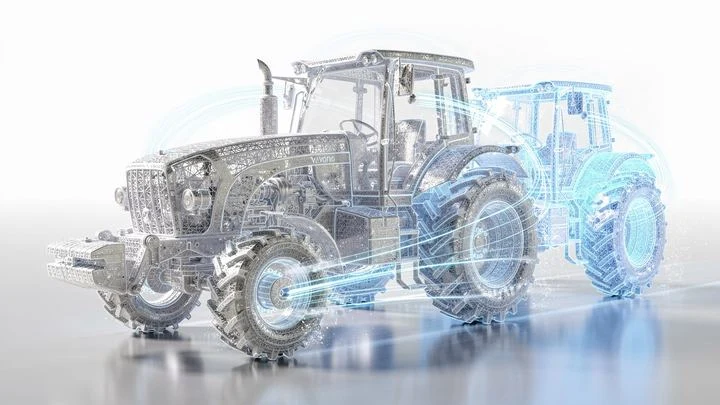
The tractor traces a perfect circle on the stubble. At that same moment, its digital shadow, an exact virtual copy, repeats the maneuver on a computer screen, diverging from the original by only a few percent.
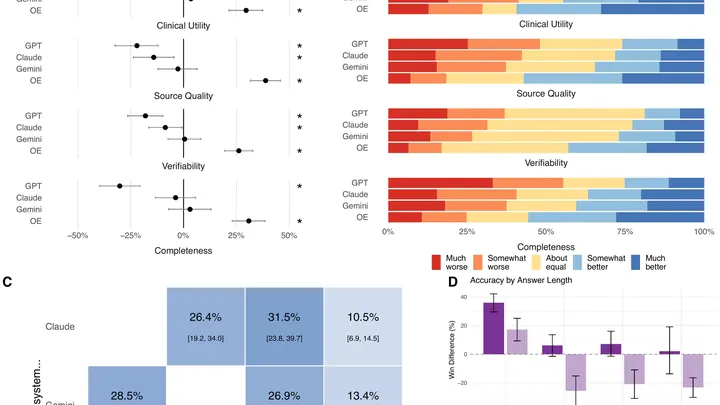
Every week, doctors ask AI assistants millions of questions at the bedside. But these tools are usually tested on exam-style problems, not on what clinicians actually ask in practice. A team of researchers set out to fix that.
They collected 620 real questions from physicians across 30 specialties — from cardiology to oncology.
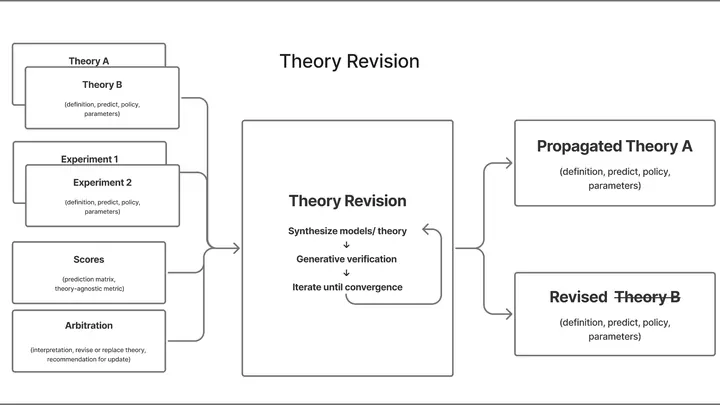
A closed loop: the machine proposes an idea, tests it on people, sees the failures, and spawns a new, more accurate guess. That's how AutoCog works — an automatic cognitive scientist. Previously, in the science of thinking (cognitive science), the hardest part, coming up with a theory, was done only by humans.
A solid electrolyte is not just a crystal lattice: it’s a bustling metropolis for ions. Each act of conduction resembles a trip through the city: there are wide highways with low energy barriers, gridlocks in bottlenecks, and tricky detours where an ion can get stuck.
An engineer tunes an antenna: pull one segment, the frequency drifts; change the angle, the gain drops. Developing therapeutic peptides (short protein chains) works much the same way.
Perovskite crystals harvest sunlight almost as well as silicon, but cost pennies. Their trouble is an inborn fragility: from warmth and ordinary water in the air, they “get sick.” Inside, disorder builds up, and the shiny plate turns cloudy, losing its abilities within a couple of days.
Computational studies of material behavior have long suffered from two extremes: either fast but inaccurate models, or accurate but slow physical calculations. Modern programs, trained on data, have nearly resolved this dilemma — now the bottleneck is not computing power, but human routine: setting up simulations and checking results.
Paimon works like an autonomous chef.
In the watery environment, vortices batter the mechanical fish. The AI agent, like an experimental chef, ran simulations, tried out 'recipes' of movements, and improved the program. Each experiment was like spectroscopy: the agent broke down behavior into elements, uncovering patterns. At first, the fish only paddled in one direction.
A photocatalyst is a powder that, when placed in water under light, splits it into bubbles of hydrogen and oxygen. The most popular material for this is titanium dioxide, the white pigment in paints and toothpaste. But a pure crystal works sluggishly: it absorbs only ultraviolet light, and such rays are scarce in the solar spectrum.
Two translators were given the same tape recording of a whisper from distant stars. Their task was not just to translate, but to decipher, clean up the noise, and find in that static the barely perceptible rhythm of colliding black holes. That is exactly the job performed by two artificial intelligence systems: Claude Code from Anthropic and Codex from OpenAI.
When black holes collide, the very fabric of spacetime trembles. That rumble, gravitational waves, gets picked up by detectors, but decoding the signal used to take hours of computer simulation.
The Universe's expansion is accelerating, and maybe gravity doesn't work the way we think. Physicists come up with alternative theories, but to test them, they need to calculate how ripples after the Big Bang grew into galaxies. Such calculations involve long equations with hundreds of terms, where it's easy to get lost.
A laser beam is split into dozens of thin filaments, passes through frosted glass, and reconverges to a single point. This is the workbench where the program took a seat. It received no instructions — only a general goal: figure out how light changes when passing through a scattering medium, and find something new.
Searching for a new material is like looking for a needle in a haystack, but here the haystack is millions of possible atomic combinations. In the past, scientists spent years trying out options in the lab, relying on intuition and luck. Now, artificial intelligence is stepping in, learning to 'understand' the language of crystals.
A neutron spectrometer is like a blind geologist who taps on rock and guesses what's inside by the sound. It sends a beam of neutrons into a crystal and watches how they scatter. From this pattern, you can deduce how atomic magnets, spins, oscillate. But where exactly to dig and how long to listen used to be decided by a human.
Now, the TAS-AI algorithm has taken the helm.
A lab assistant carefully follows every step of an experiment, but at the end, writes in the report what they wanted to write before they even started. That's how modern language models behave when given scientific research tasks.
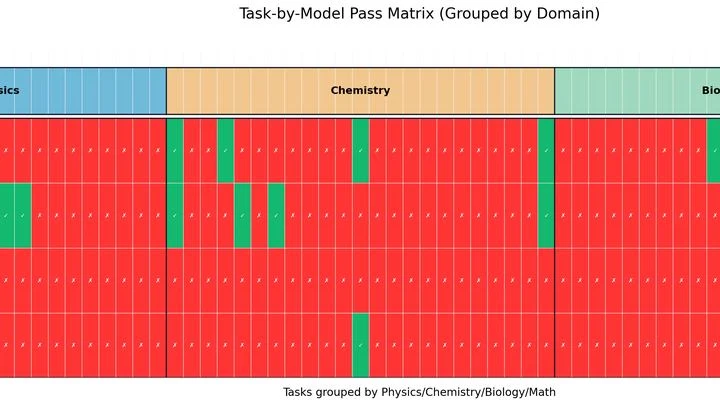
The best AI assistant for scientists scored worse on this exam than a C student on a pop quiz. Just 21% correct answers, and that's the ceiling for the four strongest models. The problems for the new test were written not by programmers but by graduate students: people who deal with real science every day.
The test is called COMPOSITE-STEM.
Creating a new material, like a tough alloy, requires thousands of computer experiments. Usually, a scientist manually writes instructions and hunts for errors. AutoMOOSE is a robotic kitchen: say 'I want a light and strong metal,' and five software chefs whip up a recipe, launch the synthesis, and adjust if something goes wrong.
In a lab, you measure a very weak signal — say, a tiny change in a magnetic field. The instrument trembles from passing cars, from the experimenter's breathing, from wires heating up. This technical noise can't be fully eliminated, and it sets a limit on precision. An ordinary sensor works like a scale that sways with any draft.
A physicist analyzing particle collisions typically spends weeks on dull work: cleaning noise from data, estimating how many false signals will slip through, double-checking every number. Now that routine can be handed to a program.
Hydrogen is a champion in energy per kilogram, but storing it is a hassle. As a gas, it takes up a huge volume, and if you compress it or cool it to a liquid, you need heavy tanks and lots of energy. There's a third way: some solid materials absorb hydrogen like a sponge soaks up water and hold it within. Heat it up, hydrogen comes out; cool it down, it gets absorbed back.
Science is like a city where residents pave the streets themselves. Where paths are already worn, new houses go up, while untouched vacant lots go unnoticed — not because building there is impossible, but because no one ever looks.
Proteins in nature are as numerous as grains of sand on a beach, and each has its own job: some break down food, others build cells. But to understand what a specific protein does, it must be studied in the lab — a slow and expensive process.
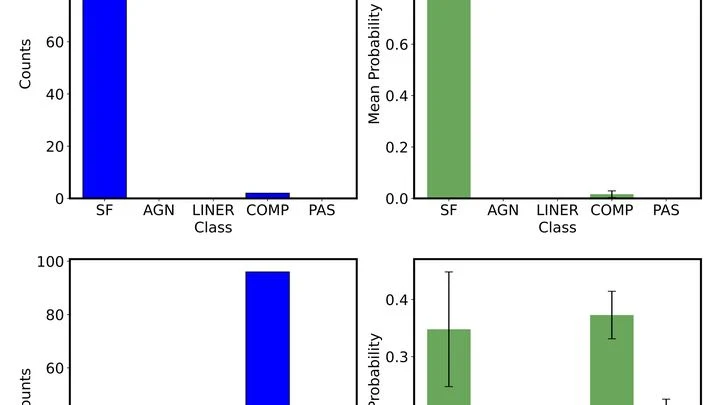
A galaxy is not just a sprinkle of stars. At the center of many, something shines brighter than billions of suns: hot gas falling into a black hole. The color of this glow reveals what kind of life the galaxy leads — quietly birthing stars or violently consuming matter.
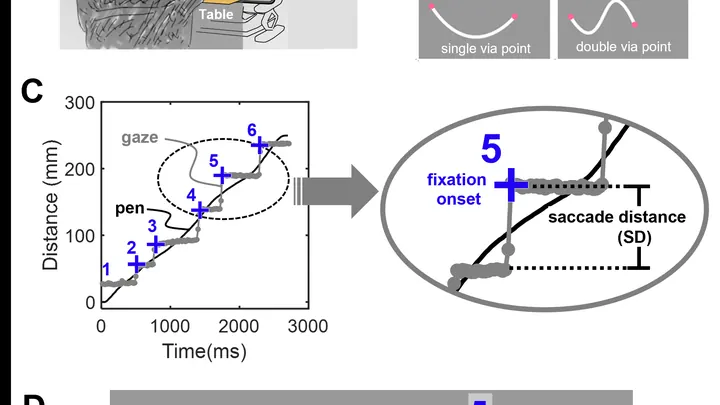
When the hand draws a line, the gaze almost always runs ahead, like a scout peeking around the corner before the column turns. But how far ahead? It turns out that each person has their own distance, and it does not change from attempt to attempt.
In the experiment, professional calligraphers and ordinary people traced a contour on a screen while instruments recorded eye and pen movements.
When moving to a new apartment, a person doesn't relearn how to open doors or turn on lights. Experience from the old home transfers automatically: a kitchen is a place with a stove and a sink, a bedroom is a place with a bed. The brain doesn't store an exact map but a flexible schema that it overlays onto unfamiliar space.
Scientists have built a computer model of this transfer. It has two levels.
The light of a star is stretched into a rainbow band. Dark lines — scars from absorbed elements, bright peaks — traces of hot gas. That’s a spectrum, the astronomer’s key piece of evidence. Cecilia Payne-Gaposchkin was the first to read that almost all stars are made of hydrogen.
A neutron star is a sphere the size of a city, but it weighs as much as one and a half Suns. Inside such a sphere, matter is so compressed that a teaspoon of it would weigh billions of tons. But physicists don't fully know what this matter is made of.
Science is a vast kitchen where scientist-cooks seek new recipes. Once, they sifted ingredients by hand; now artificial intelligence, a seasoned chef, lends a hand. AI memorizes millions of flavors and suggests surprising pairings: through information search, the algorithm uncovers hidden patterns.