Popular

Rainer Weiss

1932– · gravitational physics, experimental physics
American experimental physicist, inventor of the laser interferometer for detecting gravitational waves. His ideas and persistence led to the creation of the LIGO project, which in 2015 first detected gravitational waves from merging black holes, confirming Einstein's prediction and opening a new era of observational astrophysics.

Biography

Born in Berlin, emigrated to the USA as a child due to Nazism. Studied at MIT, where he worked his entire career, rising from technician to professor. In the 1970s, he developed the concept of the laser interferometer, and spent decades securing funding for LIGO. Winner of the 2017 Nobel Prize (jointly with Barish and Thorne).

Key discoveries

💡 In his youth, he started as a technician at MIT without a science degree, but eventually became a leading physicist. His first proposals for LIGO were rejected, and it took 40 years of persistent work for the project to succeed.
Quote: "What has always driven me is curiosity, the desire to find out what the universe can show us."
Links in the knowledge graph 1
Related tags
gravitational wavesblack hole
Related laws
Einstein field equations
Related scientists
Henri PoincaréFritz ZwickyJacob BekensteinSubrahmanyan ChandrasekharStephen HawkingKarl SchwarzschildJoseph WeberKip Thorne

Related articles

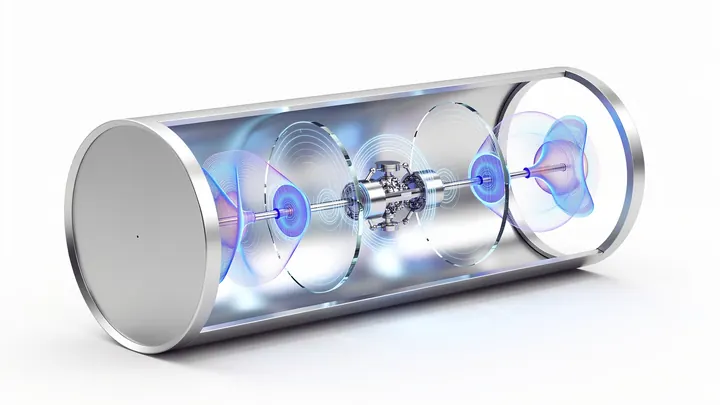
Quantum Ghosts in the Hall of Mirrors

Usually, nonclassical states of motion require clever tricks. But new research reveals that the intrinsic nonlinearity of an optical trap itself sculpts quantum 'ghosts' from mechanical vibrations — states with a negative Wigner function. No probabilistic schemes needed, even in unresolved sidebands
arXiv:2505.01942v2 · 2025-05-03

Magnetic Brakes for Cosmic Spinning Tops

Scientists simulated the birth of black holes from massive stars and saw that magnetic fields act as a cosmic brake. A strong field slows the hole's spin, a weak one spins it up to near-light speed. This explained why detectors occasionally see pairs of heavyweight black holes, like the record-break
arXiv:2508.15887 · 2025-08-21

Gravitational Ringing Unveils Neutron Star Mysteries

After neutron stars merge, a ringing clump of ultra-dense matter remains. Analyzing how fast this gravitational chiming fades relative to the spin-down rate allows, for the first time, measurement of matter’s elasticity in the interior, where densities are 5–6 times nuclear. Paradoxically, it can be
arXiv:2509.18665 · 2025-09-23

Black Hole Tugboat: Birth of a Stellar Core

It was thought black holes kick stars out of galactic centers, yet a third of giant galaxies host dense clusters snug against the hole. The clue? The hole's post-merger motion: like a cosmic tugboat, it can tow a whole swarm along.
arXiv:2509.25011 · 2025-09-29

Black Holes: Absolute Rigidity

The most precise measurements of gravitational waves from a black hole collision have set a record limit on their deformability. It turns out that black holes keep their shape even under unimaginable tidal loads — just as Einstein predicted. This closes a loophole for 'soft' quantum models.
arXiv:2512.01918 · 2025-12-01

Quantum Bubbles: A New Source of Gravitational Waves

In the hot early Universe, much like bubbles in boiling water, regions of a new state of space emerged. Some of them possessed an enormous number of microscopic states, rendering them quantum-entangled. The merger of such bubbles generates gravitational waves that carry information about their quant
arXiv:2512.13947 · 2025-12-15

Gravitational Echo Will Reveal the Number of Primordial Black Holes

Future gravitational wave detectors will see millions of black hole mergers. Sometimes the signal won’t arrive just once—massive invisible objects, like mountains, will create echoes. By measuring the delays between repeats, scientists will determine what fraction of dark matter is made up of primor
arXiv:2601.01034v2 · 2026-01-03

Wobbly Magnetars: The Secret Behind Bizarre Radio Flashes

Brief powerful radio signals from space behave oddly: some repeat, others are one-offs. A new explanation: their source is misshapen magnetars. The star spins like a lopsided top, its radio beam flickering toward us, then vanishing for years. This same crookedness blocks the detection of gravitation
arXiv:2601.04953v3 · 2026-01-08

A black hole rings nonlinearly: new gravitational overtones heard

In the gravitational waves from the black hole merger GW250114, nonlinear overtones—vibrations born from the interaction of the fundamental tones—have been directly detected for the first time. This discovery proves the complex nature of strong gravity and provides a new way to test relativity.
arXiv:2601.05734v1 · 2026-01-09

The Quiet Phantom Before a Black Hole Rings

Scientists have discovered that after a collision, black holes don't immediately start to 'ring'. A hidden pause occurs — a phantom trap that holds back gravitational waves. The silence ends with a sudden burst. This discovery changes our understanding of how black holes settle down and provides new
arXiv:2602.12101 · 2026-02-12

Magnons in a sphere squeezed to quantum limit

Quantum noise is like a balloon: you can squeeze it by redistributing uncertainty. Instead of light, scientists used magnons—waves in a magnetic material. A millimeter-sized sphere of a special crystal was coupled with a qubit and cooled until the waves inside almost disappeared. A special measureme
arXiv:2602.19671 · 2026-02-23

New Sensors Open Low Frequencies for Gravitational Waves

The low frequencies of gravitational waves were drowning in the constant shaking of the planet. Now laser stabilizers, 100 times more sensitive than the old ones, dampen this noise like active noise-canceling headphones. At 10 oscillations per second, sensitivity skyrockets tenfold, making intermedi
arXiv:2602.23531 · 2026-02-26

Black Holes Sing Gravitational Songs

Scientists have discovered how rapidly spinning black holes produce the lightest particles—axions. These particles accumulate and vibrate, emitting gravitational waves at a single constant frequency. The hum from millions of such holes in our Galaxy can already be 'heard' by existing detectors, open
arXiv:2603.15734 · 2026-03-16

Tuning Into the Hum of Spinning Stars

If neutron stars had tiny bumps, they would constantly hum with gravitational waves. Using LIGO, scientists searched for that hum from 34 pulsars, the largest search of its kind. No signals were found, which pushes the theoretical limits even lower. The Crab pulsar, for instance, turns less than 0.0
arXiv:2603.25938 · 2026-03-26

Quieter Mirrors — Louder Universe

In gravitational-wave detectors mirrors must reflect light almost perfectly, but heat makes atoms tremble, creating noise. A new coating — a thin pattern plus a few layers — makes the mirror thinner and suppresses the shiver tenfold, opening the way to observing quieter cosmic events.
arXiv:2605.00714 · 2026-05-01

The Quiet Overtones of a Black Hole Are Now Heard Louder

Using a method similar to tuning an equalizer, scientists isolated a quiet overtone in event GW250114. Its confidence level rose from 82.5% to 99.9%, fully confirming Einstein's theory.
arXiv:2605.03576 · 2026-05-05

AI Learns to Listen to Black Holes: A Simple Recipe for Gravitational Waves

Collisions between black holes shake spacetime itself, sending out gravitational waves. Decoding these signals used to require hours of computer simulations—until scientists built an AI agent. Like a chef reconstructing a recipe from taste, it finds a simple formula that nearly matches exact calcula
arXiv:2605.11280 · 2026-05-11

Black Holes: The Perfect Mask of the Abyss

All the headline discoveries — from mergers detected by LIGO to the image of M87*’s shadow — are interpreted as direct proof of black holes’ existence. But a careful analysis shows that the same signatures arise from any ultracompact horizonless object, if its radius differs from the gravitational r
arXiv:2605.13901v1 · 2026-05-12

Moon Bell: How Gravitational Waves Unveil Lunar Secrets

Scientists have found a way to peer into the Moon's interior by using it as a detector of gravitational waves. Ripples in spacetime passing through the satellite cause it to tremble almost imperceptibly. By analyzing these tremors, the internal structure can be reconstructed ten times more precisely
arXiv:2605.13960 · 2026-05-13

Gravitational Waves: A New Listener at the South Pole

A new type of gravitational antenna will be built in Antarctica. It will capture low-frequency space vibrations that are inaccessible to current detectors, allowing us to hear the cosmic symphony in previously unheard notes.
arXiv:2605.14279v1 · 2026-05-14

Gravitational Echo: How Black Holes Weave a Quantum Web of Gravitons

Quantum gravity eludes experiments due to the Planck scale. But the 2026 Gravity Research Foundation award-winning work points to a natural super-amplifier: superradiant axion clouds around rotating black holes. This cosmic mechanism generates squeezed states with up to 10⁷ correlated gravitons, cre
arXiv:2605.14797v1 · 2026-05-14

Invisible Drums: How Gravitational Waves Give Birth to Black Holes

A mechanism is proposed in which gravitational waves from bubble collisions during phase transitions and domain wall annihilation induce second-order scalar inhomogeneities. These inhomogeneities can collapse into primordial black holes of asteroid masses, fully accounting for dark matter. Model-ind
arXiv:2605.15197v1 · 2026-05-14

Ghost Black Holes: The Hunt That Comes Up Empty

An analysis of black hole mergers over the past year of observations reveals: almost all signals come from ordinary black holes of stellar origin. Primordial black holes, if they exist at all, make up only a tiny fraction of dark matter.
arXiv:2605.15749 · 2026-05-15

Celestial Waves: Found in Just 16 Seconds

Collisions of neutron stars or black holes create ripples in spacetime—gravitational waves. Scientists need to know about such an event instantly to see its light. This is the story of GstLAL, a program that finds the signal in just 16 seconds and almost never shuts down. Thanks to it, out of 250 al
arXiv:2605.19153 · 2026-05-18

Laser Cooling: From Noise to Quantum Silence

Quantum effects in large objects usually demand cryogenic temperatures. But physicists silenced a membrane at room temperature by combining two laser techniques. The jitter was suppressed 33,000-fold, paving the way for ultra-precise gravitational-wave detectors that require perfect stillness.
arXiv:2605.20902 · 2026-05-20

When Black Holes Just Wave Hello

Most encounters of black holes are a long, tightening spiral dance ending in mergers. GW190521 was different: two holes shot past each other, swapping a brief “wave,” like strangers in a crowd. Gravitational wave detectors caught this rare signal.
arXiv:2605.21640 · 2026-05-20

The Black Hole's Record: Flare Rhythm Reveals Its Spin

Astronomers cracked the flare pattern of a distant galaxy. A tiny orbiting object repeatedly punches through a gas cloud — the remains of a torn-apart star. The cloud is bent, so some bursts shine brighter, others dimmer. This on-off rhythm unveils the central black hole's spin. In a few decades, th
arXiv:2605.24905 · 2026-05-24

Why Black Holes Dance Differently

Gravitational wave detectors have revealed three distinct black hole merger styles: a slow waltz, a chaotic disco, and a mixed dance. The difference points to their origin — either from binary stars or star clusters — and helps reconstruct the history of galaxies.
arXiv:2605.25980 · 2026-05-25

Record Haul: 161 Black Hole Mergers in Gravitational Waves

The updated GWTC-5.0 catalog includes 161 recent gravitational-wave bursts from black hole collisions. Thanks to improved detector sensitivity, some signals are now record-breakingly clear, allowing for more precise measurements of black hole masses and stricter tests of relativity. The total number
arXiv:2605.27225 · 2026-05-26

The Snapping Cable of Reality: How Finite String Thickness Accelerates Quantum Decay and Reshapes the Gravitational Hum

In the early Universe, the Big Bang could have spawned cosmic strings—one-dimensional defects whose enormous energy can still shake spacetime. Their decay through quantum tunneling dictates the gravitational signal that detectors will pick up. New lattice modeling has shown: the string's finite thic
arXiv:2606.03008v1 · 2026-06-02

Roots from the Abyss: The Secret Growth of Supermassive Black Holes

Astronomers are increasingly finding giant black holes in the early universe, with masses reaching a billion suns. Ordinary gas accretion can't 'fatten' them up fast enough. A new hypothesis introduces an extra dimension: our brane-universe and an invisible donor brane intersect at a shared horizon.
arXiv:2606.03414v1 · 2026-06-02

Cosmic Detective: Two Independent Clues Against the Main Cosmological Debate

The Hubble constant — the expansion rate of the universe — has become a bone of contention: data from the cosmic microwave background and the distance ladder diverge by 6 sigma. Astrophysicists have proposed a new arbitration by cross-breeding 142 gravitational-wave events from the GWTC-4 catalog wi
arXiv:2606.03634v1 · 2026-06-02

Levitating Graphite Web Captures the Moon's Embrace

In Southampton, the thinnest graphite flake has been turned into an ultrasoft gravitational antenna. Levitating above magnets, it shifts by nanometers under tidal forces, and a laser interferometer converts this into a precise signal. The instrument distinguishes lunar and solar contributions, achie
arXiv:2606.14738v1 · 2026-06-02

Dark mountains of neutron stars: gravitational waves probe dark matter

Researchers combined a two-fluid model of neutron stars with fermionic dark matter and results from the search for continuous gravitational waves by the LIGO detectors. An anisotropic distribution of dark matter can create 'dark mountains' — quadrupole deformations that amplify emission. Comparison
arXiv:2606.05082v1 · 2026-06-03

Plateau and Dip: The Music of Cosmic Strings

Two unrelated puzzles of the Standard Model — the flavor hierarchy and the strong CP problem — find a common solution in a model with flavor gauge symmetry and an axion. Born in the early Universe, two types of cosmic strings after the QCD phase transition become efficient sources of gravitational w
arXiv:2606.05320v1 · 2026-06-03

Gravitational Phantoms: Domain Walls Instead of Black Holes

The recent short gravitational-wave transients GW190521 and GW231123 have caused puzzlement: their parameters — extreme masses and spins — challenge the standard black hole merger scenarios. Scientists tested an exotic hypothesis: perhaps these bursts are not generated by cosmic catastrophes, but by
arXiv:2606.06478v1 · 2026-06-04

The Universe's Foundry: Kilonova Dust and the Birth of Gold

Astrophysicists have discovered that dust grains of refractory elements—tungsten and osmium—form in the ejecta of a kilonova. Their near-blackbody infrared emission perfectly matches JWST data for kilonova AT2023vfi. Simulations of cluster growth and radiative transfer confirmed the rapid formation
arXiv:2607.00433v1 · 2026-07-01

15 Solar Masses: The Spin Frontier of Black Holes

Analysis of 259 gravitational-wave events revealed a sharp change in the effective spin χeff of binary black holes at around 15 M⊙. Below this threshold, spins tend to be positive and cluster in a narrow peak, while above it, the distribution broadens and becomes symmetric. It’s as if nature drew a
arXiv:2607.00565v1 · 2026-07-01

The Smoking Gun of Hierarchy: Black Holes Betray Their Ancestors

Using a flexible mixed population model, scientists discovered a striking coincidence: the mass distribution of high-spin black holes exactly matches the distribution of remnant masses from the low-spin subpopulation. This ‘smoking gun’ proves that rapidly spinning black holes arose from hierarchica
arXiv:2607.01121v1 · 2026-07-01

Cosmic Radio: How a Neural Network Catches the Whisper of Neutron Stars

The Aframe algorithm, previously honed on black hole mergers, now teases out signals from binary neutron star mergers from the noise of gravitational wave detectors in fractions of a second. Thanks to a trick from the radio engineer's toolbox—heterodyning—minute-long 'chirps' are compressed to just
arXiv:2607.01372v1 · 2026-07-01

Cosmic Symphony: How the Bass and Whistle of Primordial Black Holes Sound in Unison

The formation of primordial black holes requires extreme amplification of primordial curvature perturbations, which generates two types of gravitational waves: a low-frequency background (SIGW) from the perturbations themselves and a high-frequency signal from the mergers of the resulting binary sys
arXiv:2607.01818v1 · 2026-07-02

Gravitational Atoms: When Boson Stars Break the Laws of Energy

Physicists investigated boson stars in teleparallel gravity, where a scalar field is non-minimally coupled to spacetime torsion. It turned out that excited states of these objects can have negative energy density, violating all four classical energy conditions. The compactness of these stars exceeds
arXiv:2607.02017v1 · 2026-07-02

Dark Champagne: What Pulsars Revealed About the Phase Transition

Recently, pulsar timing array collaborations detected a stochastic background of nanohertz gravitational waves. Scientists investigated whether a first-order phase transition in the simplest dark sector — an Abelian Higgs model — could have produced it. Precision thermodynamic analysis using dimensi
arXiv:2607.02505v1 · 2026-07-02

Dark Core or Pearlescent Layer: Metamorphoses of Neutron Stars

Scientists used an agnostic approach to study how dark matter affects neutron star structure. Light dark matter forms extended halos that boost tidal deformability, while heavy dark matter creates a dense core, making the star more compact. Constraints from NICER and GW170817 show that the fraction
arXiv:2607.03840v1 · 2026-07-04