Trap Defects: Why a Solar Material Won't Deliver Current express
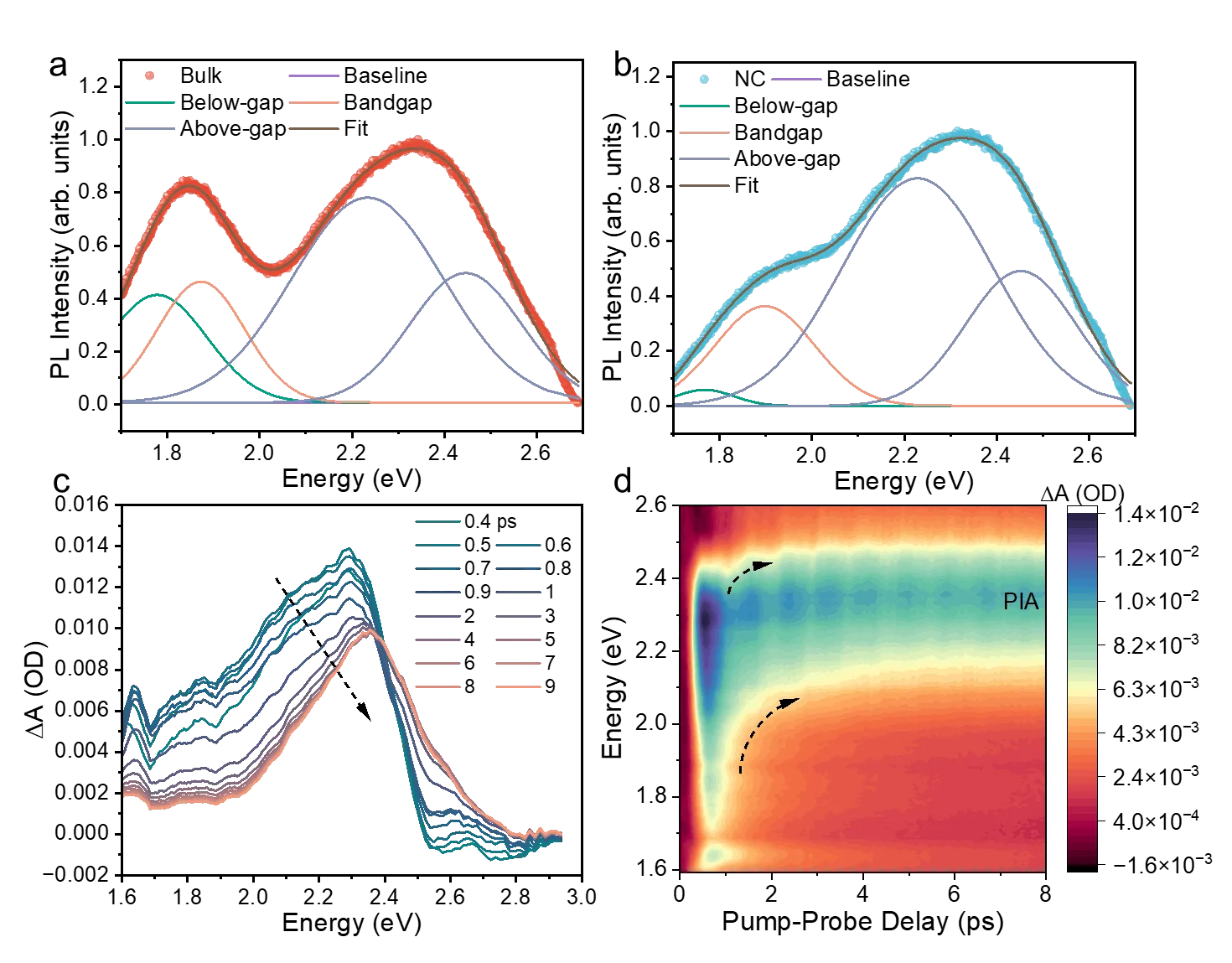
Sunlight hits a crystal, and inside, a pair is born — a swift electron and a hole. Ideally, they immediately race off to the contacts and produce current. But in the material the authors studied, things go differently. The moment a charge stumbles upon a void, a missing atom in the lattice, a cloud of vibrations tightens around it. The charge sticks to that spot like a shoe to hot asphalt and goes no further.
It's not the material itself — a pristine crystal lets charges pass freely. Traps appear when some atoms are lost during synthesis or processing. Then, near each hole in the lattice, local heating arises — scientists call it a defect-bound hot polaron. The charge spends its energy jiggling the atoms around the void and quickly loses its oomph, never reaching the crystal's edge. The result is that current peters out deep inside the material, and the solar cell runs at half strength.
Now that we know the enemy by sight, we can learn to neutralize these voids — for instance, by growing crystals more carefully or filling the holes with suitable additives. Then this safe, cheap material could finally catch up with lead-based counterparts in efficiency, making solar panels more affordable.
A single defect per million atoms can ruin a crystal's conductivity as badly as a crack in a windshield ruins visibility.
In Stanisław Lem's novel Solaris, the planet's ocean captures and processes energy — much like defects in a crystal capture and dissipate solar charges.