Synthesis is the process of creating a material or compound through chemical or physical reactions, combining simpler substances into a more complex product. In physics and materials science, it refers to the deliberate fabrication of new materials with tailored properties, such as semiconductors, superconductors, or nanomaterials. It is the foundational step for almost every experimental study and technological device, from the silicon wafers in electronics to the crystals used in lasers.
How it works
Synthesis methods vary widely: chemical vapor deposition grows thin films from gaseous precursors, sol-gel processes build materials from liquid solutions, and high-pressure or high-temperature reactions can create phases not stable under ordinary conditions. The key is controlling the reaction conditions—temperature, pressure, concentration, and time—to achieve the desired composition and structure. In physics, synthesis often involves growing single crystals or depositing thin layers with atomic precision, which requires ultra-clean environments and careful monitoring.
In practice
Synthesis is used to produce everything from photovoltaic cells and battery electrodes to quantum dots and optical fibers, enabling advances in energy, computing, and communication.
Hunting for a new material is like cooking without a recipe: you try, try again, and often throw things out. Previously, scientists manually flipped through papers and tested compositions one by one. Now there's a "robot chef" that reads the literature itself, mixes components, and checks what came out.
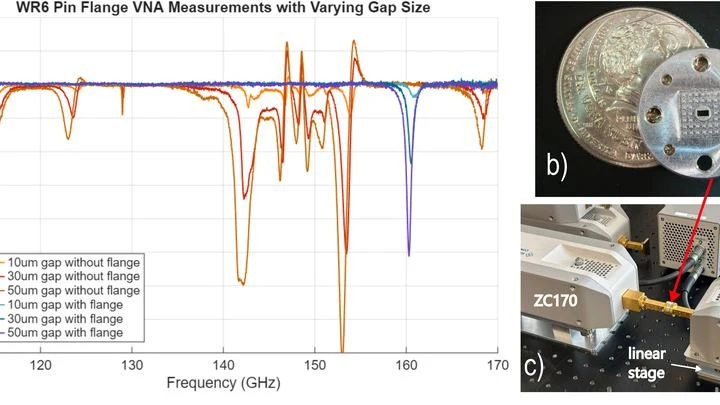
The orchestra plays, but the conductor hears only a general hum. Each instrument plays its own part, but you can't tell where the flute is and where the double bass is. You need a spectrum analyzer — a device that breaks down sound by frequency.
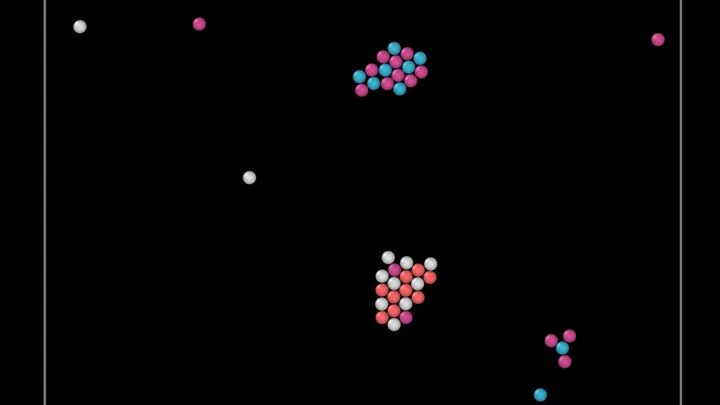
A drop of water on glass trembles and shimmers: it seems to have a life of its own. Similar behavior can now be observed in the world of colloids: tiny particles suspended in a liquid. Researchers simulated particles that emit chemical signals. These signals, like scents in the air, spread around and cause neighbors to either draw closer or move apart.
Imagine an audition for a symphony orchestra, where out of hundreds of hopefuls, only those whose instruments sound pure and withstand the furious crescendo remain. In the world of materials, computers have learned to generate 'atomic scores'—thousands of virtual crystals that promise to become the foundation for quantum chips or superconductors.
A chef pours hot sugar syrup onto a cold table, and it sets into crystals. That's roughly how engineers pictured metal solidification: the liquid instantly becomes a scatter of crystalline grains. But close-up imaging revealed an extra stage wedged between liquid and solid.
Silicon is like a universal building block: it goes into the chips in your phone, solar panels, and lasers. But if you squeeze it with immense force, the atoms rearrange into new patterns: these forms are called allotropes. One of them, Si-XIII, was first spotted more than twenty years ago, but its exact pattern remained a mystery.
A chef tastes the soup after every pinch of salt and instantly decides what to add next. That's roughly how the new setup for growing thin crystalline films works — except instead of taste, it uses an image from an electron microscope, and instead of a chef, a computer program.
Porous zeolite minerals work like tiny sponges with holes of a strictly defined size. Through such holes, molecules of one kind pass while others get stuck: this is the basis for water purification, gas separation, and catalysis in petrochemistry.
A crystal one atom thick is like a sheet of paper you can write on with electricity. Such a material promises to become the foundation for tiny, fast microchips. But before putting it into production, you need to know exactly what it's made of. And that's where the usual formula falls apart.