How a Cell Copies DNA Without Losing Its Way express
Two road crews are paving a street from opposite ends. They move toward each other, and how well they coordinate determines when the street is finished. That's roughly how a cell copies its DNA before dividing — except instead of asphalt, there's a long molecular thread of instructions, and instead of workers, there are tiny protein complexes that start at many points at once.
But along the way, there might be heat, a chemical barrier, or damage. The workers slow down, sometimes even stop. The same happens in the cell. The study's authors built a computer model of such an assembly line for baker's yeast — an organism often used as a simple model of a living cell. In the simulation, each 'letter' of DNA was tracked individually, and the behavior of the copiers was governed by probabilistic rules: when to start, how fast to move, and how much 'fuel'—cellular resources: they have available.
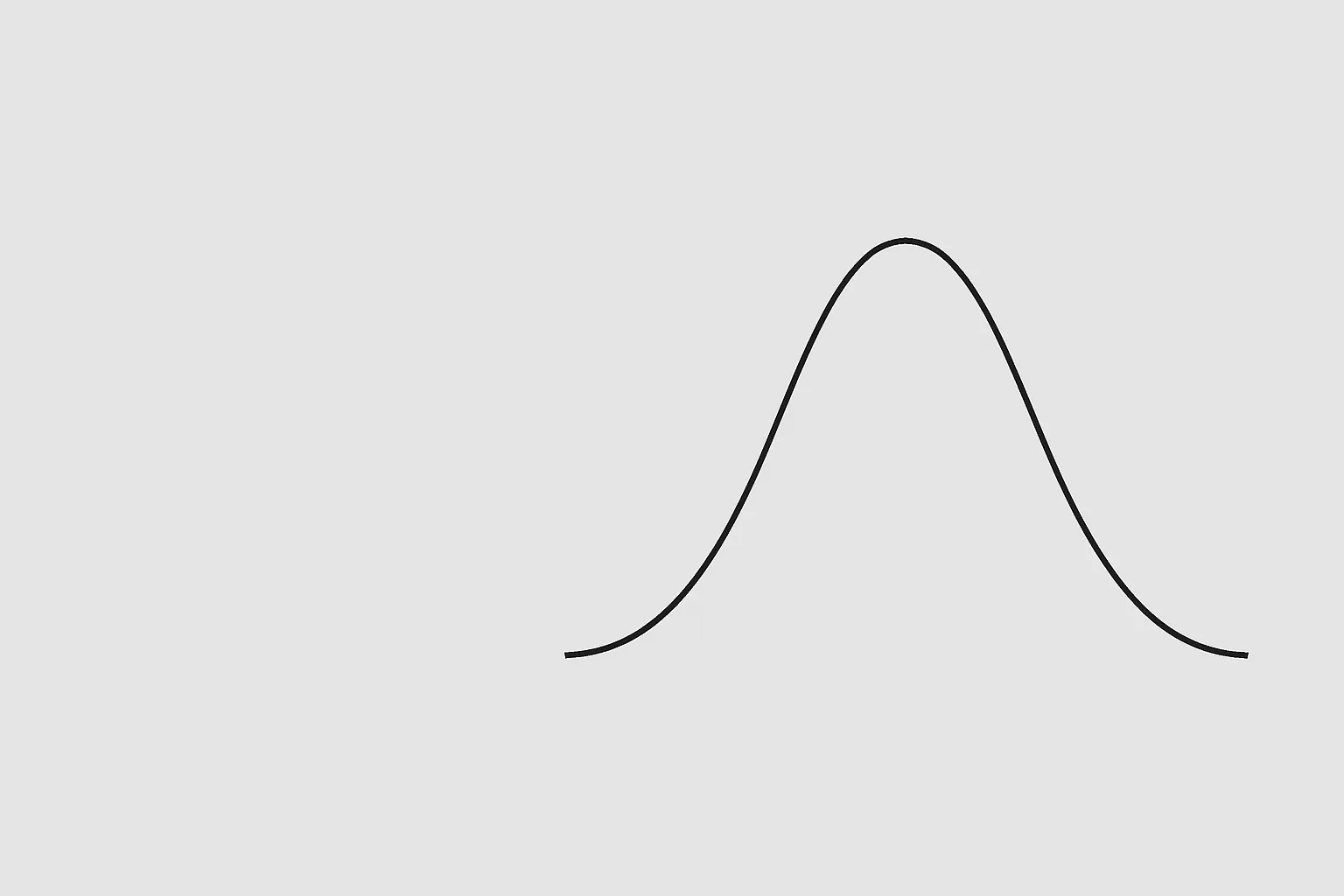
The model was tested against data from normal conditions, then 'stressed': they raised the temperature, added the chemical hydroxyurea, which interferes with copying, or simulated DNA damage. It turned out that just two key parameters, resource availability and the spread of copier speeds, could reproduce the full range of cellular responses to stress. When copier speeds vary slightly, the overall process time follows a special statistical law — the Erlang distribution. That's what produces those rare but very long delays. The cell seems to keep reserve capacity for such occasions, so it can still finish the job.
So road crews might be delayed by heat or lack of materials, but the street still gets paved. The cell copes with DNA copying by the same principle, and now we understand better how.
Original abstract
as written by the authors arXiv:2606.08138
Eukaryotic DNA replication must remain robust under thermal, chemical, and genotoxic stress despite large fluctuations in replication dynamics. Here, we develop a lattice-based stochastic Monte Carlo framework for whole-genome replication in Saccharomyces cerevisiae at single base-pair resolution, incorporating probabilistic origin firing, replication fork-speed distributions, and a time-dependent limiting factor that governs the availability of cellular replication resources. The model is benchmarked quantitatively against experimental replication profiles before being applied to stress conditions, and reproduces diverse replication stress responses using only two effective parameters. Importantly, the analysis reveals that replication fork-speed heterogeneity underlies the emergence of Erlang-distributed S-phase durations and rare, anomalously prolonged replication events observed experimentally in Escherichia coli and human cell lines, while predicting similar behavior in S. cerevisiae. The framework further predicts non-monotonic thermal behavior, power-law scaling under hydroxyurea stress, and total replication-time dynamics under diverse genotoxic conditions.
If you stretched out the DNA in each human cell, it would reach two meters in length, and all of that must be copied in a few hours with an error rate of less than one letter per billion.