DNA is a long chain molecule (polymer) consisting of two strands of nucleotides (building blocks) twisted into a double helix. Each nucleotide contains one of four nitrogenous bases: adenine (A), thymine (T), guanine (G), cytosine (C). The strands are held by weak chemical bonds (hydrogen) between pairs A–T and G–C, which complement each other like a key to a lock (they are complementary). The sequence of bases encodes hereditary information. In organisms with a cell nucleus (eukaryotes), DNA is packaged into chromosomes.
History
The idea that hereditary information is transmitted through molecules arose in the early 20th century. In 1944, Oswald Avery demonstrated that DNA is the carrier of genetic information in bacteria. In 1953, James Watson and Francis Crick, based on the X-ray diffraction images of Rosalind Franklin and Maurice Wilkins, proposed the double helix model. An important contribution to the development of X-ray crystallography methods was made by William Lawrence Bragg, whose work enabled the deciphering of biomolecular structures. Erwin Schrödinger, in his book 'What is Life?' (1944), predicted the existence of an 'aperiodic crystal' as the carrier of heredity.
How it works
DNA works through the central dogma of molecular biology: information is transferred from DNA to RNA (transcription) and then to protein (translation). Transcription is performed by RNA polymerase, which synthesizes messenger RNA (mRNA) based on a DNA template. The resulting mRNA exits the nucleus and binds to a ribosome, where protein synthesis occurs. The nucleotide sequence is read in triplets (codons), each codon specifying one amino acid. The genetic code is universal for all living organisms. Regulation of gene expression is carried out through promoters, enhancers, and epigenetic modifications (e.g., DNA methylation).
In practice
By reading DNA, we treat hereditary diseases, create GMOs, and solve crimes.
Fun fact
The total length of DNA in all human cells is about 10 billion kilometers — enough to stretch a thread to Pluto and back several times.
Four old maps were lying in different desk drawers. Each one marked genes linked to cellular aging, but the maps did not match: different names, different scales, different legends. A scientist hunting for a gene to test had to cross-check them by hand, at the risk of missing an important mark.
SenSASP stitched those maps into one.
On a table lies a handful of coins of the same denomination but different minting. Weigh the whole handful at once and you learn only the average weight, not the story of each coin.
Picture a long thread trapped inside a sphere with charged walls. The thread is the virus's RNA; the sphere is its protein shell. The thread tries to settle so that its charges sit as close as possible to opposite charges on the wall.
Picture a long thread trapped inside a sphere with charged walls. The thread is the virus's RNA; the sphere is its protein shell. The thread tries to settle so that its charges sit as close as possible to opposite charges on the wall.
A book draft before printing often carries extra pages: marginal notes, repetitions, crossed-out paragraphs. The print shop doesn't include them, but the author keeps them in case of revisions. The genome of the nematode Auanema rhodense works in much the same way: its germ cells hold the complete draft at 180.9 megabases, while the body cells retain only 60 megabases of clean text.
A drop of blood on filter paper preserves not only cells but also a record of what has been happening to the body over the past few months. That record is not in the genes but on them: the chemical marks cells attach to DNA change with food, stress, illness and age. Scientists have learned to read this archive tape to reconstruct a picture of health without repeated trips to the lab.
A single DNA molecule, squeezed into a tiny metal slit, trembles and flickers under the laser. Its signal is not a clear string of letters but a chaotic mix of flashes and shadows. Deciphering this noise is like trying to make out a whisper in a crowded room.
The new neural network works like an attentive interpreter.
A cookbook without a shopping list: that's what a scientist faces when looking at a scheme of chemical reactions. The arrows and formulas on paper look neat, but once you start hunting in the lab for molecules that will actually behave that way, a real quest begins.
Two ropes glued along their length naturally twist into a double helix. That's how DNA works — except the glue is hydrogen bonds between bases, and the stiffness comes from the chains themselves.
A protein slides along the DNA strand like a key along a keyring, searching for its lock. One wrong turn and a gene stays switched off. To know where a protein will grip firmly, you need to measure the strength of that grip — the binding energy.
Imagine a spiral staircase with balls rolling down. Some are twisted to the right, others to the left. The steps are arranged so that right-twisted balls slip through faster, while left-twisted ones get stuck. Something similar happens inside helical molecules — for example, in the double helix of DNA.
When biologists measure the activity of thousands of genes, they usually just see a list of coincidences, like two ingredients in a soup that often end up together. The standard method looks for such pairwise connections but doesn't show who influences whom.
A new approach, like a detector of dark matter, uncovers hidden threads of causation.
Neural networks trained on genetic text can 'read' the DNA of bacteria. Scientists took the powerful Evo 2 model and added a tiny, tunable sensor, a genetic probe, without touching the model itself. The probe picks up signals associated with dangerous genes, like antibiotic resistance.
Evolution resembles not just a tree with diverging branches, but a woven tapestry. Threads of ancestry cross when species exchange genes — for example, bacteria pass drug resistance to each other, and plants crossbreed to produce hybrids.
You get a report: one 'letter' in your gene has been swapped. But what does that change? A protein isn't a flat string: it's a dense tangle, where each loop sits in its own pocket. A change deep inside that tangle is like a crack in the foundation, while one on the surface is like a scratch on the facade.
In 1944, Erwin Schrödinger asked the question "What is life?", foreshadowing quantum explanations of biology. Almost a century later, physicists return to this puzzle, armed with the apparatus of quantum field theory.
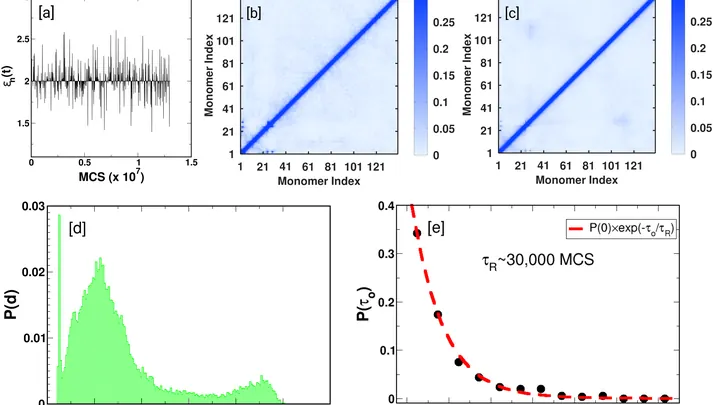
The crumpled DNA thread in the cell nucleus is not a chaotic knot, but an intricate melody played on a polymer string. Modern experiments Hi-C, like highly sensitive microphones, capture the echo of contacts between distant genome regions, turning spatial organization into a two-dimensional probability matrix.
A cell is like a library where thousands of books are copied every day. Molecular machines, polymerases and ribosomes, slide along a template chain and assemble a copy, link by link. These machines have several states: they can slow down, make mistakes, or switch. Previously, calculating such a process took hours.
Inside every cell, construction never stops: molecules constantly cluster together and drift apart. Sometimes they form dense droplets, like oil in water, but without a membrane. These droplets act as temporary storage: they hold proteins, gene copies, or DNA repair tools.
Imagine a flashlight that only lights up when you're near a road sign: that's roughly how drug discovery works when scientists follow genetic clues. A team of researchers examined over 26,000 target-disease pairs: combinations of a protein that a drug acts on and the disease it treats.
When the canary in the coal mine falls silent, the miners know: the gas is already here, time to get out. Tumor DNA floating in the blood behaves much the same way. The drug bears down on the cancer, and the level of this DNA drops to nearly zero. The test stops seeing it. The doctor sees 'clean' and breathes easy.
But silence can be deceptive.
Two road crews are paving a street from opposite ends. They move toward each other, and how well they coordinate determines when the street is finished.
The James Webb Space Telescope peered into the era when the expansion of the Universe stretched the light of distant objects into the red, and found a scattering of strange sources — 'little red dots'. Their spectra broke the usual patterns: they are blue in the ultraviolet, but deep red in the optical, as if seen through a cherry veil.
Magnetic particles are attached to the surface of the diamond by DNA strands, like puppets on strings. They constantly dance under the thermal motion of the liquid molecules. The liquid's viscosity sets the pace: in honey, the particles barely tremble; in alcohol, they dance quickly.
A torn telephone wire is a nuisance, but a torn DNA is a catastrophe. A double-strand break, when both strands of the helix snap at the same spot, threatens the cell with death or transformation into cancer. Fortunately, the cell has its own 'glue': special proteins that gather into a droplet right at the accident site.
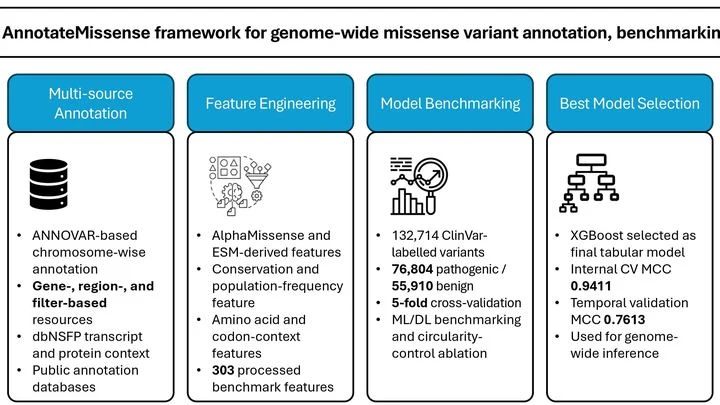
In a vast library where each book is a gene, you need to find a single typo. The error might be harmless, or it might completely change the meaning of the sentence. That's roughly what geneticists do when they hunt for harmful mutations among millions of harmless differences.
The program, named AnnotateMissense, works like a meticulous proofreader.
Imagine a huge garage with hundreds of parking spots. You're driving a tiny car, a future drug molecule, and you want to find the one free bay where it fits perfectly. But these bays aren't concrete; they're woven from DNA or RNA chains, and no one has posted the parking rules.
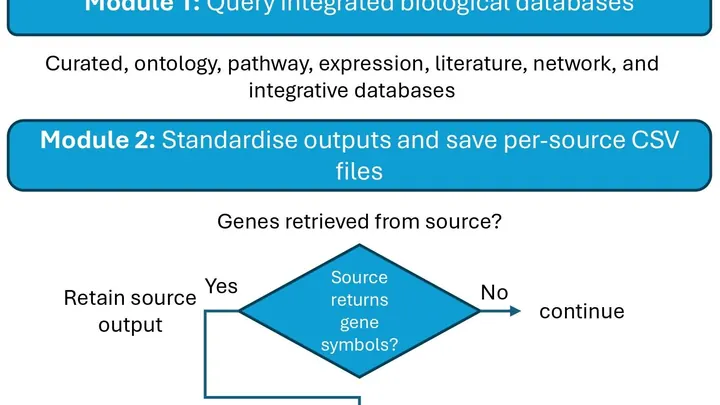
Assembling a puzzle when the pieces are scattered across 13 boxes with different numbering systems: that's roughly what it's like to search for genes linked to a specific disease. The data exist, but they're hidden in databases with their own interfaces, formats, and even descriptive languages.
Standard proton therapy is like a precise but light projectile: it hits the tumor dead-on, but it doesn't always pack enough punch. The reason is that protons have a low "killing power" (biological effectiveness), and some tumors manage to repair the DNA damage they inflict.
Researchers have found a way to amplify the blow without changing the beam itself.
Long protein threads, their tangled entanglements, and random contacts: this is how the birth of cellular droplets was usually explained. These membrane-less organelles, where important reactions take place, resemble oil drops in water: they arise on their own when molecules separate into phases.
Nitrogen, the very gas we breathe, behaves like a finicky metal under a million atmospheres of pressure. In a diamond anvil cell, it is squeezed to 78–98 gigapascals and heated with a laser to 1800–2500 kelvin. Under these conditions, N₂ molecules rearrange into crystals that can store energy more densely than explosives.
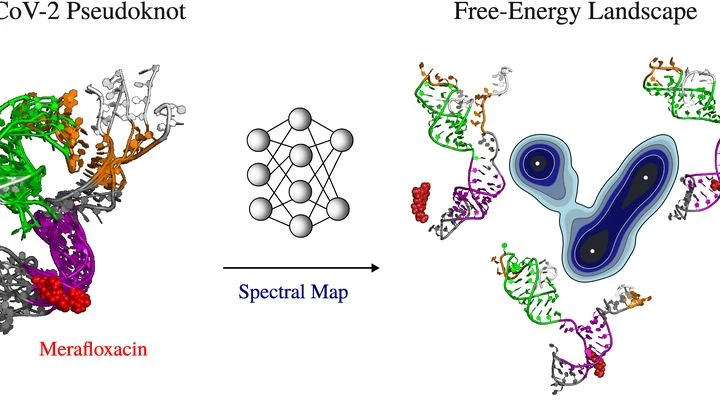
The RNA of SARS-CoV-2 is not just a chain but a complex structure. It contains a region that ties itself into a knot, much like a tangled shoelace. This knot helps the virus produce two proteins from a single stretch of genetic code. Without such a knot, the virus replicates less efficiently, so scientists are hunting for compounds that can undo it.
Engineers improving neural networks act like breeders: they try a variant, check the result, and keep the best. They collected 935 such trials from 161 papers and measured how often a code tweak turns out beneficial, harmful, or neutral. The picture is familiar to any biologist: 68% of changes degrade performance, 19% do nothing, and only 13% yield a gain.
In a growing bacterium, genes that run protein factories don't drift solo. They clump into liquid droplets, like oily smears in water — no membranes, but sharp boundaries. The NusA protein fuels this condensation. When it piles up, it glues neighboring DNA stretches together, forcing them into foci.
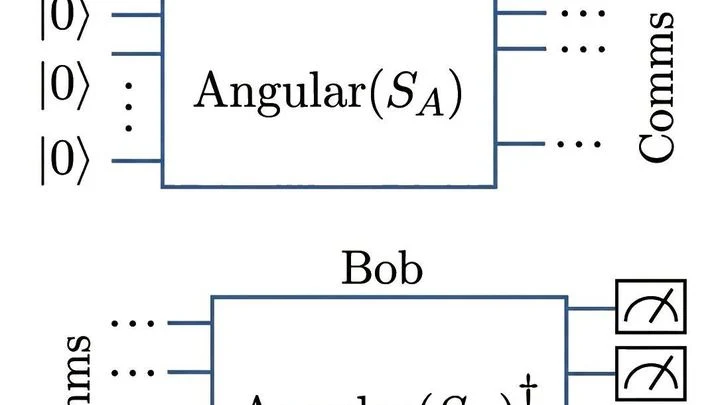
DNA is a long carbon necklace made of four types of beads. Biologists often need to compare two strands to find differences. Normally this requires a lengthy brute-force search. Researchers came up with a clever trick: encode each bead as an arrow that rotates based on its neighbors. The idea came from language models, where words also 'know' context.
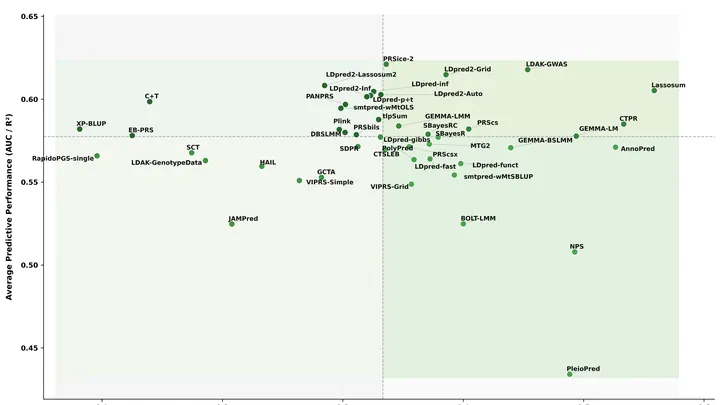
Geneticists read DNA like a long list of letters. From it, they compute a "polygenic risk score" — a number that shows how much higher or lower a person's chance of getting a disease, like diabetes, is compared to average.
In the mud at the bottom of a pond live bacteria that carry tiny magnetic compass needles inside them. These needles are chains of magnetite crystals that help the bacteria swim along Earth's magnetic field, like a compass needle, in search of better conditions.
A cell is like a kitchen where thousands of recipes (genes) are collected in one thick book (DNA). The chef-protein Klf4 flips through the pages and decides which recipe to cook today. But how does it find the right line among billions of letters? Previously, researchers thought the protein looked for a short 'password'—a few consecutive letters.