The Planet's Heart Beats Every Six Years express
Gravity satellites have noticed that Earth's gravity field breathes imperceptibly with a period of about six years. It's as if an invisible pendulum swings the planet from within, and every six years the scale's needle shifts slightly. The signal turned out to be so clean that it could be separated from the noise of oceans and melting glaciers.
The authors built a model where the solid inner core and the mantle are gravitationally coupled through the liquid outer core, like two gears in viscous oil. When the core rotates slightly, it drags the mantle along, and vice versa. This dance allowed them to calculate the viscosity of the inner core: approximately 4.6×$10^{16}$ Pa·s. For comparison, cold honey has a viscosity of about $10^3$ Pa·s, while glass at room temperature is on the order of $10^{20}$ Pa·s. In other words, the core flows a billion times slower than honey, but it still flows.
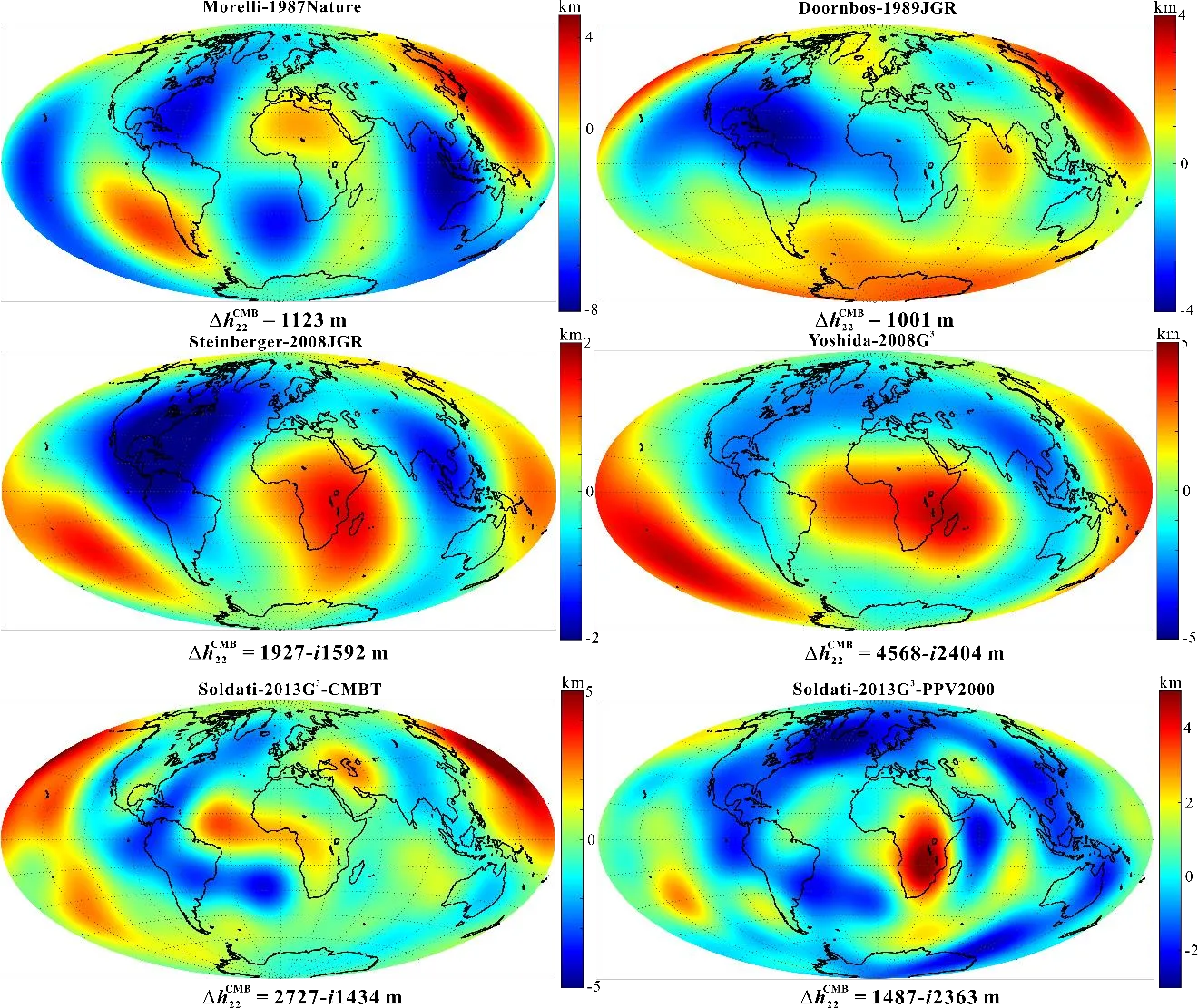
Moreover, at the base of the so-called large low-shear-velocity provinces (giant 'mountains' of hot material at the bottom of the mantle), the density turned out to be half a percent higher than average. These continent-sized structures influence how heat escapes from the interior, and now they can be weighed using gravity data. Thus, satellites flying hundreds of kilometers above us become a window into a world five thousand kilometers deep.
Earth's inner core has a temperature of about 5000 °C, almost as hot as the Sun's surface, but due to enormous pressure, it remains solid and yet slowly flows like a glacier.