Cosmic Genealogy: How Black Holes Reveal Their Origins ✦
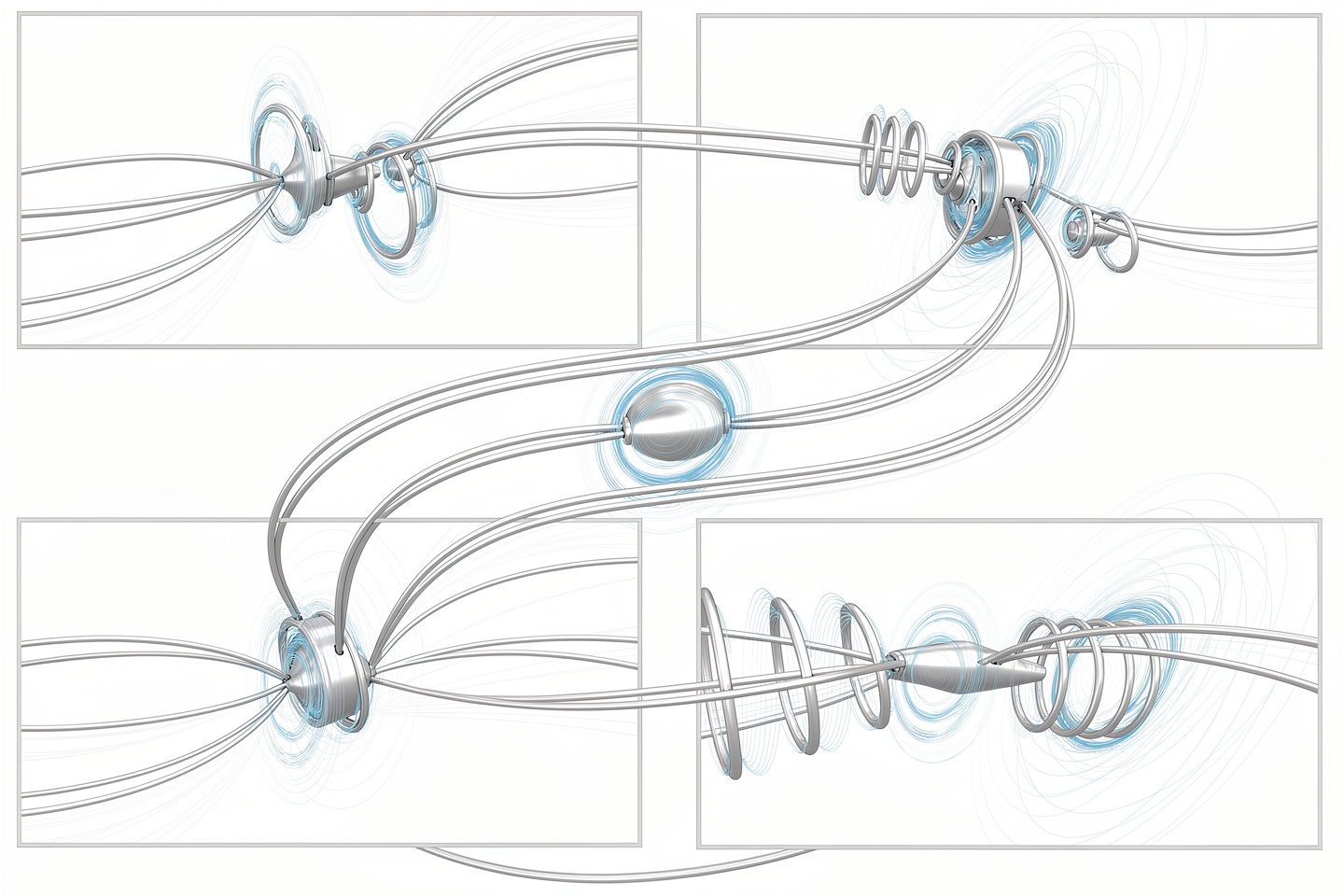
Amidst the chaos of gravitational waves, a clear pattern emerged: like fingerprints, mass functions revealed the lineage of black holes. Low-spin 'parents' and high-spin 'children' are linked by a cascade of mergers—each giant was once a pair of smaller holes. This is not just statistics, but direct proof of hierarchical assembly. Gravitational astronomy is turning into genealogy: we see how generations of increasingly massive objects are born from cosmic dust. The next step is to peer into the youth of supermassive black holes.
🎯 The mass gap of pair-instability supernovae, where black holes are almost never born, was long considered a 'forbidden zone,' but now we see how hierarchical mergers fill it with remnants of previous generations, like a cosmic matryoshka.
🎬 As in Liu Cixin's 'The Three-Body Problem,' where civilizations nest worlds within worlds, here the Universe itself assembles black hole matryoshkas in galactic nurseries—a cascade of collisions gives birth to ever more massive objects.