Popular

Hans Bethe

1906–2005 · nuclear physics, astrophysics, quantum mechanics
German-American physicist, Nobel Prize laureate (1967) for his work on the theory of nuclear reactions, especially for the discovery of energy sources in stars (proton-proton cycle and CNO cycle). His work underpins the understanding of stellar nucleosynthesis.

Biography

He studied in Frankfurt and Munich, emigrated to the United States. He worked at Cornell University, participated in the Manhattan Project. He contributed to many areas of physics.

Key discoveries

💡 Bethe was known for his longevity in science: he actively worked and published until he was over 90, working on neutrino astrophysics, among other things.
Quote: "Stars are giant thermonuclear reactors, and we have learned to understand how they shine."
Links in the knowledge graph 1
Related tags
nuclear fusionstar formation
Related laws
mass–energy equivalence
Related scientists
Fred HoyleMargaret BurbidgeNancy Grace RomanTheodore LymanEmile ClapeyronRalph FowlerJames JeansWalter Baade

Related articles

Black Holes Where You'd Least Expect Them: Solving the Mass Gap Mystery

It was thought that the most massive stars explode completely, leaving no black holes, so none exist in the 50 to 130 solar mass range. New observations found several such anomalies with low spin. The reason lies in the nuclear reaction rate inside stars, which shifts the boundaries of what's possib
arXiv:2510.22698 · 2025-10-26

A Scale-Free Fusion Boiler: The Secret's in the Walls

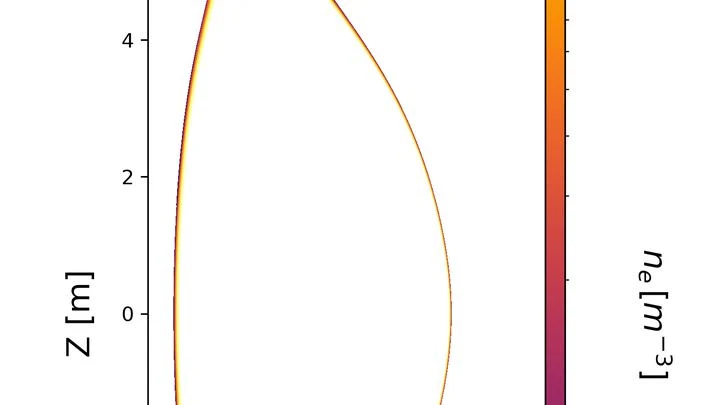
Sponge-like walls absorb plasma particles, preventing them from contaminating the fuel and improving heat retention. But this creates dangerous overheating. Computer simulations show: tracking individual particle motion helps trap harmful impurities and distribute heat evenly. This is a step toward
arXiv:2511.09437 · 2025-11-12

Nuclear Fusion in Metals: How the Medium Helps Nuclei Fuse

Palladium and titanium foil saturated with deuterium boosted the probability of nuclear fusion by a quintillion times. At low energies where the reaction should vanish, it unexpectedly plateaus. The discovery proves: the medium can control fusion just as well as stellar temperatures.
arXiv:2512.06212 · 2025-12-05

The shape of the xenon nucleus is no longer a mystery

By colliding xenon and lead nuclei at the Large Hadron Collider, physicists reconstructed the true shape of the xenon-129 nucleus from the debris scattering, like splashes from an impact. It turned out to be a lumpy body, stretched in three directions—almost like an ordinary potato. The method turns
arXiv:2606.03993 · 2026-06-02