How to Grow an Unstable Pattern express
A gardener wants to grow a rare flower. Watering and fertilizing can't be done haphazardly; it must follow a strict schedule: a bit more warmth in the morning, a bit less moisture in the evening. Otherwise, the bed will be overrun by common weeds. Molecules on a metal surface behave in much the same way.
When organic molecules settle on a metal, they assemble into patterns, like pieces of a mosaic. One pattern might conduct electricity better, another worse. But the most coveted pattern often turns out to be unstable: give the system freedom, and it will rearrange into a simpler, "weedy" structure. Catching the right moment and locking in the fragile pattern is a problem with many unknowns.
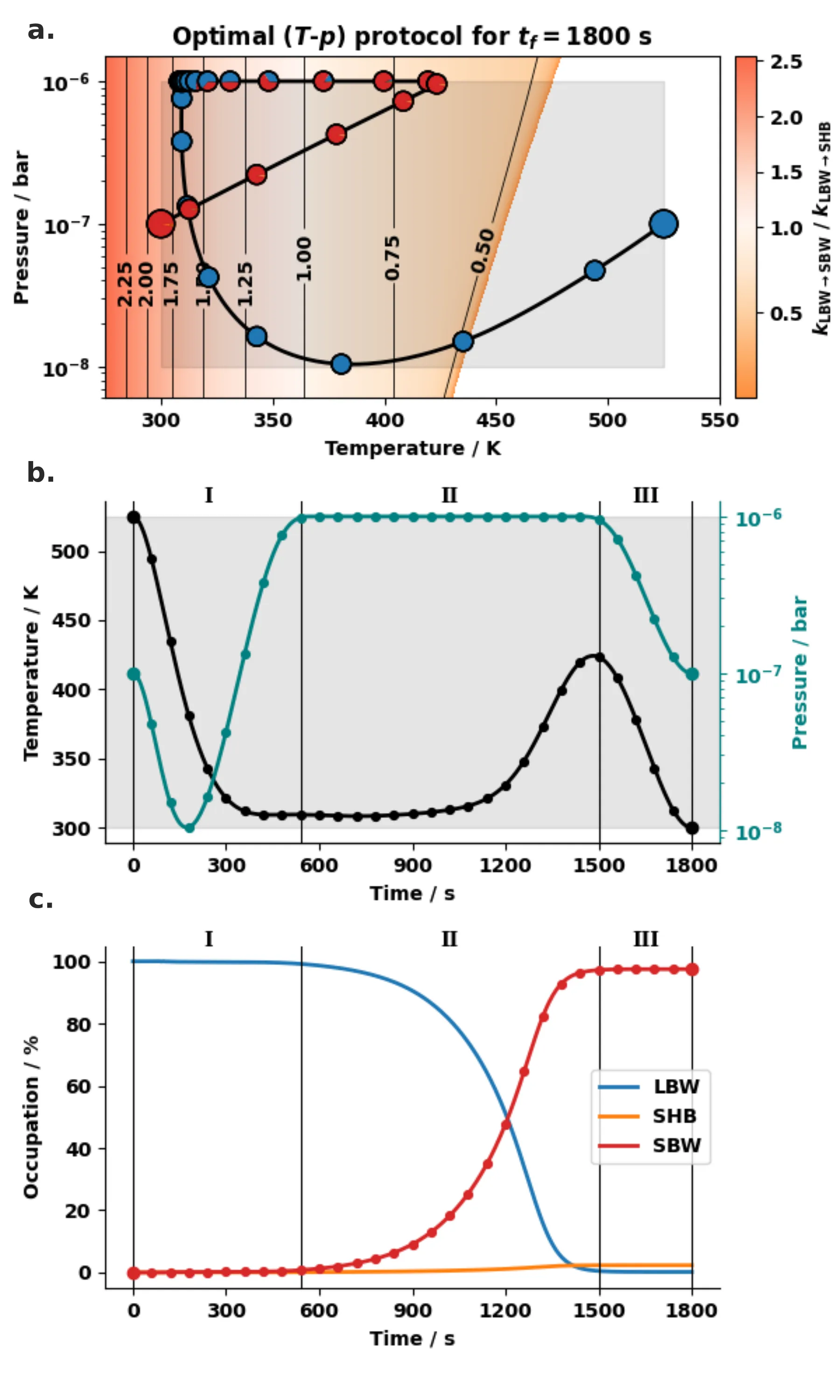
The calculations showed that if you change the conditions not in steps but smoothly, along a clever trajectory, you can dodge the traps and push the yield of the desired pattern to 97%. Manual tuning of a three-step protocol gave only 73%. The difference is like that between craftsmanship and an assembly line.
This approach is not tied to specific substances. It resembles a universal remote control for crystal growth — from sensors to solar cells. The gardener gets not just a watering can but a precise watering schedule for each rare flower.
The 24% difference between manual and automatic optimization is comparable to a situation where out of every hundred parts, only 3 are defective instead of 27—almost perfect production.