Protein foldingprediction is the computational problem of determining the three-dimensional native structure of a protein from its amino acid sequence. Since a protein's function is intimately tied to its shape, knowing the folded structure is crucial for understanding biological processes, designing drugs, and engineering new proteins. The challenge is formidable: the number of possible conformations is astronomically large, yet proteins fold into their functional forms in milliseconds, a paradox known as Levinthal's paradox. Modern prediction methods combine physics-based energy calculations with machine learning, particularly deep neural networks, to achieve near-experimental accuracy for many proteins.
History
The protein folding problem was articulated in the 1960s by Christian Anfinsen, who showed that the amino acid sequence determines the native structure. Computational prediction efforts began in the 1970s, but major breakthroughs came in 2020 with AlphaFold2, which achieved near-experimental accuracy in the CASP14 competition, followed by further improvements and broader adoption.
How it works
Contemporary approaches, such as AlphaFold and related tools, use a two-pronged strategy. First, they leverage evolutionary information: by comparing the sequences of many related proteins, they infer which amino acid pairs are likely to be in contact in the folded structure. Second, they employ deep learning models that process this co-evolutionary data along with physical constraints, iteratively refining a predicted 3D structure. The neural networks are trained on thousands of known protein structures, learning the complex rules that map sequence to geometry. The output is a ranked list of candidate structures, with confidence scores for each region, which researchers can then validate experimentally.
In practice
Accurate protein structureprediction accelerates drug discovery by enabling virtual screening of compounds against protein targets, aids in designing enzymes for industrial processes, and helps interpret disease-causing mutations in personalized medicine.
Fun fact
The latest prediction models can fold a typical protein in minutes on a single GPU, a task that would take a supercomputer years to simulate from first principles.
A thin section of eucalyptus lies under the microscope objective, and white light, passing through two polarizing filters, turns the wood into a mosaic of purple, yellow, and blue patches. These colors are not random: like letters on a map, they show the direction of the invisible cellulose threads inside the cell walls.
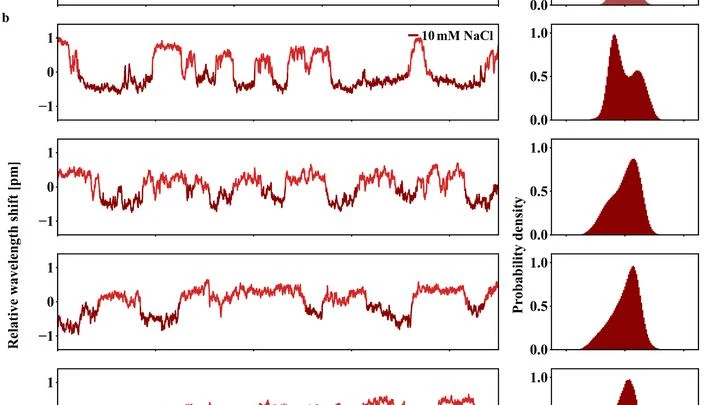
A protein in a cell doesn't hang motionless like a mannequin in a store window. Its atoms are constantly jiggling, stretching, and bending, like a plucked guitar string that keeps vibrating after you strum it. To understand how a protein works, you need to know how tightly each part holds onto its neighbors.
Under an electron microscope, a protein looks like a series of blurry shadows — hundreds of thousands of images of the same molecule, but from different angles and with heavy noise. Previously, from these shadows, one first assembled a volumetric 'haze'—a map of how electric charge is distributed inside the protein.
A protein chain folds into a working tool in a fraction of a second, and almost never makes a mistake. For a long time, it was thought that evolution specifically polishes amino acid sequences so that a protein not only works but also easily finds its unique shape. New work turns this idea on its head.
A protein in a cell is not a frozen sculpture but a restless mechanism. Its parts are constantly vibrating, and these movements determine how it grabs molecules, transmits signals, or builds the cellular scaffold. But filming the life of a single protein was hampered by two nuisances at once. First, the movements last millionths of a second — ordinary cameras simply cannot catch them.
Imagine a vast library where every book is a precise instruction manual for assembling one protein molecule. AlphaFold2 read millions of such books and learned to instantly produce a ready-made 3D model. But inside this network, in its very 'brain,' something more remained — not just assembly rules, but an entire atlas of possible protein motions, its hidden life.
A gardener wants to grow a rare flower. Watering and fertilizing can't be done haphazardly; it must follow a strict schedule: a bit more warmth in the morning, a bit less moisture in the evening. Otherwise, the bed will be overrun by common weeds. Molecules on a metal surface behave in much the same way.
When organic molecules settle on a metal, they assemble into patterns, like pieces of a mosaic.
A cell is like a library where thousands of books are copied every day. Molecular machines, polymerases and ribosomes, slide along a template chain and assemble a copy, link by link. These machines have several states: they can slow down, make mistakes, or switch. Previously, calculating such a process took hours.
A neural network, like a sheet of graph paper, receives homogeneous signals at its input, and draws its own coordinate grid. Initially, connections between inputs and network cells form a gentle hill: the response is strongest at the center and fades toward the edges.
For a long time, we only saw proteins in their final form — like photographs of dancers frozen in a beautiful pose. Programs like AlphaFold learned to predict that pose from a chain of carbon links. But the real magic is how a protein finds this shape faster than you can blink, performing a swift dance.
Imagine a huge garage with hundreds of parking spots. You're driving a tiny car, a future drug molecule, and you want to find the one free bay where it fits perfectly. But these bays aren't concrete; they're woven from DNA or RNA chains, and no one has posted the parking rules.
A protein in a cell is like a tiny machine: each has its own precise blueprint and its own task. Some proteins cut molecules, others carry oxygen, and still others capture light. To build such a mechanism from scratch, you need to solve two problems at once: decide what job it will do and how it will fold into the right knot. If the knot goes wrong, the machine jams or breaks.
A long string of beads settles into a tiny box — some beads press together, others spread apart. That's the puzzle a protein solves when it folds into a working molecule. Except the beads, amino acids, can number in the hundreds, and every contact between them reshapes the whole structure.
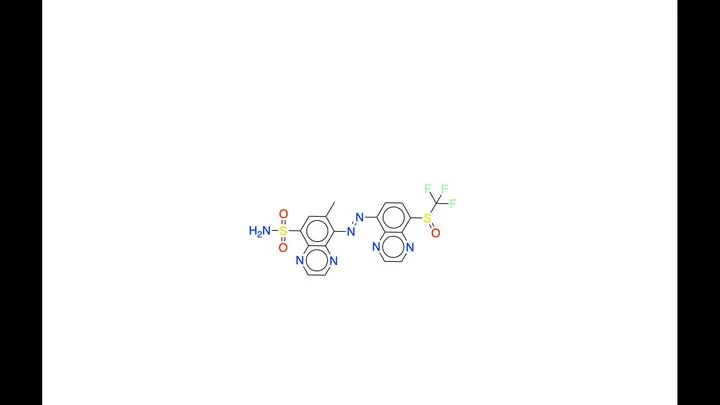
The light bulb turns on only in the room where you need it. That's roughly how photoactivatable drugs work: they 'switch on' only where light is directed, leaving the rest of the body untouched. This is especially important in cancer treatment: conventional chemotherapy hits all dividing cells indiscriminately, causing severe side effects.
The proton looks like a solid ball, but inside it's a hive of activity: quarks exchange gluons — the particles that bind them together. Gluons pop in and out of existence, and their distribution within the proton is not just a curious detail but a key to predictions at the Large Hadron Collider.
Alzheimer's disease begins quietly: deep in the brain, two proteins, tau and amyloid-beta, start to accumulate. They behave like weed seeds: one clump that appears causes neighboring cells to produce similar clumps. Gradually, the proteins spread along nerve fibers, like water through the capillaries of a paper towel, and invade new areas.
Deep inside every hard drive or flash drive lies a material that can 'remember' an electric field. Such a material is called a ferroelectric. When you apply a voltage, tiny regions inside the crystal (domains, like compass needles) flip. Flip the needle one way, you've written a one; flip it back, a zero. But what happens to the atoms at the moment of that flip?
An octopus tentacle bends, grabs, and stretches — all without a single bone. The secret is that inside it, sections that contract alternate with sections that remain passive. Scientists have long tried to replicate this trick in artificial materials, but until now they couldn't precisely dictate how a material would change shape.
Now researchers have proposed 3D-printing elastic threads from two materials at once.
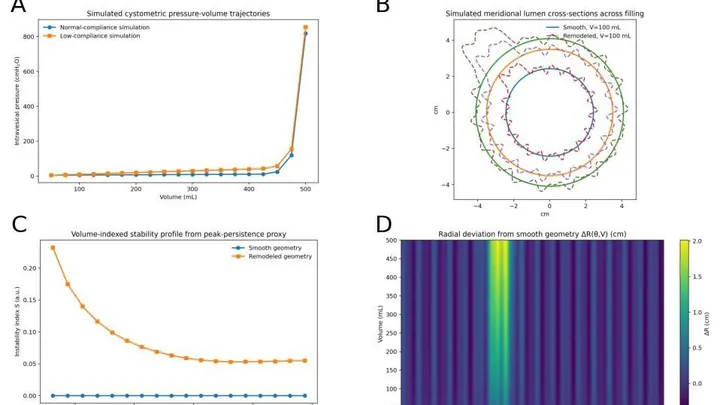
The bladder is like a balloon: as it fills, the wall stretches and the shape changes. Doctors usually monitor the pressure inside and how much fluid has entered, but they rarely look at the geometry itself — how the surface curves. Yet irregularities can appear before the usual metrics deteriorate.
Every human brain is covered with folds, much like a fingerprint: each with its own unique pattern. In dementia, this pattern changes, but for two similar diseases, Alzheimer's and dementia with Lewy bodies, the changes are nearly indistinguishable to the eye. Doctors need a reliable way to separate them, because the treatments differ.
Searching for a new drug is like matching a key to a lock. The protein in a cell is the lock, and the candidate molecule is the key. You need to know whether the key fits and how snugly it sits. Previously, the computer would examine every atom in the lock and the key to check this. A single lock could take hours or even days. Checking millions of keys was out of the question.
In a thin aluminum film, millions of tiny metal grains are packed together like grains in granite. Where three such grains meet, a triple junction arises — a line along which three boundaries intersect. Previously, it was considered merely a meeting point, but now, peering into the atomic scale, scientists have seen: it is an independent defect with its own personality.