Quantum Twist Rescues an Old Theory express
The early universe grew at a terrifying speed — inflating to gigantic proportions in a tiny fraction of a second. Physicists describe this burst with a single number: the exponent in a formula that resembles the steepness of a hill. The steeper the hill, the faster the ball rolls down: that is, the more rapidly space expanded.
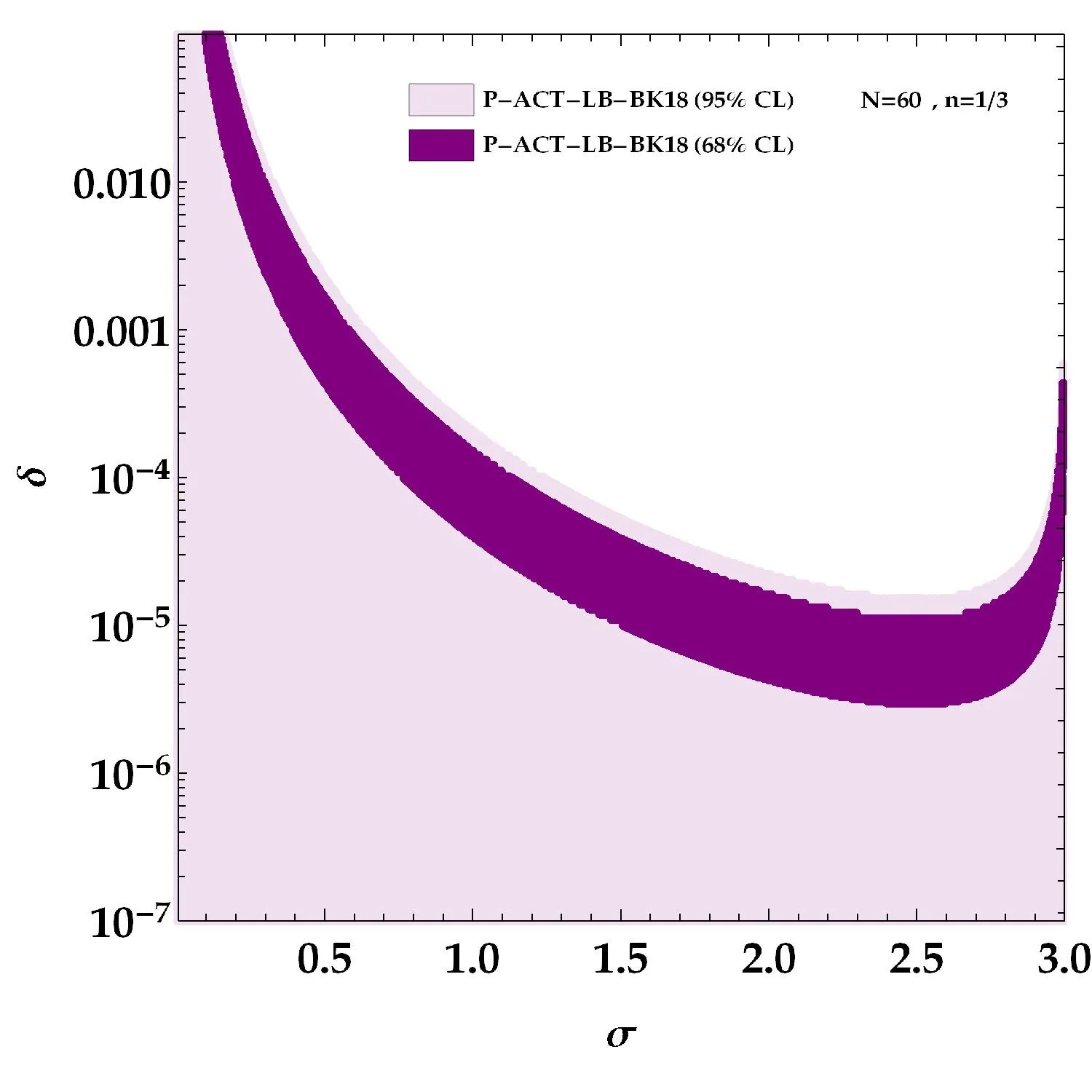
For a long time, it was thought that simple hills with gentle slopes (say, like a sand dune) didn't work: they painted a picture of the sky that didn't match what telescopes see. But the authors of this work added an invisible ripple to space itself — quantum corrections to volume that become noticeable only at mind-boggling densities. This ripple acts like a headwind: it slightly slows the ball, changing its trajectory.
As a result, old models with exponents 1/3, 2/5, and 2/3, like recut sails, once again catch the wind of observations. Without the quantum ripple, they missed the target; with it, they neatly fit into the tight corridors set by the most precise maps of the cosmic microwave background.
If the universe had expanded according to the steepest of the tested scenarios (exponent 2/3), it would have become unimaginably huge within a fraction of a second, but the quantum ripple of space softens that run just enough for the sky to look the way we see it.
In Greg Egan's novel Schild's Ladder, the laws of physics change in different regions of space — here, quantum corrections gently rewrite the rules at the earliest stages, and the result is visible across the entire sky.