Light and matter don't start dancing right away express
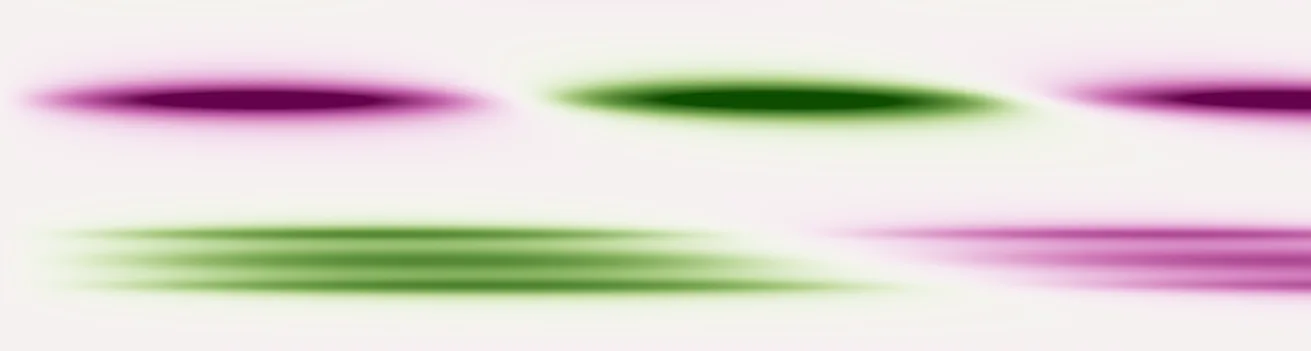
A beam of light darts back and forth between two mirrors. It reflects, runs back, reflects again, and so on, over and over. Inside this gap lies a flat layer of electrons that can rotate under a magnetic field. When the electron rotation frequency matches the light oscillation frequency, a strange dance begins.
Energy no longer belongs solely to light or solely to electrons. It flows back and forth like a ball between two players. Physicists call this flow Rabi oscillations. Until now, they inferred it indirectly — by the appearance of two spectral lines instead of one. But no one had seen when this exchange actually starts.
The research team used terahertz radiation and very short pulses. They excited the electrons and watched how they began to 'ring' in time with the light. It turned out the dance doesn't start immediately. First, light must run from one mirror to the other and back. Only after this round trip does the mixed state, polariton, emerge. The delay is about 10 picoseconds. That's a hundred times faster than an eye blink.
This result is like a freeze-frame of the very first moment of friendship between light and matter. Previously, we saw only the consequences; now we see the meeting itself. And it turns out not to be instantaneous: it requires time for an introduction.
Original abstract
as written by the authors arXiv:2607.29501v2
Strong light-matter coupling gives rise to polaritons through coherent and periodic energy exchange between electromagnetic cavity fields and material excitations. While this interaction is typically inferred from spectral mode splitting, its dynamics remain largely unexplored. Here, using phase-resolved terahertz time-domain spectroscopy, we observe Rabi oscillations of Landau polaritons formed by coupling the cyclotron resonance in a GaAs/Al$$_{0.36}$$Ga$$_{0.64}$$As two-dimensional electron gas with Fabry-Perot cavity modes. By employing cross-polarized spectroscopy and magnetic-field differential, we resolve the temporal beating of the cyclotron resonance oscillations. Remarkably, we find that the Rabi oscillations do not start immediately after excitation of the cyclotron resonance, but after a delay corresponding to one cavity round-trip time. This demonstrates that the strong-coupling regime sets up only after the formation of the cavity mode field. Our results provide direct insight into the dynamics of hybrid light-matter states in the THz regime.
The delay in polariton birth equals the time light takes to travel from one mirror to the other and back. If the mirrors were a meter apart, the delay would be about 6.7 nanoseconds — almost like a snap of the fingers.