A polariton is a quasiparticle that emerges when light (photons) and matter (typically excitons in a semiconductor) couple so strongly that they exchange energy faster than either can decay. The result is a hybrid excitation that is part light, part matter, inheriting properties from both: it can move at near-light speed like a photon, yet interact strongly with other particles like an electron. This duality makes polaritons a unique tool for studying quantum phenomena at macroscopic scales.
History
The concept was introduced in the 1950s by K. Huang and later formalized by J. J. Hopfield in 1958, who described the coupled photon-exciton system using a quantum mechanical model.
How it works
When a photon enters a material with an excitonic resonance (an electron-hole pair bound together), it can be absorbed and re-emitted repeatedly. If this cycle happens faster than the individual decay rates, the system enters the strong-coupling regime. The two original states—photon and exciton—merge into two new energy states (upper and lower polariton branches), separated by a Rabi splitting. The lower branch often behaves like a very light particle, enabling effects like Bose-Einstein condensation at relatively high temperatures.
In practice
Polaritons are used in experimental platforms for quantum simulation, low-threshold lasers, and all-optical logic devices, where their light-matter nature allows fast switching and nonlinear interactions.
Fun fact
Polaritons can form a Bose-Einstein condensate at room temperature in organic materials, unlike most quantum gases that require microkelvin temperatures.
To probe deeper into the workings of the universe, physicists accelerate electrons and smash them together. An ordinary electron is like a spinning top that wobbles randomly. For delicate experiments, you need particles whose spins all point in the same direction: this is called polarization.
A beam of light darts back and forth between two mirrors. It reflects, runs back, reflects again, and so on, over and over. Inside this gap lies a flat layer of electrons that can rotate under a magnetic field. When the electron rotation frequency matches the light oscillation frequency, a strange dance begins.
In extreme cold — minus 268 degrees — a crystalline perovskite film starts transmitting light differently depending on its polarization. The beam seems to split in two: one part travels slightly faster, the other slightly slower.
In 1984, the world of crystallography was turned upside down: sharp diffraction peaks with fivefold symmetry were discovered in an alloy of aluminum and manganese – as if nature had mocked the strict theorems forbidding repeating patterns from having axes of order 5, 8, 10, or 12.
An electron and its antiparticle — the positron, predicted by Дираком, — upon meeting, momentarily form позитроний: a tiny pair circling each other, like in an atom but without a nucleus. Almost instantly it decays, emitting two photons that turn out to be mysteriously linked.
Light gets trapped in a crystal lattice, but not an ordinary one: it's turned inside out, like a honeycomb where instead of wax there's emptiness, and the edges are made of material. That's how an inverted opal is built: a three-dimensional photonic crystal that blocks light of certain colors.
A pebble falls into a pond, and ripples spread across the water. In the quantum world, the pond is not made of water but of many identical particles, and the pebble is also a particle, just a foreign one. Such a foreign particle is called a Fermi polaron.
Generative neural networks that create images typically rely on digital randomness. But a team of researchers built a system where randomness is born not in code, but in a tiny optical cavity filled with an organic dye.
Spacetime can be imagined as a tightly stretched fabric. A massive body dents it, guiding light. Rotation twists the fabric into a spiral. Such a gravitational funnel can entangle a passing photon with the very source of rotation — say, a tiny mirror. Quantum entanglement springs up: an invisible thread binding their fates.
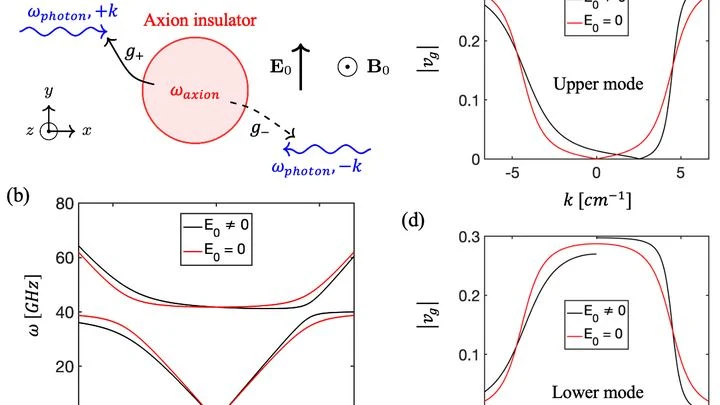
A regular flashlight shines equally forward and backward. But in magnetic crystals, a axion appears — a ghostly excitation, like a wave going around a stadium: atoms pass a magnetic impulse to each other. When light meets an axion, a hybrid forms, whose fate depends on electric and magnetic fields.
Tile a floor with identical triangles, and you get a boring repeating pattern. But what if you want the pattern to never repeat, yet use just one tile? For a long time, mathematicians were sure it couldn't be done: you'd need at least two different shapes. The famous Penrose mosaic is a case in point: rhombi with acute and obtuse angles arrange into an infinitely varied but strictly ordered pattern.
In a thin sandwich of semiconductors, light creates pairs, an electron and a positive hole, that stick together like a ball on a rubber band. Normally, such pairs, called excitons, quickly emit light and vanish. But there are others, dark ones, that live hundreds of times longer because their internal structure forbids them from easily giving off energy.
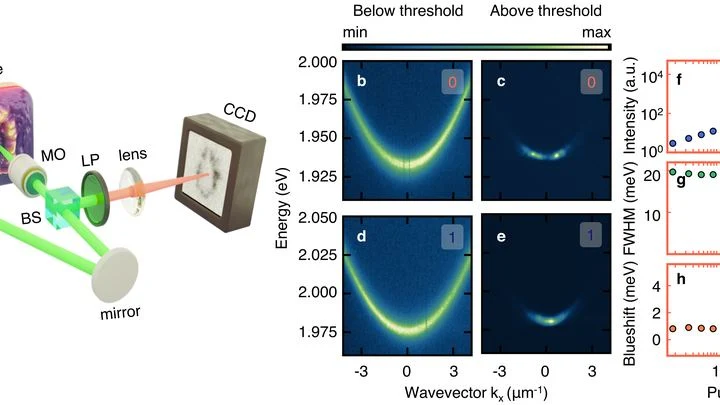
A conventional laser is like an orchestra where musicians must warm up before playing in unison. You first need to pump enough atoms with energy so they 'flip' and are ready to emit light: this is called population inversion. Only then does the beam flash. A polariton laser plays by different rules: its 'musicians'—a mix of light and matter — join in almost without preparation.
Ordinary light scatters in all directions, like water from a shattered glass. But in some crystals, light waves can bunch together into narrow beams and flow in a single direction, like water in a trough. Physicists studied such a material: layered vanadium oxide α-V2O5.
In this crystal, atoms vibrate differently along and across the layers.
On a dance floor, the lights and dancers move independently: the lights flicker on their own, and people move separately. The quantum world is similar: electrons and photons rarely synchronize — this is the no-go theorem for superradiance. But add a rhythmic beat, and the dance floor comes alive.
A quantum dot the size of a virus, squeezed between mirrors, gives birth to two photons in a short flash of light. These photons fly out as a pair, and their polarizations, the directions of wave oscillation, are linked such that knowing one instantly tells you the other.
Light from the star HD 163296 passes through the surrounding gas-and-dust disk like a flashlight beam through murky water. The disk's particles scatter the light, giving it a special property — polarization: the waves begin to oscillate in a single plane, like a rope shaken strictly up and down.
Light from tiny perovskite crystals is like a choir performance, where voices sound sometimes solo, sometimes in a tight duet. Previously, such a duet could only be heard under extreme cooling, nearly to the chill of outer space. Now the choir sings at room temperature.
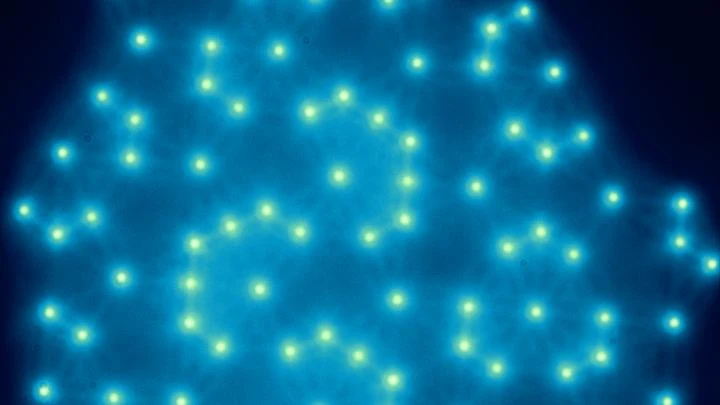
In a container the size of a coin, light behaves like water: it gathers into a single quantum fluid. When energy is added, whirlpools, quantum vortices, spin up on their own. Each vortex is like a tiny whirlpool that cannot simply disappear.
Physicists illuminated this fluid with a laser and took snapshots.
A magnesium oxide crystal is like a row of soldiers: atoms stand in neat lines, and an electron runs along them. But if the electron lingers, the nearest atoms shift slightly from their positions, like neighbors in a rank turning their heads. The electron finds itself in a dip made of displaced atoms and can no longer move freely.
A flashlight beam in fog spreads out within a couple of meters. Light particles scatter in all directions, like a crowd in a square. But sometimes they can march in formation — without spreading, without mixing. That's exactly the kind of march achieved in a tiny perovskite crystal.
The crystal was placed between two mirrors.
Light from an ordinary lamp is chaos: photons scatter in all directions with no order. But if you make many atoms emit light simultaneously and in sync, you get a short, powerful flash, like applause that turns individual claps into a single burst. Such coordinated emission is called superradiance.
A material just one atom thick and of record purity — only one foreign atom per million — becomes the setting for a remarkable phenomenon. When cooled to near absolute zero, the electrons inside, like musicians in an orchestra, freeze into a strict order, forming a crystal. This state, predicted by Eugene Wigner nearly a century ago, has now been observed in detail.
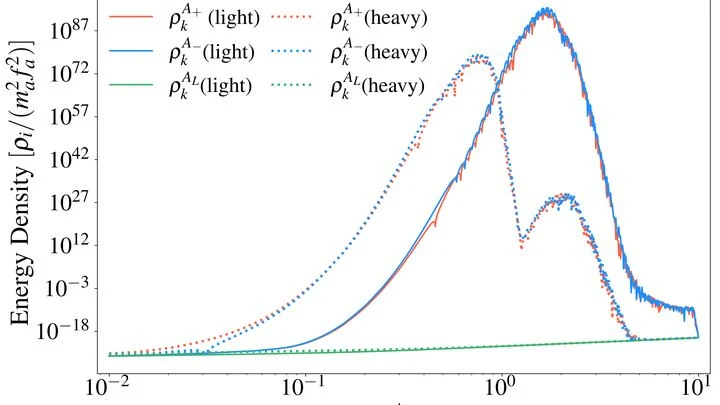
Dark matter is the invisible framework of the Universe. It doesn't emit light, but its gravity keeps galaxies from flying apart. A new hypothesis: dark matter consists of dark photons — ghostly particles that are invisible under ordinary conditions.
Supermassive black holes at the centers of galaxies appeared so quickly after the Big Bang that astronomers are scratching their heads. The solution lies in the trembling of an invisible axion field.
Superfluorescence is a crystal’s synchronized exhale of light. Researchers just witnessed its mirror image: superabsorption, a coordinated inhale. They zapped cheap perovskite nanocrystals with laser pulses (spectroscopy) and saw a time-reversed absorption burst.
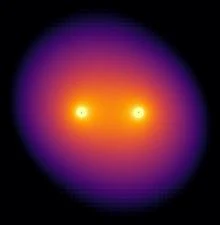
Two black holes circle in a tight dance, and around them something remarkable is born: a gravitational molecule. A cloud of ultralight bosons, particles with masses below an electronvolt, envelops the pair like the electron cloud in an H2+ ion.
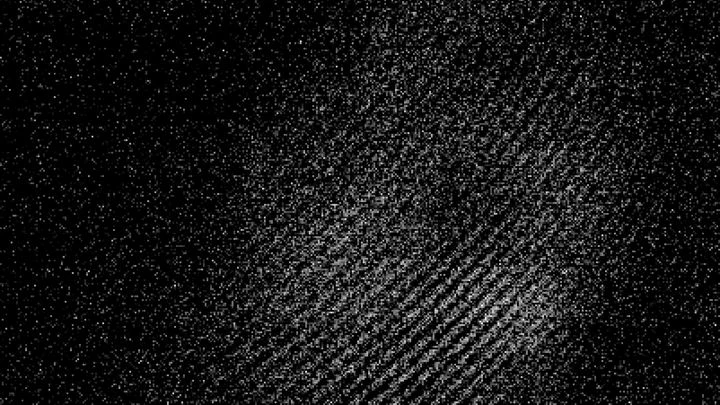
Niels Bohr insisted: you cannot simultaneously know which path a photon took and see interference. For a long time, this was considered a limitation of knowledge — we simply cannot obtain both types of information at once.