Seven Qubits Tie the Perfect Knot express
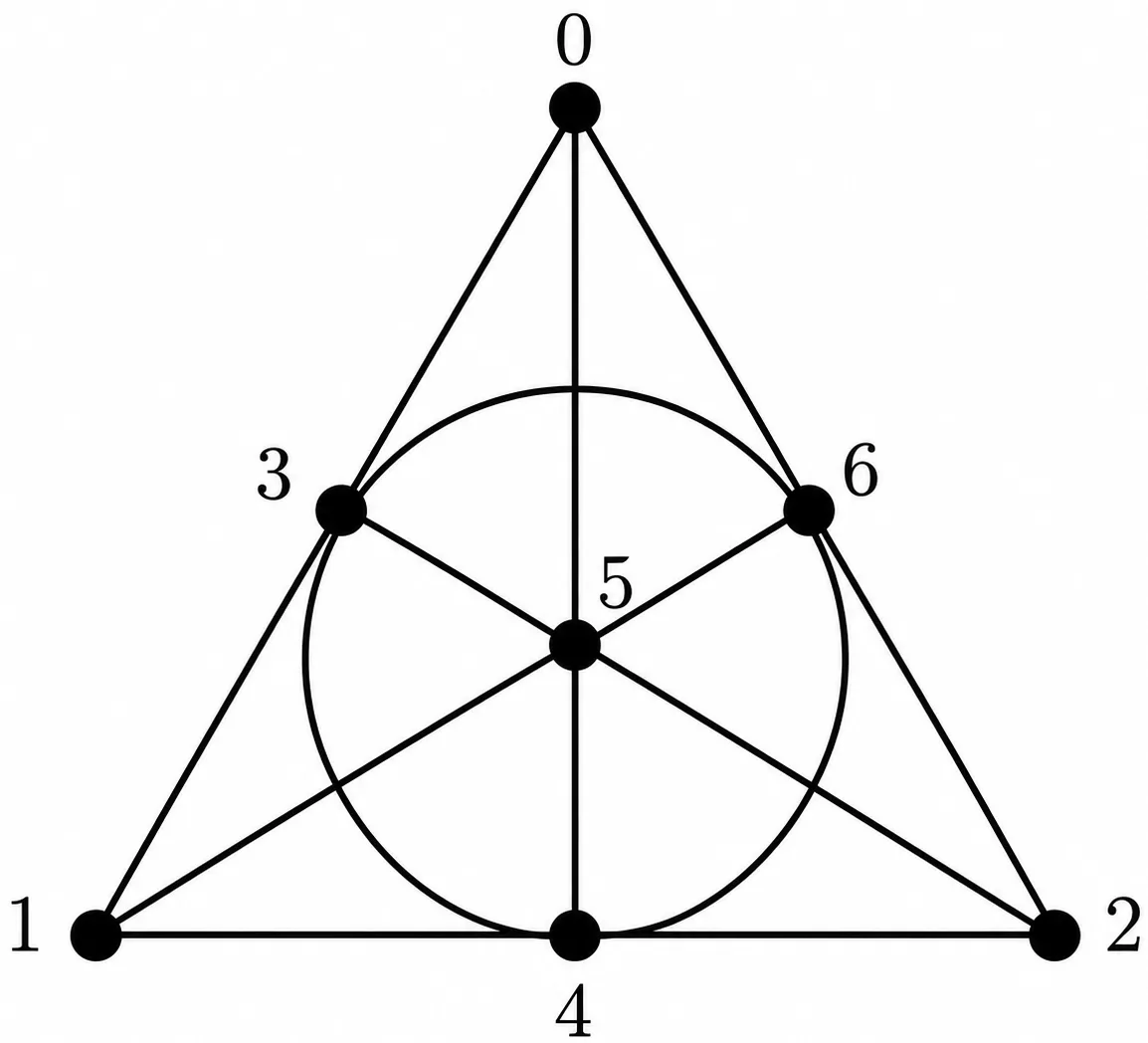
Seven dancers step onto the stage. They join hands so that any trio or quartet moves in perfect harmony with the rest — no group falls out of the overall rhythm. In the quantum world, this is called an absolutely maximally entangled state (AME for short). It's a perfect knot where every part knows everything about the whole.
Until now, mathematicians could weave such a knot from seven qudits (quantum systems with multiple levels instead of two) only when the number of levels was a power of a prime number — except for 2. For dimension 2, it is proven that the knot cannot be tied. What about all other numbers? The authors of the new work have closed this question. They constructed such states for every odd dimension and for every dimension that leaves a remainder of 2 when divided by 4. Together with previously known cases, this covers all dimensions from three upward.
The practical benefit is quantum error correction. Perfectly entangled states act as a safety net: if part of the quantum information is lost, it can be recovered from the remaining particles. The more dimensions available, the more flexible the encoding. Now engineers can choose not only from "power" options but from any, as if they had threads of any thickness at their disposal, not just standard ones.
AME states are sometimes called "perfect tensors"—due to their mathematical similarity to multidimensional arrays where all slices are equally informative.
In the novel "The Quantum Thief" by Hannu Rajaniemi, entangled states are used for instantaneous communication and storing personalities — ideal AME states could become the basis for such technology.