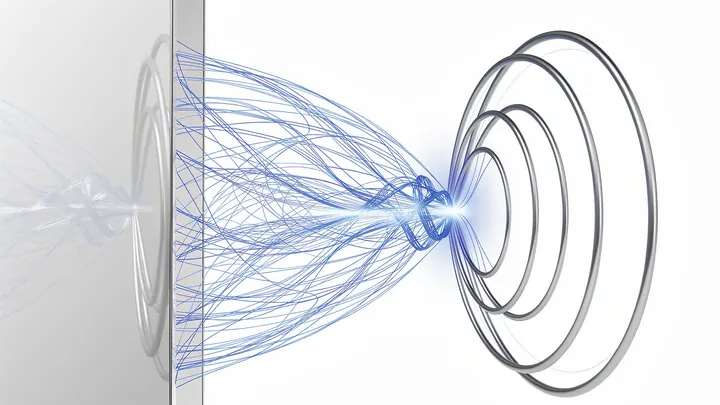
Maximal quantum entanglement represents the strongest possible quantum correlation between two or more systems, where the state of each subsystem is completely undefined until a measurement is made on another. For two qubits, the maximally entangled states are the Bell states, such as the singlet state where the spins are perfectly anti-correlated. For larger systems, maximal entanglement is more complex — for example, a system of four particles can be maximally entangled in a way that is robust against particle loss, a property known as 'maximally entangled set'. This concept is central to quantum information theory because maximally entangled states are the ideal resources for quantum teleportation, superdense coding, and many quantum cryptographic protocols.
History
The concept of maximal entanglement dates back to the early days of quantum mechanics, with the Einstein-Podolsky-Rosen paradox (1935) highlighting the extreme correlations. The formal definition for multi-particle systems was developed in the 2000s, particularly through the work on entanglement measures and the maximally entangled set.
How it works
Maximal entanglement is defined by the property that the reduced density matrix of any subsystem is maximally mixed — meaning all information about the individual subsystem is erased. For two particles, this means the entropy of each particle is maximal. For multiple particles, the definition becomes more nuanced: a state is maximally entangled if it cannot be transformed into another entangled state using local operations and classical communication (LOCC) with certainty. This leads to the concept of 'maximally entangled sets' — states that are optimal resources for entanglement manipulation. In practice, maximal entanglement is achieved in the laboratory by carefully controlling interactions, such as in spontaneous parametric down-conversion for photons or in trapped-ion systems.
In practice
Maximally entangled states are used in quantum key distribution, quantum teleportation experiments, and as benchmarks for quantum computers. They also appear in high-energy physics, where top quark pairs produced at colliders are expected to be maximally entangled.
Fun fact
The spin states of top quark-antiquark pairs produced at the Large Hadron Collider are predicted to be maximally entangled, providing a new way to test quantum mechanics at high energies.
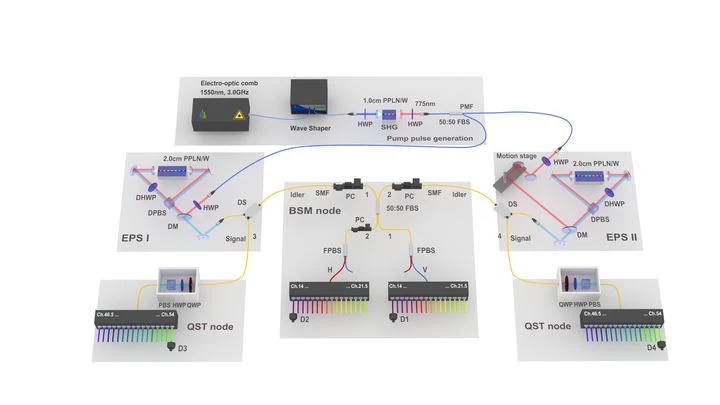
Quantum communication is like sending a secret letter that tears apart at any attempt to peek. So far, such a letter can only be sent along one road, and that's slow. Scientists have figured out how to send 16 couriers along 16 parallel roads, different frequencies of light, and verified that the letters arrive intact.
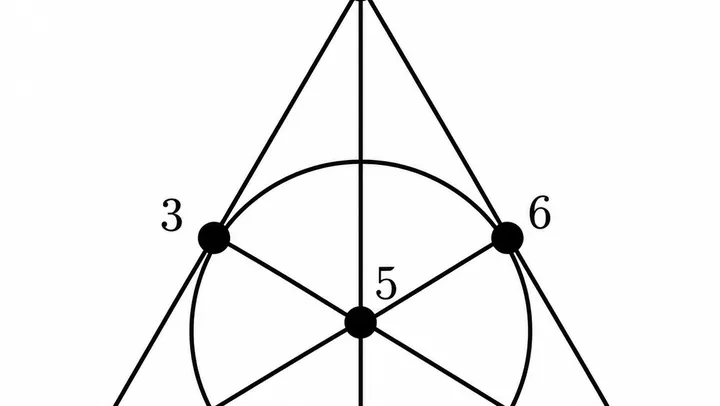
Seven dancers step onto the stage. They join hands so that any trio or quartet moves in perfect harmony with the rest — no group falls out of the overall rhythm. In the quantum world, this is called an absolutely maximally entangled state (AME for short). It's a perfect knot where every part knows everything about the whole.
A polar molecule is like a tiny dumbbell with opposite charges at its ends. Normally, such particles quickly stick together or fly apart when they meet — electric forces are too strong. But the authors of the work found a way to turn this aggressiveness into a controlled game.
Neurochips work differently from conventional computers, which are built according to the blueprints of von Neumann with separate memory and processor. At the core of these chips is a network of simple cells, similar to neurons, and, like water that evenly fills containers of any shape, they easily find a solution without unnecessary steps.
An electron and its antiparticle — the positron, predicted by Дираком, — upon meeting, momentarily form позитроний: a tiny pair circling each other, like in an atom but without a nucleus. Almost instantly it decays, emitting two photons that turn out to be mysteriously linked.
Quantum entanglement often behaves like a synchronized dance visible from only one angle. Change the way you observe it, and the particles appear disconnected. This limits secure communications. Now physicists have created a pair of photons whose 'dance' is flawless from all perspectives.
Three dancers move as one: each feels all the others, and the overall harmony cannot be reduced to individual interactions. This is roughly how three particles behave, born from an electron and positron collision at the speed of light. They are a top quark, its antiparticle, and a Z boson.
Two dice lie in different rooms. If they are 'entangled,' a roll of one instantly determines the outcome of the other — even at a distance. In the quantum world, such a link is called steering: one party, by performing measurements on their side, seems to dictate the state of the partner.
Any measuring device is spoiled by quantum noise — the chaotic jitters of elementary particles. To tame it, physicists used a trick on calcium fluoride molecules, much like squeezing a balloon: press in one spot, and it bulges in another.
An infinite chain of atoms spaced at equal intervals. Shift the entire chain by one step, and the picture doesn't change. That's translational symmetry: the world looks the same wherever you look. You'd think such a simple rule would give rise to simple states, like a crystal lattice assembled from identical building blocks.
But the authors counted those blocks anew.
Two tiny spinning tops fly apart after a collision. Their rotation is not predetermined: it becomes definite only at the moment of measurement. This is quantum entanglement: the state of one top instantly responds to the state of the other, no matter how far apart they are.
Picture a crowded hall where each person is a molecule, and their private conversation is the motion of electrons within it. Normally, everyone talks to themselves, and the overall buzz is chaotic. But if a bright spotlight is turned on in the center, it begins to conduct the crowd: people synchronize their movements, even though the light merely reflects off the walls.
Two mailboxes at opposite ends of a city. Drop a letter in one, and an identical one instantly appears in the other. That's roughly how quantum entanglement works: two particles behave as a single unit, even when separated by a great distance. But until recently, this connection could only be maintained within a single room or across a lab bench.
The quantum world loves order, but reality often brings disorder. In this work, physicists study one-dimensional chains of spins — tiny magnetic arrows that can point up or down. Usually, topological phases (stable states protected by symmetry) are defined for pure states, where each arrow is precisely known.
Physicists have discovered exact laws by which quantum entanglement mixes in chaotic systems. In a model with rhythmic jolts — like a baker kneading dough — they studied the growth of entropy of entanglement, a measure of quantum disorder.
In two mirrored rooms, set at right angles, lives a cloud of atoms. Each atom is like a singer in a choir: on its own, it may stay silent, but when neighbors start to sing, it joins in. Here, the conductor's role is played by geometry itself: one room helps the atoms emit light together, while the other gently nudges them toward that — not directly, but through a clever detour.
Quantum entanglement works like a leash: it ties particles together, but the length of this tether is strictly limited. In a chain of particles, heat plays the role of an impatient dog tugging at the leash — the hotter it gets, the shorter the distance over which the connection holds.
At the Large Hadron Collider, by accelerating particles to nearly light speeds, top quarks are created — the heaviest building blocks of the Standard Model. They live for vanishingly small fractions of a second but manage to exhibit complex quantum connections.
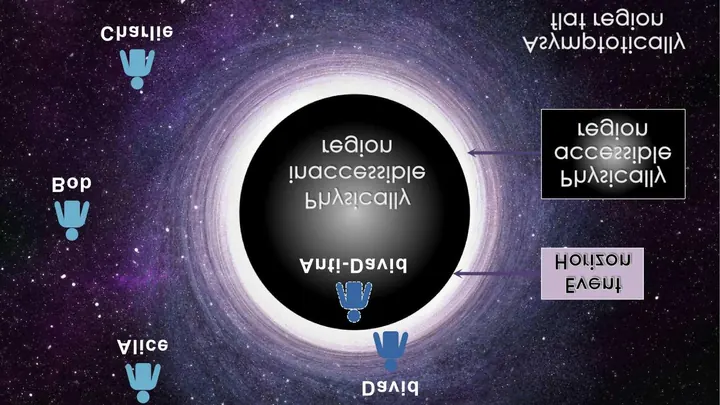
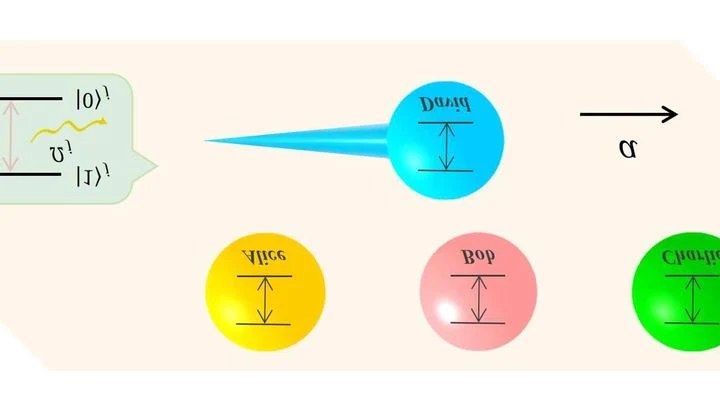
Fragile as ice in a furnace, quantum entanglement usually perishes from the slightest heat. Near a black hole, where space is twisted by Einstein's gravity and Hawking radiation Hawking's heats things up, any bond should be destroyed.
Two spinning tops are set off simultaneously in opposite directions. If one spins left, the other always spins right — no matter how far apart they fly. That's roughly how quantum entanglement works, except instead of tops, we have top quarks, the heaviest known particles.
Quantum entanglement is a special connection between particles: they affect each other instantly, even across light-years. For a long time, it was believed that strong acceleration destroys this bond.
Picture an orchestra of 120 musicians playing in perfect unison — one false note and the harmony crumbles. That's the metaphor for a record-breaking quantum ensemble. Physicists have for the first time entangled 120 superconducting qubits, the building blocks of future computers.
In a laboratory at Purdue University, a laser beam strikes a crystal of hexagonal boron nitride, and in response, a single point of light flashes. This is not just luminescence; it is a signal from a spin defect, a pair of electron spins, one of which is coupled to a carbon-13 nuclear spin.
In an accelerator, two Higgs particles collide. For a fleeting moment, their fates intertwine, then separate, carrying away information about the encounter.
In the silent heart of creation, where particles converge and part, an act of pure harmony is born. Two Higgs bosons meet and for a fleeting moment form a single whole — and if one demands that their quantum entanglement always reaches its limit, like a tuning fork setting a perfect pitch, then the equations suddenly light up with a new symmetry.