Light Catches Chip Tampering express
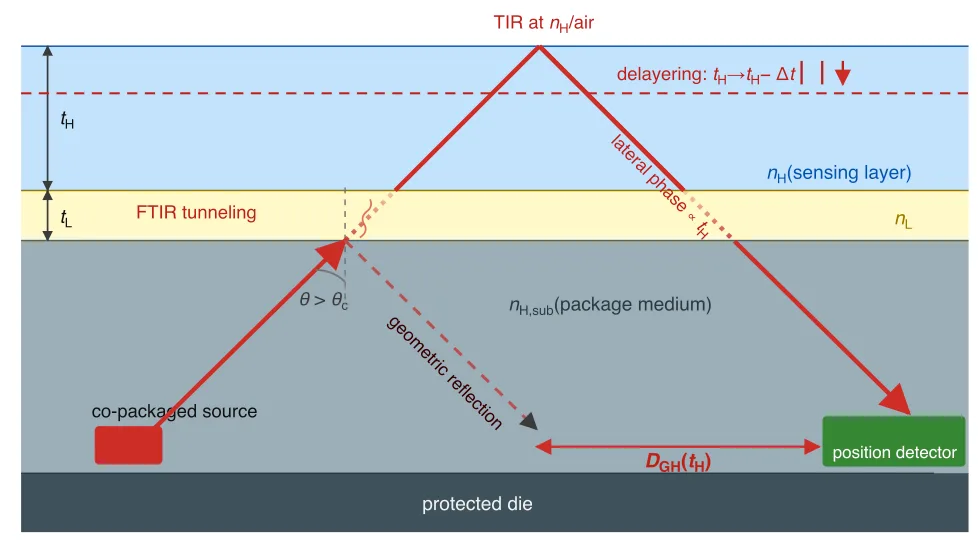
A microchip is like a layered cake: protective layers on top, secrets inside. An attacker can peel off layers one by one to get to the secrets. A new sensor monitors this with a light beam.
The beam hits the chip surface at an angle. Part of the light reflects, but not immediately: it slightly 'dives' into the top layer, like a pebble skipping across water. If the layer becomes thinner, the beam emerges elsewhere — shifting by a few nanometers. The sensor measures this shift.
This shift is nearly impossible to fake. It changes consistently under any disturbance — whether temperature fluctuations or laser jitter. Even if someone drills a pinpoint hole, the beam honestly reports: something was poked here.
The beam shift the sensor detects is thousands of times thinner than a human hair.