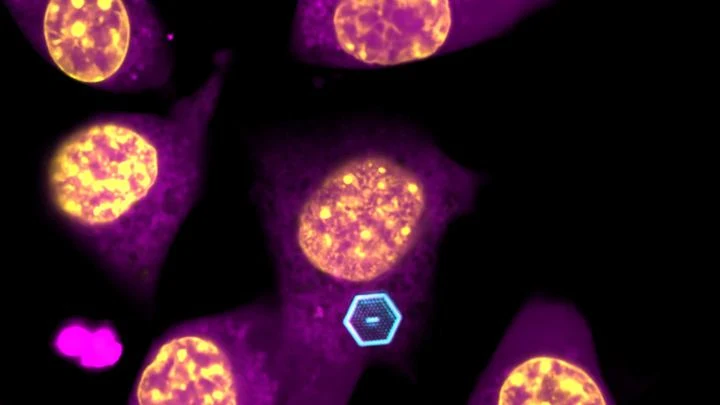
A microchip is a compact electronic device that integrates multiple components—transistors, resistors, capacitors—onto a single semiconductor substrate, typically silicon. In the context of the research corpus, it serves as a miniature laboratory: a platform where experimental setups are hosted, from superconducting memory switches to quantum translators that detect errors. The chip's small size and precise fabrication allow scientists to manipulate light, microwaves, and even individual molecules in ways that macroscopic apparatus cannot.
History
The integrated circuit was independently invented by Jack Kilby at Texas Instruments in 1958 and Robert Noyce at Fairchild Semiconductor in 1959, leading to the modern microchip.
How it works
Microchips work by etching intricate patterns of conductive and insulating materials onto a silicon wafer using photolithography. These patterns form transistors that act as switches or amplifiers for electrical signals, and interconnects that route signals between components. In research applications, the chip's surface can be modified to include sensors, waveguides, or electrodes, enabling precise control of physical phenomena at the micrometer scale.
In practice
Microchips are ubiquitous in electronics, from computers and smartphones to medical devices, and in research they enable compact, high-precision experiments in quantum computing, photonics, and sensor technology.
Fun fact
A modern microchip can contain billions of transistors, yet a single grain of sand—silicon dioxide—is the raw material for the entire semiconductor industry.
In a quiet room with no magnets anywhere, two electrons in a silicon trap still feel a faint trembling. It comes from the nuclei of silicon and germanium atoms, which spin randomly like the needles of broken compasses. This trembling was once considered noise, but now it has become a measuring instrument itself.
A plastic film as thin as a hair, and inside it — platinum dots smaller than a millionth of a millimeter. These dots sit at the boundary between two transistor layers and catch electric charge like a sponge catches water. As charge accumulates, the transistor changes its resistance, and remembers that state.
A quantum lab is like a kitchen where the chef waits a day for the stove to cool down. Superconducting qubits only work at temperatures of a few hundredths of a kelvin, and each 'cool, measure, warm up' cycle eats a whole day. A team of engineers built a fridge the size of a melon, weighing 3 kg, that does the job in just two hours.
The orchestra plays, but the conductor hears only a general hum. Each instrument plays its own part, but you can't tell where the flute is and where the double bass is. You need a spectrum analyzer — a device that breaks down sound by frequency.
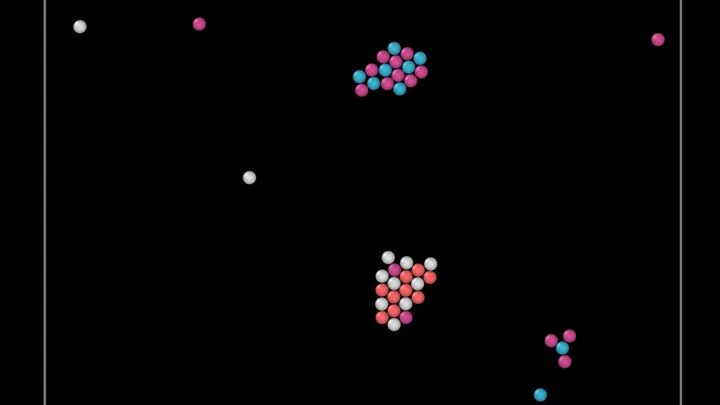
A drop of water on glass trembles and shimmers: it seems to have a life of its own. Similar behavior can now be observed in the world of colloids: tiny particles suspended in a liquid. Researchers simulated particles that emit chemical signals. These signals, like scents in the air, spread around and cause neighbors to either draw closer or move apart.
Blood vessel cells were seeded onto a transparent film just 700 nanometers thick — a hundred times thinner than a human hair. Flat electrodes are hidden beneath the film. They send a weak alternating current and listen as the resistance changes.
Dozens of copper coils in an MRI scanner pick up the faint response from tissues, like microphones trying to catch a whisper in a noisy hall. Each microphone drags a thick bundle of wires behind it. The wires press on each other, create electrical interference, heat up, and add risk for the patient.
A magnetic field holds a tiny particle in mid-air, like an invisible dance partner. A special tuning of the field creates a trap with two "positions." In the ordinary world, a dancer occupies only one, but in the quantum world — both at once. Physicists have learned to achieve this for dust grains weighing trillionths of a gram.
Ordinary magnetic sensors lose sensitivity as they shrink. But scientists turned a tiny diamond into a light-based compass. Unlike jewelry diamonds, what matters here isn't purity but artificially created defects — these are what turn the crystal into a compass.
Light can be more than just a beam: it can be a precision ruler. If you take very short pulses, shorter than a fly's wingbeat, and fire them one after another, you get an optical comb: a set of colors spaced at exactly equal intervals, like the teeth of a comb. This rainbow lets you measure distances, time, and the composition of materials with unimaginable accuracy.
After a heart attack, the dead section of heart muscle can be replaced with living cells grown from stem cells. But a common problem arises: the fresh transplant starts acting as its own pacemaker, and the heart falls out of its proper rhythm. Doctors see the arrhythmia on an ECG, but what exactly happens at the junction between 'self' and 'foreign' remains hidden.
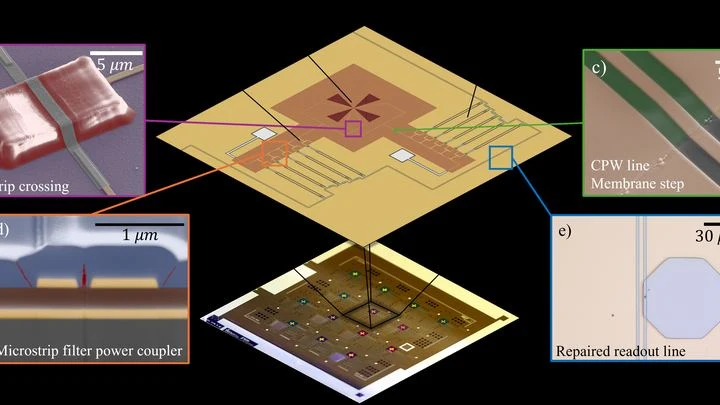
The rows of wires stretching from the warm room into the fridge holding the quantum chip look like a tangled telephone exchange from the last century. Each qubit needed its own analog channel for precise tuning, and the cables carried extra heat and got underfoot.
Now researchers have placed a digital-to-analog converter right in the cold zone, next to the qubits.
An ordinary flash drive in your pocket gets warm even when it's just sitting there. Now imagine memory that, in the cold, uses almost nothing, like a thermos that never cools down. A superconductor carries current without loss at liquid-helium temperatures, but it couldn't store data. The new cell changes that.
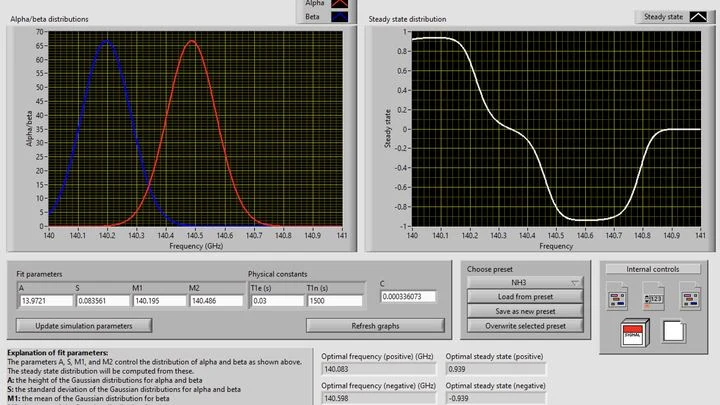
At Fermilab's accelerator, a particle beam strikes a target of frozen ammonia. The hydrogen nuclei inside are like tiny tops, and physicists need them all spinning the same way. Then the collisions reveal how the proton's spin is put together.
A regular laser is a light amplifier in which atoms, after receiving energy, collectively emit waves of a single frequency. A maser does the same thing, but for microwaves — the invisible radiation that heats food in a microwave oven and carries signals in phones.
Speech is like an orchestra where every note must sound at just the right moment. The brain turns a thought into a chain of sounds in a fraction of a second, and until now it was unclear how it manages this hierarchy — from individual sounds to syllables to whole words.
A cell is like a house with many doors. Some doors open only for certain guests, others let anyone through. To understand how these doors work, scientists build models of them. The new model is a glass slide with 52 miniature wells. Each well is covered with an ultrathin lipid film, like a jar with a lid. A protein that forms a channel through the film was inserted into it.
You can launch sound in a crystal at a frequency so high that the human ear can't hear it, and make that sound run in circles, like a train on a loop track. Engineers took a thin film of silicon nitride, deposited it on a lithium niobate substrate, and carved waveguides for sound waves into it.
In a particle accelerator, nuclei shatter into fragments like a porcelain cup dropped on the floor. Each fragment flies through silicon wafers, which register the impact and its strength. But to distinguish a real signal from random noise, you need a threshold: below it, readings are considered interference.
Light that has traveled to us for nearly 14 billion years is like an old photograph whose details emerge with careful processing. The cosmic microwave background (the afterglow of the Big Bang) holds the imprint of the universe's first moments, but its signal is faint and distorted.
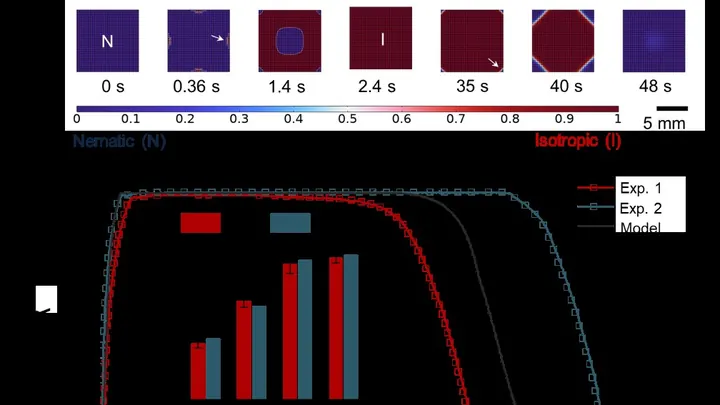
Radio waves surround us, but our eyes can't see them. This new sensor, the size of a fingernail, turns them into a colored patch on a tiny screen.
Inside the chip is a layer of liquid crystals — the same kind used in phone displays. Among them are embedded thin ferromagnetic nanowires. When a radio wave arrives, the nanowires heat up quickly.
Ordinary soldering doesn't work for quantum circuits: when cooled to liquid helium temperatures, metal cracks, and the contacts themselves introduce noise. Engineers from the research group tried something different — a drop of gallium alloy that stays liquid at room temperature, like mercury in an old thermometer.
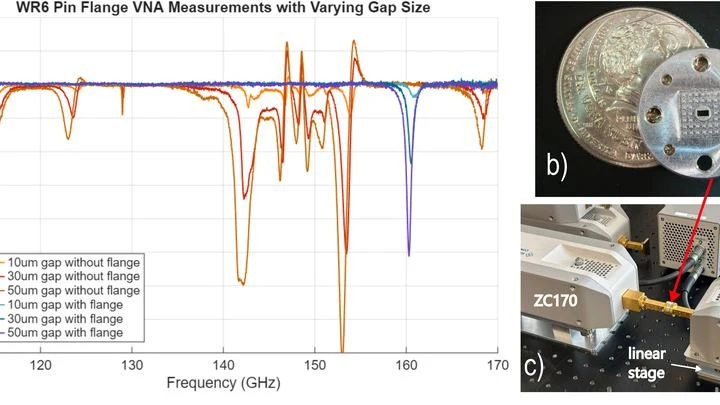
The receiver doesn't catch radio waves but submillimeter light — the radiation emitted by cold clouds of gas and dust in distant galaxies. Inside, there's an array of tiny resonators, each tuned to its own frequency, like the strings of a grand piano tuned to notes.
A fridge magnet attracts a paperclip: we can feel that field with our hands. Now shrink that field by a billion times. Atoms inside our bodies emit such weak signals, and they are very hard to catch.
Scientists built the sensor from special molecules that themselves behave like tiny magnets.
Ultracold molecules are a promising material for quantum computing, but assembling them into a neat array, like eggs in a carton, is no easy feat. A method has been proposed to load molecules one by one into optical tweezers or lattices directly from a gas. The molecules immediately end up in the calmest state of motion.
Light passing through a thin crystal can change color and the direction of its oscillations. In a molybdenum disulfide flake just hundreds of atoms thick, an infrared beam turns green, and its polarization, the way the light wave oscillates, obeys the crystal's geometry.
Silicon is like a universal building block: it goes into the chips in your phone, solar panels, and lasers. But if you squeeze it with immense force, the atoms rearrange into new patterns: these forms are called allotropes. One of them, Si-XIII, was first spotted more than twenty years ago, but its exact pattern remained a mystery.
A quantum bit is like a spinning top that must keep spinning steadily for a long time. In germanium, researchers have learned to set such tops spinning, but the floor around them is always trembling: electrical noise knocks the spin off course.
Quantum technologies often use light, but not just as a light bulb — rather as a carrier of information. One approach is to encode data in frequency: each 'color' of a photon can be a separate memory cell. The problem is that working with such color states requires a whole lab: a photon source, filters, modulators, detectors.
An ordinary solar cell does one thing: when the sun shines, current flows. Here, when the sun shines, the current flows differently depending on which side you bring the magnet.
A microwave signal that doesn't jitter from interference is needed in both radar and telecommunications. Until now, a clean signal was obtained on bulky setups where lasers and resonators sat on an optical table. Now engineers have packed everything into a box the size of a cup—166 milliliters.
A light beam passing through a piece of glass usually just bends slightly. But if you engrave ultra-fine patterns inside the glass with a laser, you can make the light split into separate beams, much like white light fans out into a rainbow after rain.
A quantum computer is like an orchestra where each qubit is a musician, and a measurement is the conductor's attempt to hear who played what. But the hall is noisy: the signal fades like sound through a thick wall, and the conductor himself sometimes mixes up the notes.
A quantum computer is a machine where qubits replace ordinary bits. A qubit can be not just a 0 or a 1, but both at the same time. One way to make a qubit is to take an electron and make it hover above the surface of liquid helium. The helium is cooled to below two degrees above absolute zero.
A silicon wafer is like cookie dough. Heat it in an oven, and tiny raisins appear inside — defects in the crystal lattice that can emit single photons. These "raisins" are called color centers, and they are needed for quantum computers and secure communication.
You can trap light in a cage smaller than a speck of dust. Photonic crystals are lattices that stop light from scattering and force it to run in circles. Previously, such structures were grown on a bulky substrate, making them too large for living cells.
Magnetic fields are all around us, from the compass in your phone to the MRI machine at the hospital. To measure them with high precision, you need special materials that respond to the slightest changes in the field. One such material is molecular crystals, where electron spins, think of them as tiny tops, can hold their state for a long time.
A laser pointer shines a neat spot: all its light waves march in step, like soldiers on parade. Such light is called coherent. But nature and technology also feature another kind of light—'messy' light, where waves are out of sync, like a crowd at a market. It's called partially coherent.
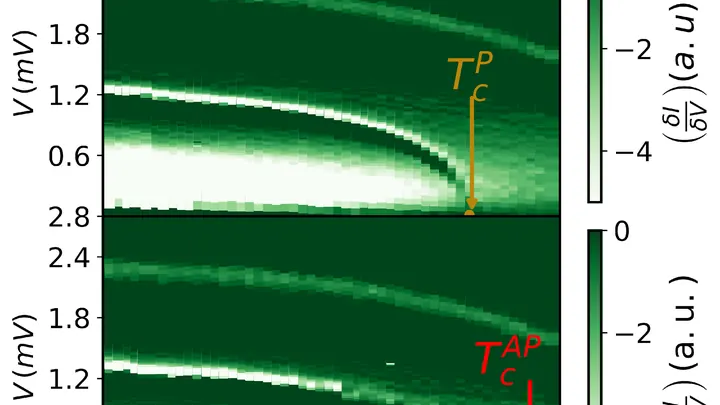
Ordinary computer memory constantly consumes energy to avoid forgetting what's stored. A superconductor could store data without loss, but it's hard to make it switch.
In the new work, a superconductor is sandwiched between two magnetic insulators.
A drop of ink falls into a glass of water, and instead of a flat stain, a ring is born that immediately starts to spin. That's roughly what the birth of a skyrmion looks like: light emitted by a tiny source twists into a stable vortex. Until now, such vortices could only be produced by large lasers.