A Tiny Lightbulb That Deposits Iron Atoms onto a Perfect Surface express
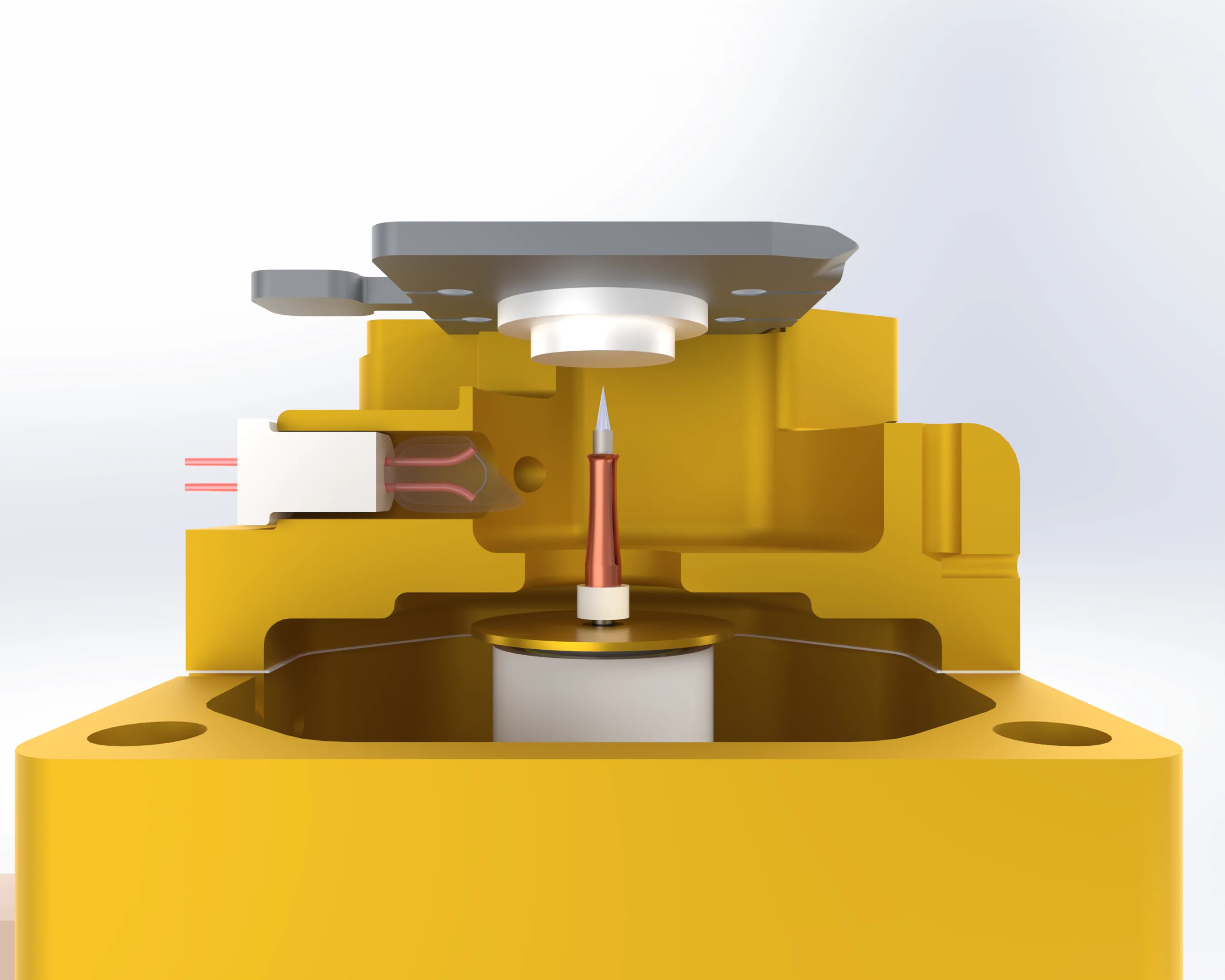
Inside a microscope that sees individual atoms, it's cold and silent: the temperature is around -268°C, and the interior is in perfect vacuum. To place individual iron atoms on such a stage, you usually need a direct 'corridor' from the evaporator to the sample. But in the coldest instruments, that corridor is blocked by thermal shields, making deposition a puzzle.
Engineers found a clever workaround: they took a miniature incandescent lightbulb, the kind that glows in pocket flashlights or instrument panels, coated its tungsten filament with a thin layer of iron, and built it right into the microscope head. By heating the filament with a weak current, they evaporate iron atom by atom. It lands on the cold magnesium oxide surface, which sits on silver, like frost on glass. The whole setup is pea-sized, and the sample is about a centimeter away.
After deposition, the microscope continues to scan the same surface area: the tip drifts less than 5 nanometers, which is the width of a few atoms. This allows you to first photograph a clean patch, then deposit a few iron atoms on it, and then look at it again, like carefully placing pieces on an empty chessboard and taking a photo before and after.
To confirm that the deposited material is indeed iron, the scientists measured how electrons tunnel through a single atom. The graph showed symmetric steps at voltages around plus or minus 14 millivolts — a characteristic 'signature' of an iron atom on magnesium oxide. The atomic flux is very low: about 15 atoms per square nanometer per second. Such an evaporator can run for about 150 hours, and its fixed position eliminates the need for bulky movable shields and for opening the microscope after cooling.
Now it's possible to repeatedly and very precisely add magnetic atoms onto an insulating surface without disturbing the fragile cold world inside the microscope. This paves the way for assembling tiny magnetic structures — one atom at a time.
The microscope's temperature rises by only 2 kelvin when iron atoms are evaporated — less than a cup of tea warms up in a second on a table.