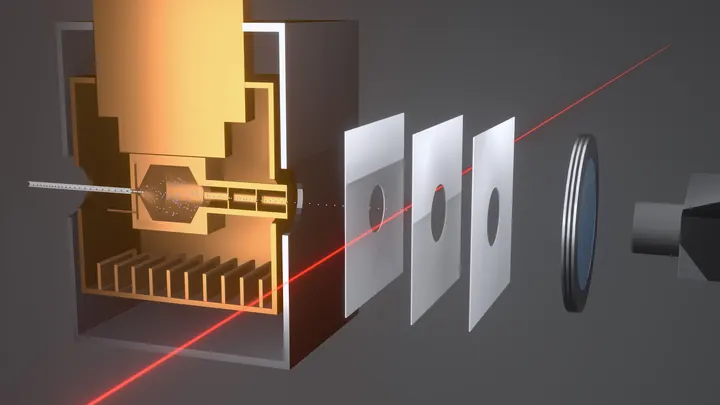
A cryostat is a device that maintains extremely low temperatures, often near absolute zero, for scientific experiments and technological applications. It is essential for operating quantum processors, superconducting circuits, and other systems that require minimal thermal noise. Cryostats provide a stable cold environment, typically using liquid helium or mechanical coolers to reach temperatures below 1 kelvin.
History
The development of cryostats dates back to the late 19th century with the liquefaction of gases, but modern dilution refrigerators were developed in the 1960s by Heinz London and others for low-temperature physics research.
How it works
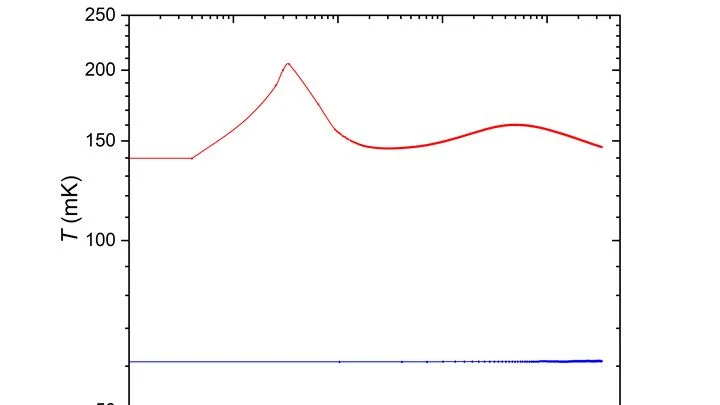
Cryostats work by isolating the sample or device from ambient heat using vacuum insulation and thermal shields. They use refrigerants like liquid helium (boiling at 4.2 K) or dilution refrigerators that mix helium-3 and helium-4 to reach millikelvintemperatures. The cold stage is connected to the device via conductive links, and temperature sensors and heaters maintain precise control.
In practice
Cryostats are used in quantum computers to cool superconducting qubits, in telescopes to cool infrared detectors, and in particle physics experiments to operate superconducting magnets.
Fun fact
The title 'Мороз для квантового мозга' refers to the cryostat as the 'freezer' for the quantum brain, since quantum processors must be kept at temperatures colder than outer space to function correctly.
A librarian in a rare-book archive takes a volume from the shelf and puts it back without waking the cat dozing nearby. That is roughly how the new quantum memory works: it catches a photon, tucks it into the mechanical vibration of a tiny silicon bridge, and returns it on request.
The stage is bathed in icy light, and on it stand silicon spectators. Each is an array of tiny avalanche diodes capable of spotting a single photon, but only if the surrounding temperature drops to 165 K.
A magnetic bit that flips with a gentle puff of current, not a strong magnet. That is exactly how the new device from the Institute of Semiconductors at the Chinese Academy of Sciences works: the layered magnet Fe3GaTe2 with a platinum channel changes its state under a short electrical pulse.
A tiny black hole flies through a hydrogen cloud and stretches atoms like taffy. That is what a superconductor looks like when it traps a persistent current: a material in which electricity flows without losses turns into a miniature permanent magnet.
Instead of an ice bath, a warm gas blanket. That is how the cryogenic current comparator at Japan's National Metrology Institute is now cooled. Previously, this instrument, which compares electric currents to within billionths of a percent, required immersion in liquid helium.
A quantum lab is like a kitchen where the chef waits a day for the stove to cool down. Superconducting qubits only work at temperatures of a few hundredths of a kelvin, and each 'cool, measure, warm up' cycle eats a whole day. A team of engineers built a fridge the size of a melon, weighing 3 kg, that does the job in just two hours.
Inside a microscope that sees individual atoms, it's cold and silent: the temperature is around -268°C, and the interior is in perfect vacuum. To place individual iron atoms on such a stage, you usually need a direct 'corridor' from the evaporator to the sample. But in the coldest instruments, that corridor is blocked by thermal shields, making deposition a puzzle.
Hot water after a shower, warm air from ventilation, the heated walls of an engine — all this is heat below 100°C. Usually, it dissipates without doing any useful work. Now it can be captured and turned into electricity.
Inside the new device is a wire made of a nickel-titanium alloy. This material remembers its shape: when heated, it contracts; when cooled, it returns to its original shape.
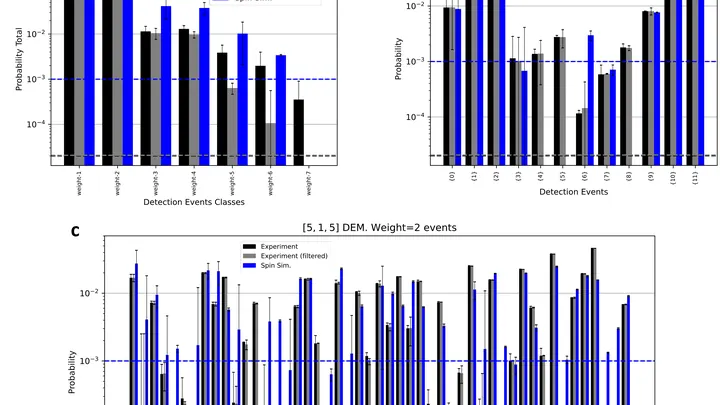
Quantum computers make mistakes. Each qubit is like a ball balanced on the tip of a pencil: a slight tremor in the hand and it rolls off. To keep the balls from falling, you need someone to notice the wobble and correct it in time.
In the world of quantum particles, there are introverts — anyons. They are unlike familiar electrons or protons. If you swap two such introverts, they remember the maneuver, as if leaving an invisible trace.
A quantum computer based on neutral atoms is like a city where couriers, laser tweezers, physically carry packages between addresses. While one courier drags an atom across the entire chip, the others sit idle. This is slow and error-prone.
The new architecture replaces couriers with a shared radio wave.
Hot tea cools down, and ice cream melts — heat always flows from warm to cold, and this law seemed unbreakable. But in the quantum world, even familiar rules can be rewritten. Physicists placed a tiny mechanical resonator (a vibrating bridge the size of a microbe) in an optical cavity between two mirrors.
Two dancers on stage must move in perfect sync, but if one hesitates, the whole routine is ruined. That's roughly how quantum computers with neutral atoms work: two atoms are entangled by putting them into a Rydberg state (as huge as a balloon compared to an ordinary atom), and then you wait for them to 'dance' their part.
In the quantum world, particles can merge into a single liquid that flows without friction. One of its most mysterious forms is the fractional quantum Hall liquid. In it, electrons or atoms move as a single vortex, and their charge splits into fractions, like a pie cut into perfectly equal slices.
A sugar cube squeezed between your fingers will almost certainly crumble rather than compress evenly. A similar challenge faces quantum computer builders. They need to slightly stretch or compress miniature silicon plates — qubits are later placed on them.
An ordinary field-effect transistor is like a faucet with a very sensitive handle: turn it slightly, and water flows. In the cold depths of a quantum computer, where everything is chilled to near absolute zero, such a faucet must open strictly on command.
A magnet the size of a grain of rice floats in a vacuum without touching the walls. It is held by the magnetic field of a superconducting trap — a ring cooled to a state where current flows without resistance.
In a pot of soup, every grain is a tiny magnet that wants to flip opposite to its neighbor. Heat the soup, and the magnets start jittering, obeying the heat. But how do you know how unruly they are at each temperature? For an ordinary material, you'd calculate this on powerful computers by enumerating possibilities.
Quantum laws reign supreme in the microworld, but macroscopic objects usually behave classically: the thermal motion of atoms drowns out quantum effects.
A tiny ball weighing a fraction of a milligram, suspended in a magnetic field and cooled to near absolute zero, oscillates for 110 hours without stopping: this is record isolation. The energy loss is so small that the system's entropy barely increases, making any external influence noticeable.
The rows of wires stretching from the warm room into the fridge holding the quantum chip look like a tangled telephone exchange from the last century. Each qubit needed its own analog channel for precise tuning, and the cables carried extra heat and got underfoot.
Now researchers have placed a digital-to-analog converter right in the cold zone, next to the qubits.
An ordinary flash drive in your pocket gets warm even when it's just sitting there. Now imagine memory that, in the cold, uses almost nothing, like a thermos that never cools down. A superconductor carries current without loss at liquid-helium temperatures, but it couldn't store data. The new cell changes that.
A quantum computer is like an orchestra where every musician must play their part perfectly, or the melody falls apart. Previously, controlling qubits — the quantum 'musicians'—required a room full of equipment, and every extra wire added noise.
A crystal that promised to conduct electricity without loss at room temperature turned out to be like a house of cards: touch it and it falls apart. Two compounds (one with silver, one with gold) were considered superconductor candidates, but tests showed that neither can withstand even ordinary conditions.
In the silver variant, the lattice simply collapses.
A copper crystal is squeezed in diamond anvil cells. As pressure mounts, a battle unfolds inside the material between two states: one prepares electrons for superconductivity, the other hinders their pairing. Scientists tracked this struggle using ultrashort laser pulses.
Imagine trying to examine a snowflake without letting it melt or get damaged. That's roughly the challenge facing scientists who want to study individual proteins — the tiny molecular machines of life. In solution, a protein constantly jiggles and clumps with its neighbors, and in an electron microscope, the beam destroys it.
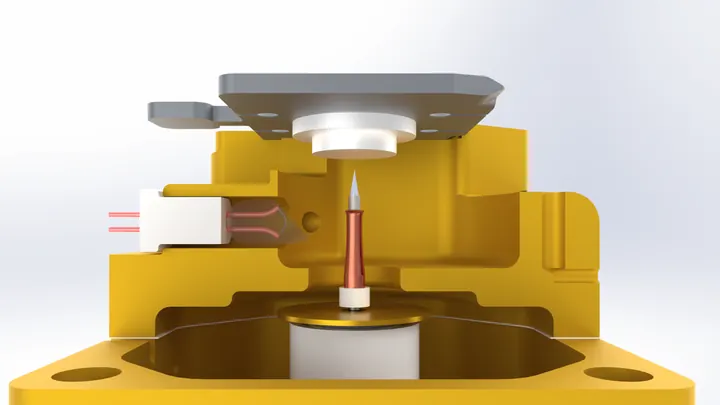
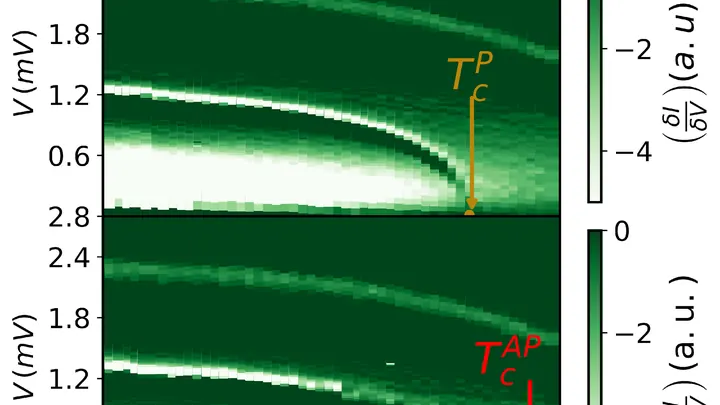
A metal needle descends onto a piece of superconductor. All of this happens inside a refrigerator that cools the sample to 30 thousandths of a degree above absolute zero — a hundred times colder than outer space. A weak current is passed through the needle, and by how electrons travel through the tiny contact point, physicists read what is happening inside the material.
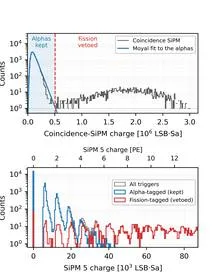
A detector that hunts for rare particles is like an ear trying to catch a whisper in a noisy room. The quieter the signal, the harder it is to tell apart from random noise. In the NUCLEUS experiment, such detectors, cryogenic calorimeters, are cooled to near absolute zero so they can pick up even a faint pulse of heat from a single particle.
A quantum computer is like an orchestra where each musician plays their part, but if the conductor waves the baton a bit too hard, the delicate instruments go out of tune from excess heat. Controlling qubits at 10 mK (300 times colder than your freezer) is like conducting an orchestra in an ice-cold hall where even a breath can ruin everything.
An ice cube in tea melts without a trace. Similarly, quantum systems usually quickly forget their past. But under strong disorder, many-body localization emerges — particles seem to freeze, preserving memory.
The experiment on IBM's 144-qubit processor lasted 5000 cycles.
Superconductivity is the ability of a material to conduct electricity without losses. Ordinary wires heat up, and some energy is lost as heat, but a superconductor carries current with zero resistance.
Quantum materials are like finicky flowers: they only bloom in the cold. At room temperature, they hide their unusual properties, but when deeply cooled, they become superconductors or change their magnetic behavior. To understand how they work, you need to examine their atoms in the very cold where these properties reside.
In laboratories where atoms are cooled to near absolute zero, even a tiny change in the magnetic field throws off all the settings. Conventional sensors, Hall plates or coils with ferrite cores, sit a few centimeters away from the vacuum chamber because they themselves create interference.
Water in a pot, when heated, doesn't boil: it turns into ice. That's roughly how ultracold atoms behave in an optical lattice — a light-based crystalline grid that holds atoms in place. Scientists simulated this system on a computer to understand how order changes as temperature rises.
A semiconductor film just one atom thick is like a communal apartment: it houses negatively charged electrons and positively charged 'holes.' When light hits such a film, an electron and a hole can pair up into an exciton — a bound state of an electron and a hole, akin to a hydrogen atom.
A quantum computer is like an orchestra where every musician must come in exactly on the beat. The faintest rustle in the hall throws off the violinist, and the melody falls apart. In silicon chips, that rustle is electrical noise: random fluctuations of charge inside the material. They make quantum bits err.
A seismometer is the planet's ear. It picks up the faintest tremors in the ground and turns them into an electrical signal. But this ear isn't perfect: its sensitivity depends on temperature. In the cold and in the heat, the instrument hears slightly differently, and that introduces error into measurements.
Ultracold molecules are a promising material for quantum computing, but assembling them into a neat array, like eggs in a carton, is no easy feat. A method has been proposed to load molecules one by one into optical tweezers or lattices directly from a gas. The molecules immediately end up in the calmest state of motion.
At 0.1 K, just three-tenths of a degree above absolute zero, matter stops following the usual rules. Helium becomes superfluid: it flows without friction, seeps through cracks, and behaves like one giant quantum liquid. Seeing what happens inside such cold is a challenge at the edge of possibility.
A quantum bit is like a spinning top that must keep spinning steadily for a long time. In germanium, researchers have learned to set such tops spinning, but the floor around them is always trembling: electrical noise knocks the spin off course.