Laser Tuning of Quantum Dots in Nanowires ✛
A taut string sounds higher, a slack one lower. In quantum dots, the crystal lattice plays the role of the string: compression or stretching changes the color of the emitted light. The trouble is that during nanowire growth, each dot ends up with its own random strain, so their "strings" sound out of tune. For quantum networks, where photons from different emitters must be indistinguishable, such a spread is fatal.
Scientists have found a way to tighten each string individually without touching it. An indium phosphide nanowire with an indium arsenide quantum dot is coated with a shell of amorphous antimony sulfide (Sb₂S₃). This material softens under a light beam, much like wax. A laser with a wavelength of 671 nm, aimed at a single nanowire, makes the shell flow slightly and relieves some of the mechanical stress on the core. As a result, the quantum dot experiences less compression, and its emission shifts to the red. At room temperature the shift was 7-8 meV, and on cooling to 12 K it reached 28 meV. That corresponds to a wavelength change of about 30 nm, comparable to the width of an entire channel in the telecommunications band.
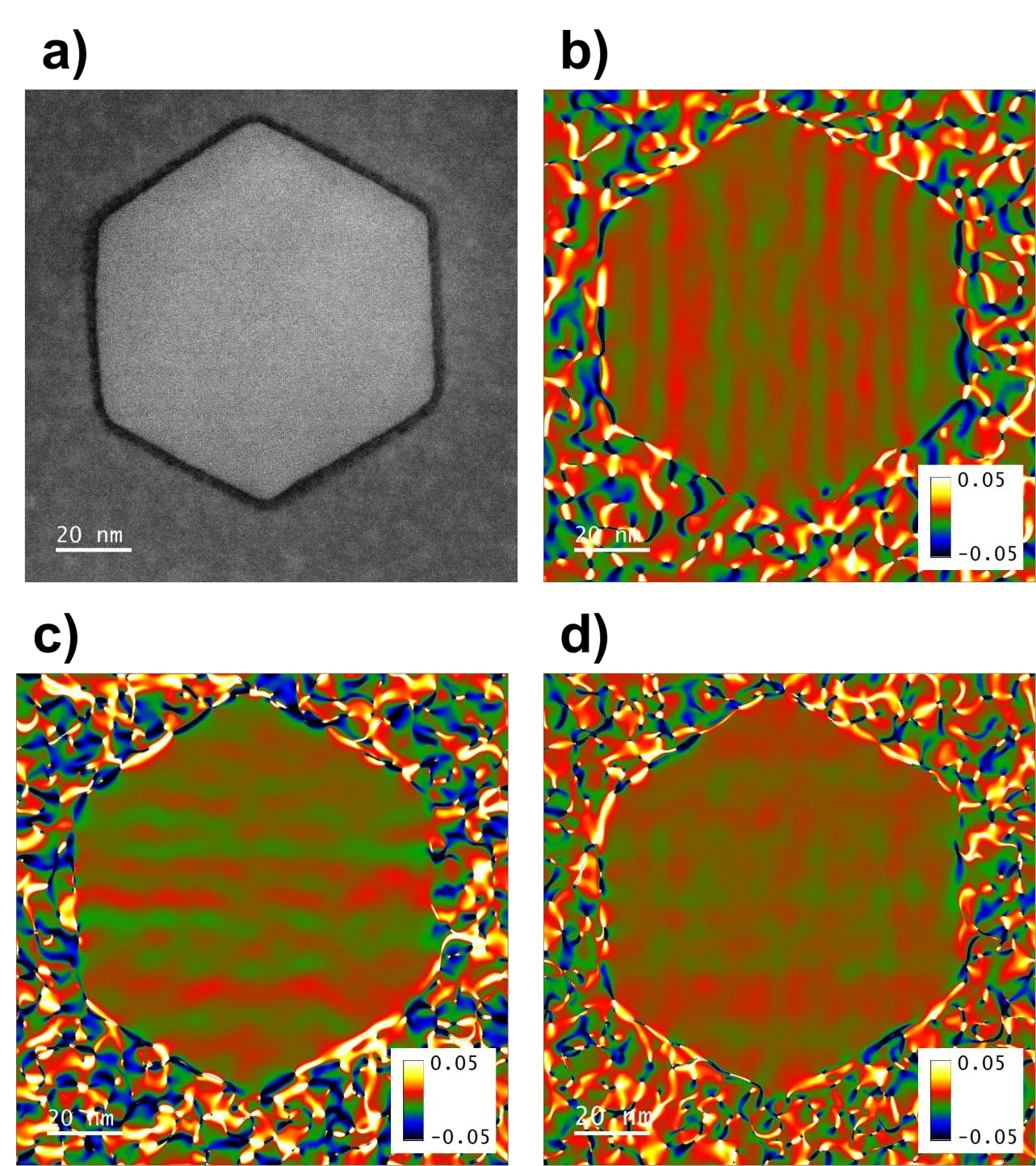
X-ray diffraction experiments showed that after the shell is deposited, the InP core contracts by 0.13% along both axes. This strain is what detunes the string. Irradiation relieves it, but not completely: some residual shift remains, and it can be controlled by the light dose. Importantly, the emission linewidth does not degrade, meaning the quality of the single photons is preserved. The method works at cryogenic temperatures, where quantum dots are typically used.
This tuning approach is contactless and local: you can adjust one emitter on a chip without touching its neighbors. That opens a path to arrays of nanowires with individually tuned wavelengths for entangled states. In the long run, the method could be integrated into the fabrication process for photonic integrated circuits, where matching the spectra of emitters is a key challenge.
The taut string can now be precisely tuned with a beam of light. Instead of growing perfectly identical quantum dots, you can grow them with a spread and then "tune" each one to the desired note. This approach brings scalable quantum networks a step closer.
A shift of 28 meV at 12 K corresponds to a wavelength change of about 30 nm in the telecommunications O-band, comparable to the width of an entire DWDM channel.
In the series The Expanse, quantum entanglement is used for instant communication across the Solar System. Tuning emitters to identical wavelengths, similar to what is described here, is necessary to create such communication channels.