Scientist

Joseph Fourier

1768–1830 · mathematics, physics, heat conduction theory, harmonic analysis
Jean-Baptiste Joseph Fourier is a French mathematician and physicist whose name is inextricably linked with harmonic analysis. His theory of Fourier series and transforms became a universal language for describing waves and oscillations, penetrating all corners of physics, engineering, and signal processing.

Biography

Born in Auxerre, orphaned early, educated at a military school. He participated in Napoleon's Egyptian campaign, heading the scientific part of the expedition. Upon returning, he became prefect of the Isère department but continued to intensively engage in science. In 1822, he published his magnum opus — 'The Analytical Theory of Heat'. He was elected a member of the French Academy of Sciences and awarded the Legion of Honour.

Key discoveries

💡 Fourier was a passionate advocate of heat: he believed that heat is good for health, constantly wrapped himself in clothing, and even in hot Egypt managed to wear a warm overcoat, earning the nickname 'the eccentric from Grenoble'.
"He considered that mathematical analysis of nature gives the ability to understand the secrets of the world."
Concepts
Fourier seriesFourier transforminterferometryspectroscopy
Laws
Fick's law
Scientists
Robert HookeJohann Jakob BalmerJocelyn Bell BurnellArno PenziasCharles TownesJames Clerk MaxwellErwin SchrödingerCecilia Payne-Gaposchkin

Related articles

cs.PL2011-09-053 minarXiv:1109.0786
Properties as a Compass: Precise Programming
Fog thickens over the line "def max(a: Int, b: Int): Int". What does it do? It returns the larger of two numbers, but how can you verify that? You could write a dozen tests with specific pairs: max(2,3)=3, max(5,5)=5, max(-1,0)=0. Still, a nagging doubt remains: what if it breaks for, say, a million and minus a million?
Depth as a Measure of Natural Complexity
A team assembling a jigsaw puzzle from random pieces: how many simultaneous moves does it take to complete the picture? If the pieces are independent, they all go down at once. If each piece depends on the previous one, you have to work one at a time. So it is with systems: some states assemble instantly, others require a long sequential effort.
Noise That Works for Us
An old aviation instrument sometimes sticks: the needle catches on the scale and doesn't move, even though the plane is already changing altitude. Engineers found a simple solution: add a slight vibration. The shaking doesn't hinder; on the contrary, it helps the needle break free and show the truth.
How to Keep a Supercomputer from Gridlock
A supercomputer simulating laser plasma is like a kitchen where hundreds of chefs are preparing a single dish. If ten people crowd around one stove while another stands empty, the work grinds to a halt. The same happens in simulations: plasma particles bunch up in certain regions of space, leaving others nearly empty.
eess.SY2020-04-233 minarXiv:2004.11411
How to Hear the Ocean's Voices
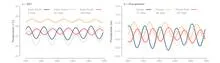
Earth's climate resembles a choir, where each member sings their own part at their own pitch. Some voices hold low notes, like multi-year ocean temperature oscillations, while others produce rapid trills, like short atmospheric waves. The conductor needs to hear each one, but the voices overlap and the notes blend into a mush.
Mapping Bifurcation Landscapes: How Numerical Continuation Reveals Hidden Mechanisms in Delay Systems
A cartographer charting a route through a mountain range notes not only peaks and valleys but also passes where the trail sharply changes direction.
stat.ME2020-10-053 minarXiv:2010.02247
A Causal Map Without Intervention
An orchestra without a conductor plays in harmony, and you want to understand who influences whom. The violinist hears the cello, the cellist catches the rhythm of the percussion, and the flute adapts to everyone at once.
Graph Neural Networks Predict El Niño More Accurately
The warm El Niño current appears in the tropical Pacific every few years and reshuffles weather across the planet: drying fields in some places, flooding streets in others. Meteorologists have long tried to catch it early, but the ocean is too cunning: the cause hides not in a single spot but in a call-and-response between regions separated by thousands of kilometers.
The World as a Graph: Neural Network Learns to Predict El Niño
The ocean resembles a giant web, where each thread connects distant points of water. When one spot warms, winds and currents change thousands of kilometers away. The neural network in this study wove such a web for the first time on its own to predict El Niño.
Climate Teleconnections with a Time Lag
In 1960, a meteorologist at a station in Peru records water temperature, while a farmer in India watches the sky waiting for the monsoon. There is no direct link between these two events, but months later one will echo in the other.
Disentangling Complexity: How to Tell a Direct Signal from a Chorus of Voices
An orchestra without a conductor plays a complex piece. The listener hears the overall music but wants to understand who leads the melody and who merely echoes it in unison.
cs.CE2025-01-223 minarXiv:2501.12756
The Sculptor of Informativeness: How to Carve a Specimen That Tells Its Own Story
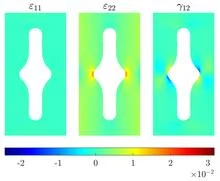
A mechanical testing lab is like a kitchen where a chef tastes a dish to guess the recipe. For an anisotropic material, one that is stiffer along its fibers than across them, a single taste is not enough. You need three or more separate tests, each with its own specimen. Engineers have spent years refining specimen shapes by hand, relying on intuition and experience.
Four Notes of the Ocean: Squeezing an El Niño Model into Your Pocket
The Pacific Ocean, ten thousand kilometers wide, breathes: warm water shifts eastward, cold water retreats, and this in-and-out repeats every few years. A model that captures this breathing takes weeks of computation even on a supercomputer.
Three Types of Passengers on One Platform: Who Leaves the Station and How
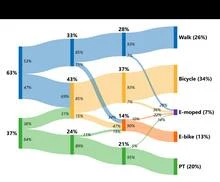
The train pulls into the station. Doors slide open, and the crowd spills onto the platform. From there, everyone goes their own way: some head for the bike racks, some dive into the underpass toward the bus, and some just walk to the exit. This final stretch, from the train door to the door of home or office, often decides whether people take the train at all.
Cloud Spices: How a Neural Network Improves Climate
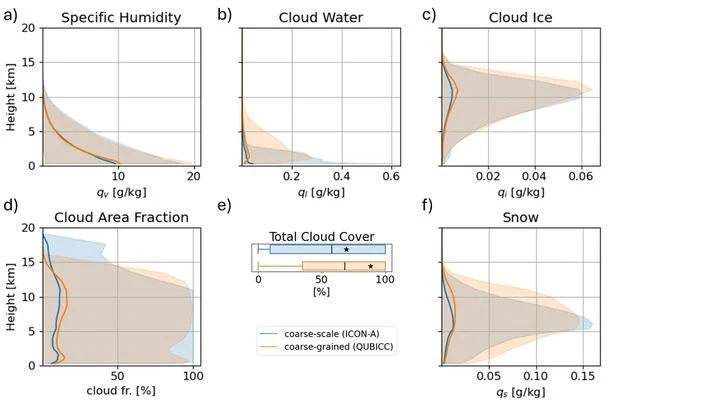
Climate forecasting is like a complex recipe: one wrong pinch and the whole dish is ruined. So it is with clouds — small but decisive. Climate models divide the sky into 50–100 km cells and don't see individual clouds. It's like throwing pepper by the handful when the recipe calls for a pinch.
Quantum Physics2025-10-191 minarXiv:2510.16759express
A Quantum Instrument Plays the Music of Primes
Physicists have created a quantum analogue of a musical instrument. Its “notes”—the allowed energy levels — precisely replicate the first numbers from a set that governs the distribution of primes. These numbers are the imaginary parts of the zeros of the famous Riemann zeta function, a mathematical object inextricably linked to prime numbers.
Physics and Society2025-11-261 minarXiv:2511.20976express
How Artificial Intelligence Becomes a Scientist's Partner
Science is a vast kitchen where scientist-cooks seek new recipes. Once, they sifted ingredients by hand; now artificial intelligence, a seasoned chef, lends a hand. AI memorizes millions of flavors and suggests surprising pairings: through information search, the algorithm uncovers hidden patterns.
Chemical Physics2026-01-022 minarXiv:2601.00581express
Molecules on a Leash: Fast Drug Discovery
You need to sift through millions of keys to find the one that unlocks the lock of a disease. Each key is a molecule, and the lock is a protein in our body. Checking each key manually is impossible, so chemists use computer models that predict how a molecule will behave in reality. Until recently, accurate calculations took hours or days on powerful computers. The new tool AceFF does it in seconds.
Autopilot for Digital Materials
Computer models that predict material properties at the atomic level usually require long, manual tuning. To work accurately, the model needs to see many examples — how atoms are arranged and how they interact. Scientists spend weeks hand-picking these examples. The new program AutoPot does it all by itself.
The Secret of Warped Webs: A New Way to Compare Networks
Graphs are considered identical if their 'terrain' matches. Imagine two maps with mountains and valleys: even if drawn differently, the heights and steepness of slopes can be the same.
Applied Physics2026-01-091 minarXiv:2601.05448express
Light Instead of Microphones: A New Way to See Inside the Body
A laser hits tissue, and the tissue responds with a barely audible click — a sound wave. Sensors pick it up, and from that, an image of what's inside is built. That's how photoacoustic imaging works: light reaches deep, and sound carries the picture out. In the new scheme, there are no sensors. Instead, several thin light beams are sent through the area where the wave has passed.
Spec-o3: A Digital Magnifying Glass for Hunting Rare Stars
The light of a star is stretched into a rainbow band. Dark lines — scars from absorbed elements, bright peaks — traces of hot gas. That’s a spectrum, the astronomer’s key piece of evidence. Cecilia Payne-Gaposchkin was the first to read that almost all stars are made of hydrogen.
Chemical Physics2026-01-151 minarXiv:2601.10791express
Particle Physics Accelerates Molecules
In the Large Hadron Collider's detector, each proton collision leaves thousands of points — tracks of flying particles. A neural network learned to spot patterns in this scatter and predict what happened at the moment of impact.
Chemical Physics2026-01-171 minarXiv:2601.11856express
How to Catch an Excited Molecule
When a molecule absorbs light, it doesn't just heat up: it transitions into a special, excited state. Its electrons rearrange, like musicians who, after a loud chord, start playing a new melody.
Biological Physics2026-01-172 minarXiv:2601.11947express
A Drop of Blood Tells Its Story Through a Single Molecule
A drop of blood is a bustling city in miniature. Thousands of different molecules scurry through it, each leaving its own trace. But peering directly into this city is hard: the streets are tangled, and there are so many inhabitants that counting them all individually is out of the question. Scientists have found a way to listen to the whole city at once, without singling out its residents.
Optics2026-01-182 minarXiv:2601.12228express
A Spectrometer That Fits in Your Palm
A conventional spectrometer is like a comb that untangles light and sorts it by wavelength. But a comb is rigid: one type of light needs one comb, another needs a different one. The new device works differently. It asks light a series of questions, changing its shape each time to glean more meaning from the answers.
Chemical Physics2026-01-181 minarXiv:2601.12268express
How Molecules Recognize Each Other Without Hints
When a guest molecule enters a host molecule, it's like a key going into a lock. But molecules don't have rigid shapes: they bend a little, charges on their surfaces attract or repel, and predicting exactly how they'll fit together has been very hard. DeepHostGuest learns from thousands of known host-guest pairs.
Applied Physics2026-01-182 minarXiv:2601.12418express
Sound Waves Mix Like Paint
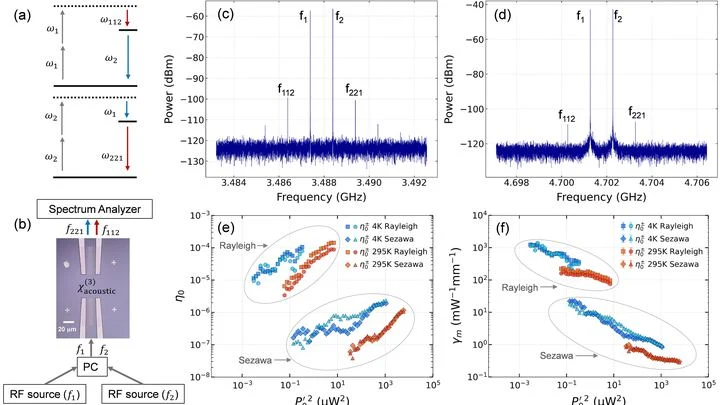
In the kitchen, when two broths are mixed in one pot, the resulting flavor is new, unlike either of the originals. A similar trick is possible with sound: two waves meeting on the surface of a crystal give birth to a third, with a frequency that neither of them had.
Spin compass a thousand times more precise
Magnetic resonance is like a tuning fork that rings only at its own note. Each molecule has its own frequency, and from that you can tell what the molecule is and what state it's in. But previously, this tuning fork was listened to through a thick wall: the signal was blurred, and you couldn't make out the exact note.
Superconductivity2026-01-221 minarXiv:2601.15971express
Tuning a Light Detector to Its Limit
A superconducting single-photon detector is like a string stretched in the dark. When a single photon hits it, the string momentarily loses its superconductivity, and we hear a click. But until now, the string was always out of tune: the detector performed worse than the material would allow. The reason is the uneven distribution of current across the detector's width.
q-bio.QM2026-01-251 minarXiv:2601.17669express
Kidney Cancer: Math Takes on the Tumor
A tumor in the kidney grows like a weed that has learned to hide from the gardener. The immune system, that very gardener, simply doesn't notice it. Doctors try different drugs, but each person's disease behaves differently. The authors made a computer replica of this battle.
Materials2026-01-251 minarXiv:2601.17847express
Batteries Under the Microscope: How AI Learns from Its Mistakes
Inside a battery, like a layered cake, different solid layers sit side by side. The meeting point, the interface, behaves capriciously: stresses concentrate there, and over time the battery ages. To understand these processes, we need computer models that see every atom. But accurate calculations are too expensive, and fast ones are too crude.
Image Processing2026-01-271 minarXiv:2601.19743express
A Heart Under a Clear Dome
An echocardiogram is like a window into the engine room: you can see the chambers contracting and relaxing. The key question is how much blood the heart pumps out with each beat. Doctors calculate this by hand, and two specialists can differ by 10–15%. A computer could be more precise, but typical neural networks are like black boxes: they give an answer but don't say how.
Fluid Dynamics2026-01-272 minarXiv:2601.19994express
Predicting Blood Damage in Pumps
In a heart-lung machine, blood flows through narrow tubing and past rapidly spinning pump blades. Sometimes red blood cells can't take it: their membranes rupture, and hemoglobin spills into the plasma. For a patient, this is like pouring sand into a car's fuel system — small damages accumulate and wreck the whole mechanism.
Materials2026-01-292 minarXiv:2601.21273express
Squeezing Light Out of a Crystal to Its Limit
When you pluck a guitar string hard, it doesn't sound a single note but several at once — the fundamental tone and overtones. Physicists have pulled a similar trick with light: they aimed an infrared laser at a crystal, and the crystal lit up with sixteen colors at once, from invisible heat to hard ultraviolet.
An Ultrasonic Ear for Icy Detectors
A thermometer cooled to near absolute zero picks up the heat from a single particle. That's how cryogenic calorimeters work — instruments that catch ultra-rare events like neutrinoless double beta decay. But old thermistor thermometers respond slowly: in about a millisecond.
Machine Learning2026-01-311 minarXiv:2602.00526express
Breathing Turns into Sleep
At night, a person breathes, and the rhythm of that breathing can tell you a lot about their sleep. But usually, doctors look at the brain's electrical waves — recorded by sensors on the head. New work shows how to reconstruct those waves from breathing alone, without touching the head. The model acts as a translator from the language of the body to the language of the brain.
Machine Learning2026-01-311 minarXiv:2602.00539express
Drugs That Should Never Meet
A doctor prescribes a pill for the heart and a pill for blood pressure. Individually, each helps, but together they can scramble signals in the blood and cause harm. These unwanted encounters between drugs are called interactions, and testing every pair in the lab is impossible: there are millions of them.
Machine Learning2026-01-311 minarXiv:2602.00547express
Teaching Machines to Identify Molecules by Their Fragments
A mass spectrometer works like a molecular shredder: it breaks a substance into charged fragments and weighs each one. From this 'fingerprint,' chemists can tell what was in the sample. But if the molecule is new and its fragments don't match anything known, the instrument just shows a set of peaks, and what lies behind them is a mystery. The authors of the paper proposed a workaround.
A Molecular Compass for Drug Discovery
A chemist searching for a new drug is like a cook without a recipe: they have a list of desired properties but millions of possible ingredients. Each trial is costly and time-consuming, so you need to experiment wisely. The new program SEISMO acts like a chef who tastes the dish after every step and immediately decides what to add next.