Statistical mechanics is the framework that connects the microscopic world of atoms and molecules to the macroscopic properties we observe, like temperature, pressure, and entropy. Instead of tracking every particle, it uses probability distributions to describe the collective behavior of systems with enormous numbers of constituents. This approach explains why heat flows, why gases expand, and why magnets lose their magnetization at high temperatures — all from the statistical rules governing microscopic motion.
History
Developed in the late 19th century by Ludwig Boltzmann and Josiah Willard Gibbs, building on earlier work by James Clerk Maxwell on the kinetic theory of gases.
How it works
The core idea is to define a probability distribution over all possible microstates (specific arrangements of particle positions and momenta) consistent with macroscopic constraints like total energy. From this distribution, one computes average quantities — energy, particle density, magnetization — that match what we measure. The second law of thermodynamics emerges naturally: systems evolve toward the most probable macrostate, which corresponds to maximum entropy.
In practice
Used to design engines, predict phase transitions in materials, model biological processes like protein folding, and simulate complex fluids in engineering.
Fun fact
Boltzmann's entropyformula S = k log W is engraved on his tombstone in Vienna.
In a rubber band stretched in the lab, three different elasticity mechanisms operate simultaneously. At small strains, Hooke's law prevails; at intermediate strains, entropic chain elasticity; at large strains, strain-induced crystallization.
A sunspot, a dark island on the fiery surface, lives its own turbulent life. Beneath it, in invisible depths, giant magnetic loops drift like twisted cables. When such a loop emerges, it can discharge as a flare, and hurl clouds of charged particles into space.
Scientists have long tried to understand what determines the strength and suddenness of these events.
A courtroom interpreter is distracted by every rustle: the creak of a chair, a cough in the back row, the rustle of papers. By the end of the day, they are translating not what the witness said, but what they heard through the noise. Rare translation errors are not the result of a single loud shout, but of the accumulation of many small disturbances.
A kitchen mixer runs at a single speed, but start jabbing the button and the mixture whips up differently. Chemical reactions behave much the same way when the rates of their individual steps are not constant but pulse over time.
Glass lenses and mirrors appear perfectly smooth and still. But beneath the surface, a hidden life teems. Atoms in an amorphous material (a substance without a crystalline lattice) are packed haphazardly, and this disorder creates a complex energy landscape, like a mountainous region with countless hills and valleys.
A crowd at a metro station during rush hour. Some hurry toward the escalator, others slow down at the departure board, still others weave around a column. Each step is not merely a reaction to what's right in front of your nose. A person estimates in advance where a neighbor will be a second from now and adjusts their route accordingly. Physicists call this forward-looking behavior anticipatory.
Many chemical transformations resemble assembling furniture in complete darkness: you see the starting parts and the finished cabinet, but the assembly itself remains a mystery. The intermediate states, like awkward positions of the craftsman's hands, vanish too quickly to be discerned.
In a football stadium, the crowd's emotions arise from the chatter of individual fans. If mood could be both joyful and sorrowful at once, you'd have a quantum superposition. But the murmur of thousands of voices instantly forces that blend into a single definite state.
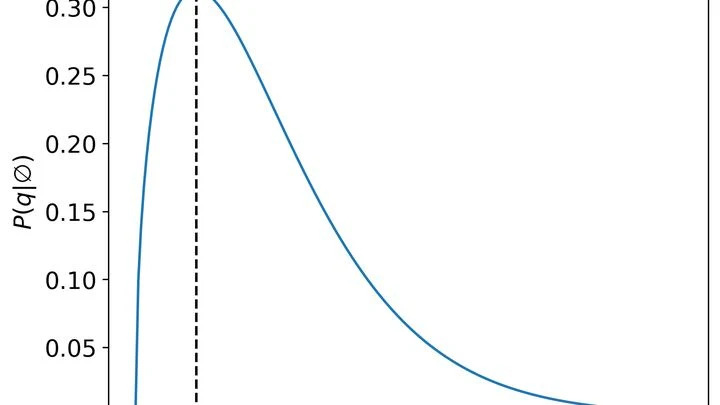
Hot tea cools down, and its temperature is the same throughout the cup. But in many systems (for example, in the rarefied gas between stars or in plasma) temperature is not uniform: in one place particles are faster, in another slower. Physicists call such systems "superstatistical": it's as if the tea consisted of many small regions, each with its own temperature.
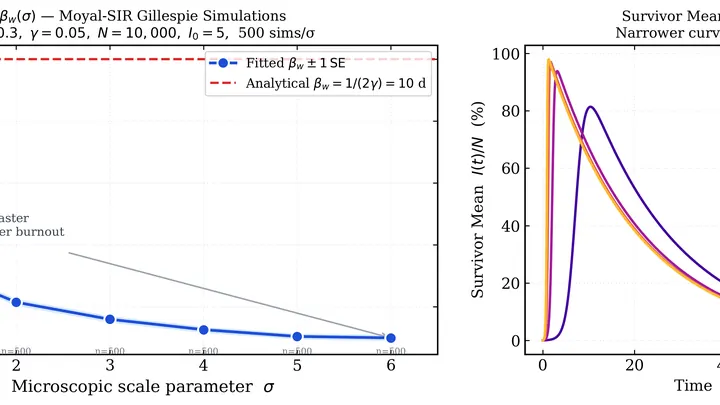
An epidemic is not a steady stream but a series of hits. One carrier may infect no one, while another infects fifty people at once. Such rare but powerful events are called 'dragon kings': they stand out from the overall pattern and determine how severe a disease wave will be.
In the new study, the virus is compared to a billiard ball.
A pot on a stove receives heat, but not work: the gas under the lid just heats up. But what if the stove is not ordinary, but quantum? Then heat and work can arrive simultaneously, like from an engine that also heats.
In a new study, exactly this case is described: a classical system (say, a pendulum or a small mirror) bathes in a quantum environment.
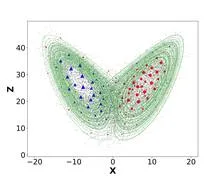
In winter, air over the Northern Hemisphere does not move haphazardly; it spends days at a time in the same pattern before rearranging itself. These patterns are like rooms in a maze: the system enters, lingers, then finds a door to another room. Each room has its own weather: somewhere over Europe it is warm and humid, while over Siberia it is frosty and clear.