El Sol atrae a los electrones hacia atrás, pero aun así se escapan exprés
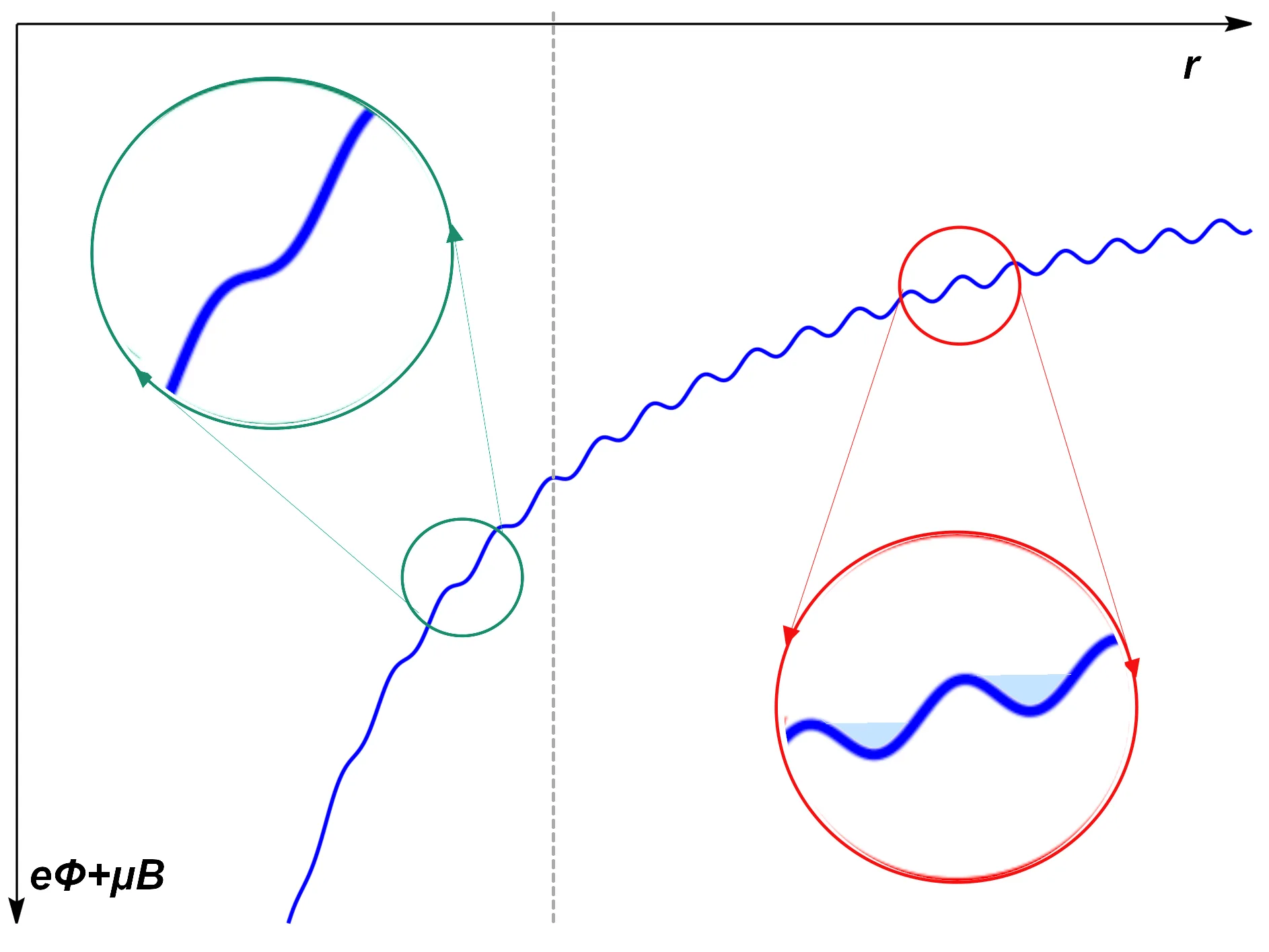
El Sol emite constantemente un flujo de partículas cargadas: el viento solar. Entre ellas hay muchos electrones, y algunos vuelan de regreso hacia el Sol. Pero las observaciones muestran que regresan menos electrones de los que deberían. Antes se pensaba que la culpa era del campo eléctrico del Sol, que frena las partículas.
Un nuevo estudio propone otra explicación. En el viento solar, el campo magnético oscila constantemente y crea pequeñas trampas magnéticas. Son como bolsillos que se mueven junto con el viento. Un electrón que cae en uno de esos bolsillos no puede regresar de inmediato al Sol. Primero escapa, pero rápidamente cae en el siguiente bolsillo. Así, las partículas pierden energía y permanecen en la corriente del viento.
Los científicos calcularon que el límite de energía medido de los electrones muestra solo la profundidad de un bolsillo, no la del campo eléctrico completo del Sol. En realidad, el campo podría ser varias veces más fuerte. Esto cambia la idea de cómo se acelera el viento solar. Los electrones atrapados forman la mayor parte de la masa del viento, y el campo eléctrico juega un papel más importante de lo que se creía.
Así, el Sol, como un pastor con bolsillos invisibles, retiene parte de sus electrones en la corriente del viento. Y ahora entendemos mejor por qué el viento solar es como es.
Resumen original
tal como lo escribieron los autores, en inglés arXiv:2602.16221
This paper re-evaluates the relationship between the observed sunward electron cutoff energy and the depth of the Sun's global electrostatic potential. It investigates whether taking into account the effects of local traps formed by magnetic fluctuations provides an alternative explanation for the observed electron deficit. The fluctuations of the highly variable interplanetary magnetic field form a series of shallow magnetic mirror traps that move at approximately the speed of the solar wind. The study investigates the dynamics of electrons as they move outward against an attractive solar electrostatic potential and interact with these traps. By following the motion of the electrons using first-principles calculations, we assess the effect of the traps on the velocity distribution of the particles. Electrons that escape the local trap continue to lose energy as they move outward until they are eventually captured by subsequent traps, preventing them from returning to the observer as sunward-moving particles. We derive a mathematical expression for the cutoff velocity, defined as the limit beyond which particles can no longer overtake the outer endpoint of a local trap. It turns out that the observed cutoff energy characterizes only the local potential drop within a trap, rather than the total depth of the Sun's potential well. The true potential well can be significantly deeper, scaled by the ratio of the radial distance from the Sun to the trap size. Furthermore, electrons captured by these moving traps contribute to the formation of the solar wind core population. The Sun's electrostatic potential is a more significant factor in solar wind acceleration than previously interpreted from cutoff data. The interaction between electrostatic deceleration and moving magnetic traps provides a new framework for understanding the origin and behavior of the solar wind core electrons.
El viento solar sopla a unos 400 kilómetros por segundo, mil veces más rápido que el huracán más fuerte de la Tierra.
En la novela de Arthur C. Clarke «Viento solar», una nave de vela se mueve por la presión de la luz, pero en realidad el viento está compuesto de partículas que se comportan de manera mucho más astuta de lo que los escritores de ciencia ficción imaginaban.