Comment un tourbillon dans une tasse devient une bombe de trou noir express
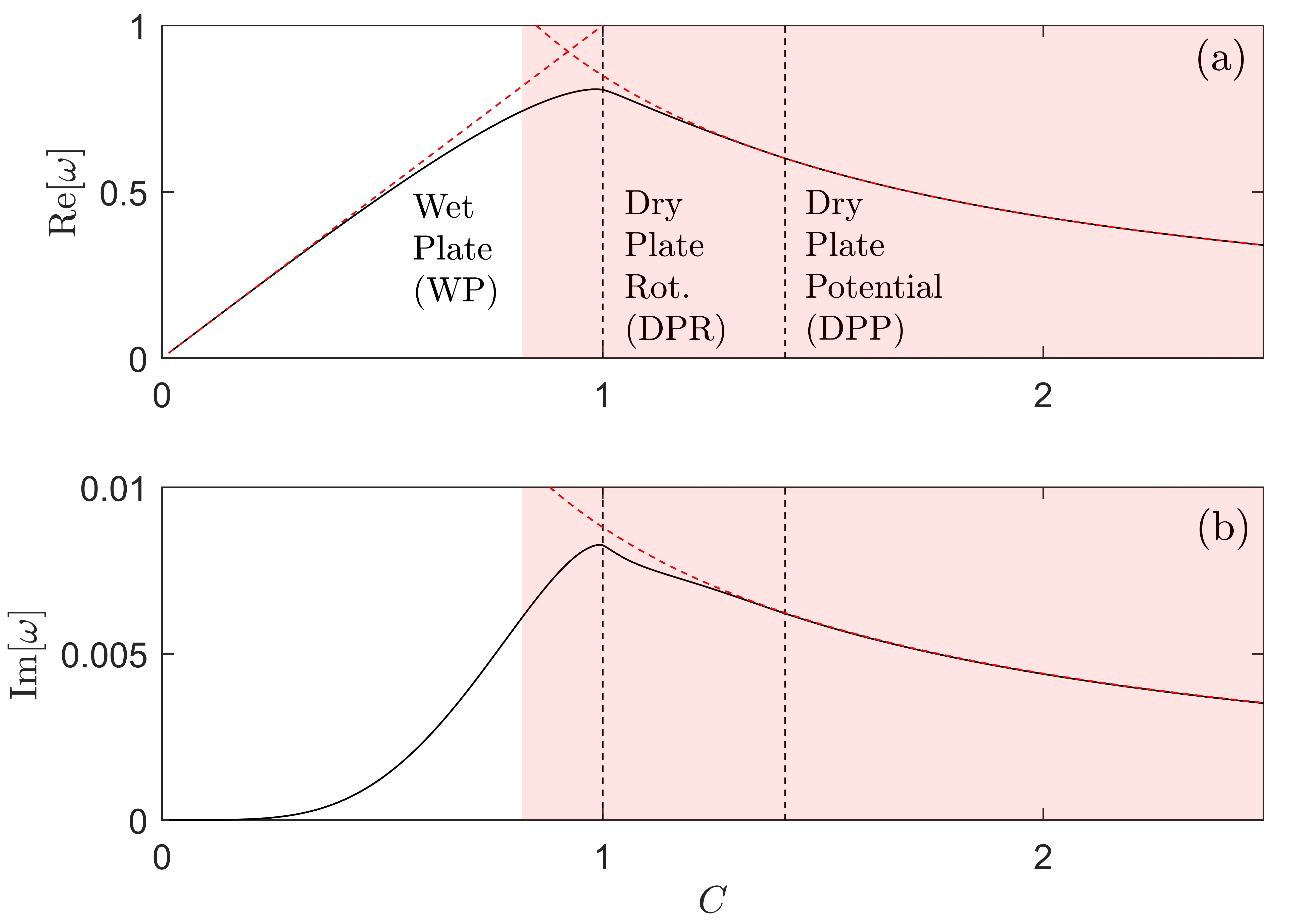
Quand on fait tourner un liquide dans une tasse, il se forme un tourbillon avec un centre vide. Dans ce centre vide, les vagues trouvent un piège : en se réfléchissant sur les parois, elles puisent de l'énergie dans le vortex et grossissent, comme une flamme qui court le long d'une mèche — chaque vague est plus forte que la précédente, jusqu'à ce qu'une gerbe d'écume se déclenche.
La grande surprise de l'expérience : le meilleur analogue de laboratoire du trou noir est un tourbillon avec un centre parfaitement vide. C'est précisément ce vide intérieur, comme dans une tornade, qui rend son comportement presque cosmique. Ainsi, une simple casserole d'eau devient un portail vers les abysses lointains.
Résumé original
tel que rédigé par les auteurs, en anglais arXiv:2511.05351
Draining vortices provide a powerful platform for simulating black hole phenomena in tabletop experiments. In realistic fluid systems confined within a finite container, low-frequency waves amplified by the vortex are reflected at the walls, rendering the system unstable. This process, known in the gravitational context as the black hole bomb, manifests as a sloshing motion of the free surface. The analogy, however, becomes more nuanced when a realistic vortex core with a non-singular vorticity distribution is considered. We investigate this by analysing a non-draining Rankine vortex in the shallow-water and inviscid limits. At low circulation, the sloshing corresponds to an instability of the vorticity field, whereas at high circulation where fluid is expelled from the vortex core, the destabilising mechanism coincides with that of the black hole bomb. Our variational framework distinguishes the energetic contributions of vorticity and irrotational perturbations, offering new insight into the rotating-polygons instability reported by, e.g. Jansson et al. (2006). From the analogue-gravity perspective, we identify hollow core vortices as an optimal regime for exploring black-hole-like instabilities in fluids.
Les tornades et les trombes marines reproduisent exactement la structure des trous noirs : leur centre vide sert de piège à vagues — dès qu'elles se réfléchissent, une avalanche se déclenche.