Тёмная материя лепит чёрные дыры экспресс
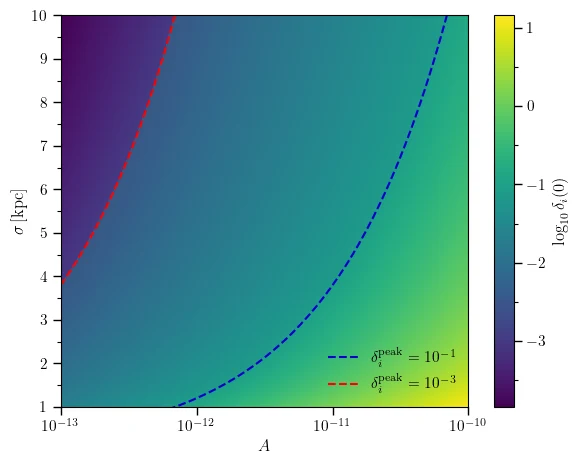
Всего через несколько сотен миллионов лет после Большого взрыва в океане невидимой тёмной материи уже формировались гигантские чёрные дыры. Рождались они из самой материи — без помощи звёзд. Такой механизм, основанный на уравнениях Лемэтра, объясняет их раннее появление. Главный секрет — в форме. Только плавные, широкие уплотнения, похожие на пологий холм, способны схлопнуться в дыру. Острые пики или неравномерные бугры просто разлетаются. В нужном месте искривление пространства становится настолько сильным, что вещество неудержимо падает внутрь. Расчёты показывают: такие обрушения происходили, когда возраст Вселенной составлял от одного до трёх миллиардов лет, и порождали дыры массами в тысячи и миллионы солнц. Это объясняет, откуда взялись сверхмассивные чёрные дыры уже через миллиард лет после рождения Вселенной. Неожиданный поворот: судьба коллапса — пойдёт ли он в точку, вытянется в нить или расплющится в блин — зависела от мельчайших движений материи. Этот «танец» тёмной материи и определил облик будущих галактик, ведь возникшие дыры стали теми семенами, вокруг которых выросли привычные нам звёздные системы.
Оригинальная аннотация
как её написали авторы, на английском arXiv:2605.30145
We study black hole (BH) formation from the nonlinear growth and collapse of primordial perturbations during the matter-dominated era. Modelling cold dark matter (CDM) as pressureless dust, we describe the collapse in a fully nonlinear relativistic framework using the Lema\^{i}tre-Tolman-Bondi (LTB) and quasi-spherical Szekeres solutions as exact perturbations of a spatially-flat Friedmann-Lema\^{i}tre-Robertson-Walker (FLRW) $$\Lambda$$CDM background. At first order in relativistic scalar perturbation theory, the growing mode of any relevant quantity can be expressed in terms of the conserved gauge-invariant curvature perturbation $$\mathcal{R}_c$$, which acts as a potential for the 3-curvature of hypersurfaces orthogonal to the matter 4-velocity. We use this result to express the active gravitational mass and curvature functions of the LTB and Szekeres models in terms of the initial values of $$\mathcal{R}_c$$ and its spatial derivatives. From these initial curvature data we derive: (i) the turn-around, collapse, and apparent-horizon formation times, and (ii) the regularity conditions required for BH formation. We show that sinusoidal and Gaussian profiles do not provide viable BH-forming channels, whereas broad compensated curvature peaks, naturally predicted by peak theory, do. We then estimate the formation times of $$10^{3}-10^{6}~\mathrm{M}_\odot$$ massive BH seeds produced by the direct collapse of primordial CDM curvature peaks, finding full BH formation at redshifts $$z>5$$, with core collapse beginning at $$10 \lesssim z \lesssim 16$$. Finally, we characterize the local dynamics and singularity type of the collapse (point-like, cigar-like, or pancake-like) directly from the initial comoving curvature data, clarifying the role of the initial shear in selecting the collapse end-state.
Самые первые чёрные дыры родились не из умирающих звёзд, а напрямую из невидимой тёмной материи. Их коллапс запускала гравитация — и для этого хватало правильной «холмистой» формы.