النقاط الساخنة في السماء: مُرسِلو الجسيمات الفائقة أصبحوا معروفين سريع
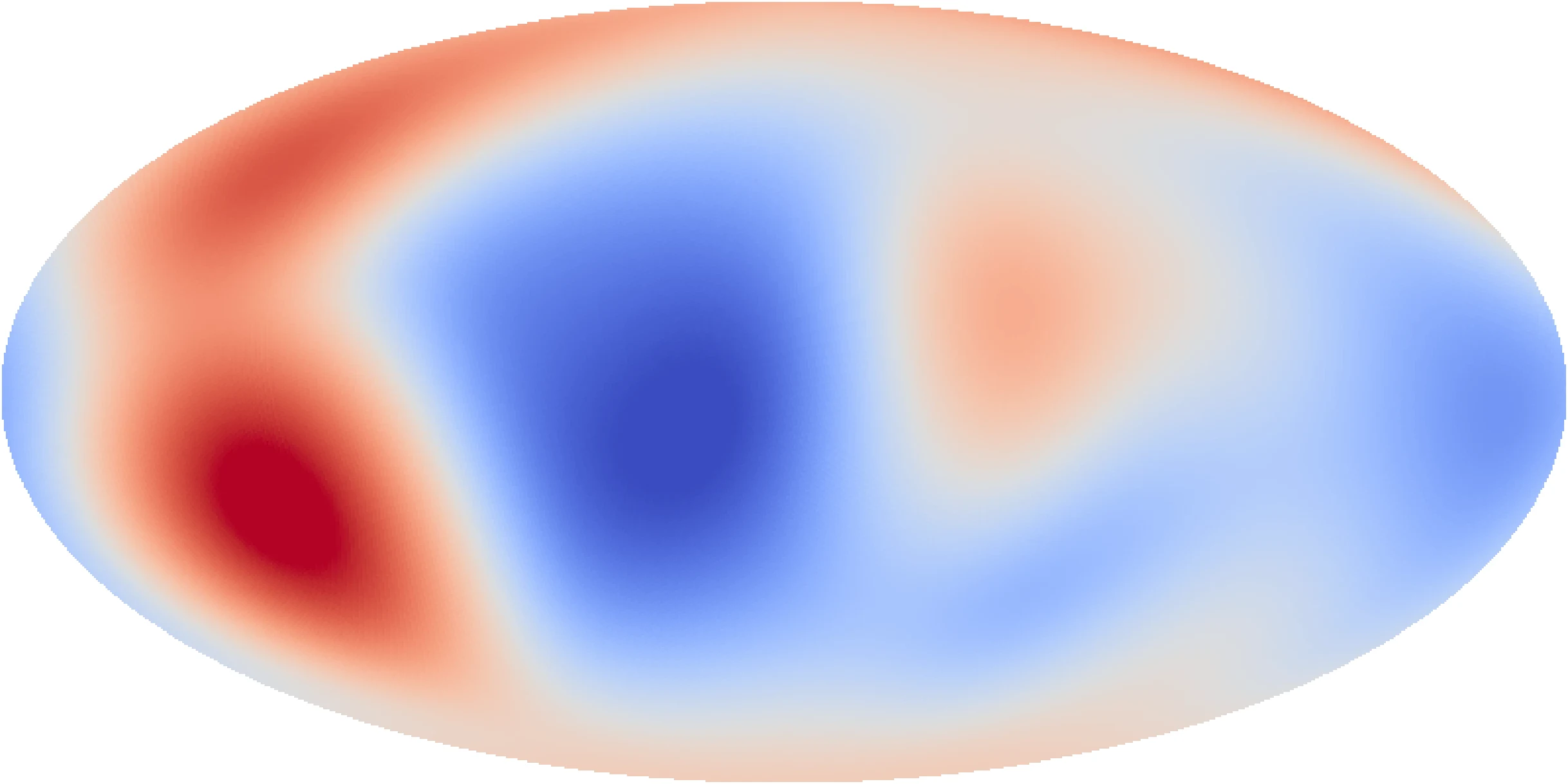
كل يوم تدخل جسيمات ذات طاقة هائلة غلافنا الجوي — وكأنها رسائل بدون توقيع. ظل مصدرها لغزًا لفترة طويلة. أظهرت دراسة جديدة أن هؤلاء «الضيوف» يشيرون إلى مجرات مجاورة، حيث تحدث بين الحين والآخر كوارث — تصادمات نجوم نيوترونية، وهي كرات فائقة الكثافة بحجم مدينة وكتلة تعادل كتلة الشمس. عند التصادم تنثر الجسيمات مثل الطرود البريدية، ويتجه بعضها نحونا مباشرة.
النموذج نفسه يفسر لماذا يرى النصفان الشمالي والجنوبي «تشكيلة» مختلفة قليلاً من الجسيمات: ببساطة «المكاتب البريدية» القريبة — أي المصادر — تقع على جانبي السماء. كان يُعتقد سابقًا أن تركيب الأشعة يعتمد على الطاقة فقط، لكن أصبح واضحًا الآن: المفتاح لفهم اللغز يكمن في توزع المجرات المرسلة.
الملخص الأصلي
كما كتبه المؤلفون، بالإنجليزية arXiv:2510.06193
The origin of ultra-high-energy cosmic rays remains one of the central open questions in astroparticle physics. Recent measurements reveal anisotropies in arrival directions, a rigidity-dependent composition dominated by intermediate-mass nuclei, and striking hemispheric differences in the energy spectra. Here we show that \emph{rare transients in nearby galaxies} can naturally account for these features. In our fiducial neutron-star merger model, the cosmic ray flux above $$25$$~EeV is dominated by ten nearby galaxies within $$8\,$$Mpc. This accounts for the observed hotspots: seven of the ten brightest galaxies coincide with reported excess regions, a chance probability of $$p\sim0.001$$. Nearby transients can also explain the spectral excess of TA over Auger and modify the rigidity--aligned succession of isotopes.
جسيم واحد من هذه الجسيمات، أصغر من الذرة، يحمل طاقة تضاهي صدمة كرة بيسبول — وكأنه حمام زاجل يحمل شاحنة.