ثقوب سوداء خفية: كواكب أم شيء آخر؟ سريع
نجم يرقص دون شريك مرئي — هكذا يدرك علماء الفلك تمايلاته. عادةً ما يكشف انزياح دوبلر عن كوكب، لكن أحيانًا يبقى الرفيق خفيًا. حينها قد يكون ثقبًا أسود بدائيًا — جرم بحجم كوكبي، وُلد في الكون المبكر. فعلى عكس الكواكب العادية، لا يعكس هذا الثقب الضوء ولا يحجب النجم (حيث يغيب العبور).
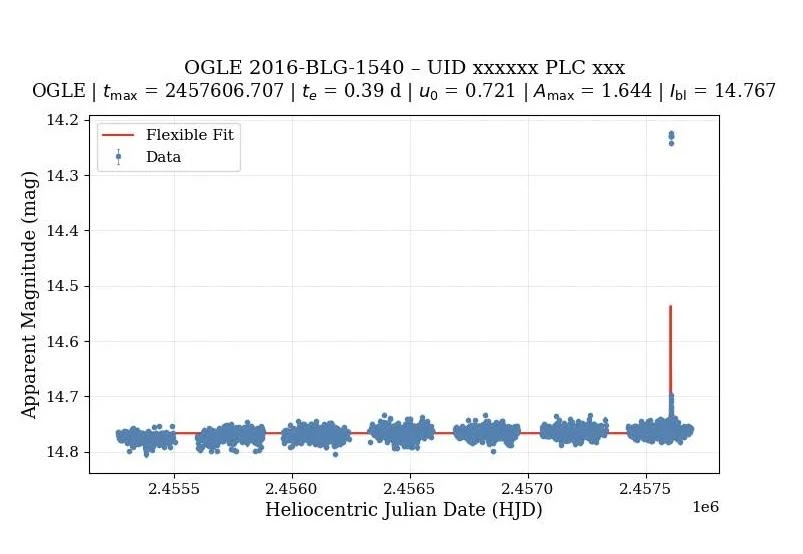
بفحص بيانات آلاف المرشحين لكواكب خارجية، استخلص العلماء ستة أجرام لا تتجلى إلا جاذبيًا. من بينها توابع النجوم Kepler-21 وGliese 686 وأربعة أخرى. كما تثير حالتان من انحناء الضوء المؤقت لنجوم بعيدة (العدسية الدقيقة) الشكوك.
الرقص الجاذبي يفضح الكوكب والثقب الأسود معًا. ولتمييزهما سنعتمد على إشعاع هوكينغ: فالثقوب الصغيرة تتبخر بسرعة وقد تُصدر إشارة ضعيفة. فإن تأكد ذلك، سيصير الرفقاء الخفيون مفتاحًا لـالمادة المظلمة — تلك المادة الغامضة التي قد تُشكّل معظم الكون.
الملخص الأصلي
كما كتبه المؤلفون، بالإنجليزية arXiv:2512.03118
We have sifted through astrophysical data collected by various radial velocity and gravitational microlensing searches for exoplanets with the goal of identifying potential signs of the presence of primordial black holes (PBH). Our motivation is that those hypothesized remnants of inhomogeneous energetic fluctuations in the early universe, though too small for direct detection, are thought to have a mass range similar to that of planets. Thereby, if captured by stars, they could conceivably make their presence known through stellar wobbles picked up by means of Doppler spectroscopy in the radial velocity method, or alternatively through microlensing. In our analysis of such data, we have identified potential PBH contenders by ruling out any exoplanet candidates that have been detected through direct imaging or transit methods, as they would have sizes consistent with planets rather than PBHs. In particular we focus on the objects Kepler-21 Ac, HD 219134 f, Gliese 686 b, HR 5183 b, HD 20794 e, and Wolf 1061 d, each of which has been found using the radial velocity method but never imaged (either directly or through transit). We also examine the microlensing events MOA 2009-BLG-387L and OGLE-2016-BLG-1540, which offer promise as candidate PBHs. We present these as a representative, but not exclusive list, of potential PBH contenders. Furthermore, future imaging, especially focused on signals of planetary dimensions versus evaporation signatures, might clarify which of these are indeed exoplanets.
ثقب أسود بدائي بكتلة الأرض يمكن أن يتسع داخل حبة عنب، إذ لا يتجاوز قطره 9 مليمترات.