مستعر أعظم يزفر غاز أول أكسيد الكربون سريع
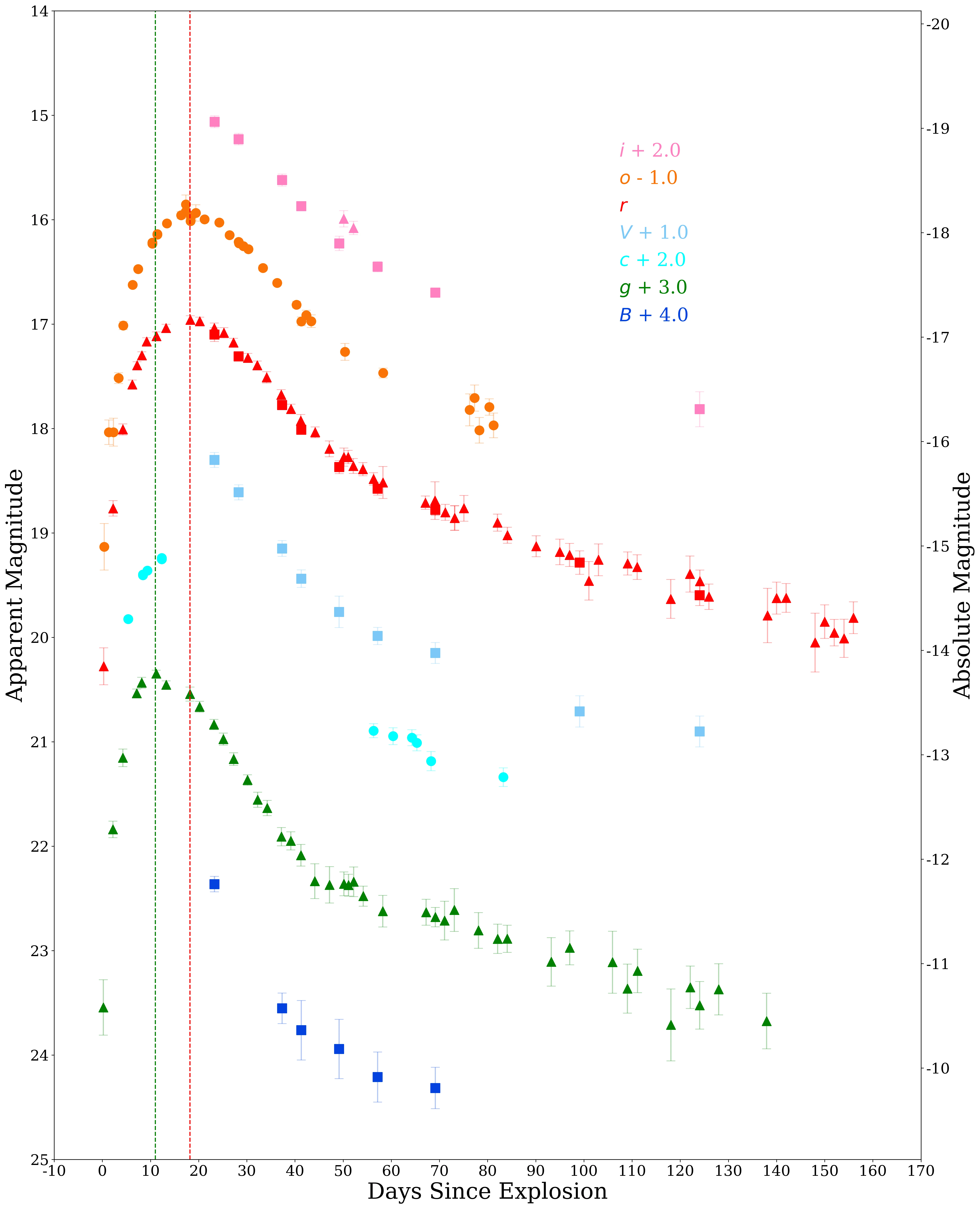
عندما يستنفد نجم ضخم وقوده، يتخلص من غلافه الهيدروجيني وينفجر، مثل زفير أخير يائس. وهذا ما رصده علماء الفلك في مستعر أعظم من النوع Ib. فبعد 62 يوماً من الانفجار، التقطوا وهجاً خافتاً تحت الأحمر في الحطام المبرد: وتبين أنه أثر لغاز أول أكسيد الكربون (CO). اندفعت المادة بسرعة هائلة بلغت 6 آلاف كيلومتر في الثانية، وهي سرعة تقطع المسافة بين الأرض والقمر عشرين مرة في طرفة عين. وبسبب هذه السرعة، تشوَّهت بصمته الطيفية لتظهر كحدبة عريضة. وفي المشهد، توهج غبار كوني ساخن بلغت حرارته 637 درجة مئوية، وأكدت خطوط الهيليوم نوع الانفجار.
من أنفاس النجوم المحتضرة، هذا ما صُنع منه العالم.
الملخص الأصلي
كما كتبه المؤلفون، بالإنجليزية arXiv:2603.23877
We present optical and near-infrared (NIR) observations of the Type Ib supernova (SN) 2024rbc. Emission from the first CO overtone, resting on a dust continuum at $$2.3-2.4$$ $$\mu$$m, was observed at 62 days post-explosion. The CO band heads are not resolved, and the emission appears broad, lacking sharp spectral features. This is the first observation of CO in the ejecta of a Type Ib SN reported in literature. The spectra of SN 2024rbc exhibit strong He I lines and numerous neutral and ionized metal lines. Comparing the spectral evolution of SN 2024rbc to other Type Ib, Ic, and IIb SNe indicates it is a Type Ib SN. We compare the velocities of key optical lines to examine the evolution of the ejecta. Additionally, fitting SN light curve models of helium star progenitors computed with the STELLA code to photometric observations indicates a $$^{56}$$Ni mass of $$0.07$$ $$M_\odot$$ and an ejecta mass of $$1.7$$ $$M_\odot$$. Fitting a LTE model to the CO overtone implies a CO mass of 5.2 $$\times$$ 10$$^{-4}$$ $$M_{\odot}$$, a CO temperature of $$4040$$ K, and a CO velocity width of $$5905$$ km s$$^{-1}$$. We also fitted a modified blackbody model to the dust continuum, deriving a dust temperature of $$910$$ K and a dust mass of $$1.3$$ $$\times$$ $$10^{-3}$$ $$M_{\odot}$$. The CO provides direct evidence for the onset of dust formation, and the observed dust continuum likely originates from newly formed dust in the ejecta. However, robust dust mass estimates require MIR observations.
كمية غاز أول أكسيد الكربون في SN 2024rbc تفوق كتلة الغلاف الجوي للأرض بمليارات المرات. لكنها تبقى كمية ضئيلة مقارنة بكتلة النجم.
عبارة «نحن جميعاً مصنوعون من غبار النجوم» ليست مجرد استعارة. في فيلم «إنترستيلار»، يتردد هذا المعنى بشكل مؤثر.