مجرة قزمة توقفت عن إنجاب النجوم سريع
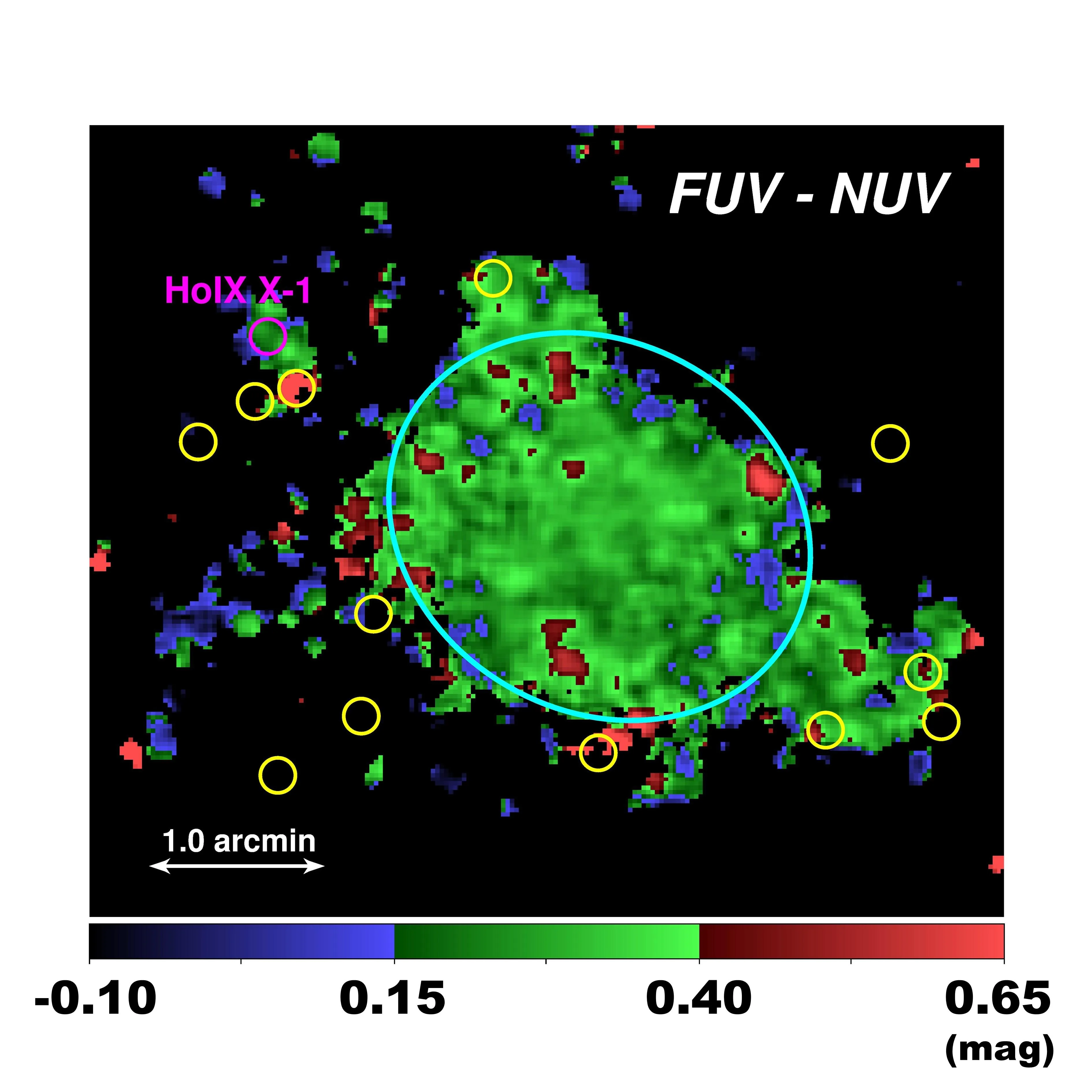
المجرة Holmberg IX تشبه مدينة توقف فيها فجأة بناء المنازل الجديدة، رغم امتلاء المنطقة بمواد البناء. نظر إليها علماء الفلك باستخدام تلسكوبات مختلفة ورأوا مشهدًا غريبًا: الغاز والعناصر الثقيلة وفيرة، لكن الغبار يكاد يكون معدومًا. عادةً حيث يوجد الكثير من الغاز تولد نجوم جديدة، لكن هنا الأمر مختلف.
من خلال التوهج في الأشعة فوق البنفسجية والهيدروجين، أدرك العلماء أن جميع النجوم تقريبًا تشكلت قبل حوالي 130 مليون سنة في دفعة واحدة قصيرة. بعد ذلك توقف تكوّن النجوم بشكل حاد، وخلال آخر 80 مليون سنة لم تظهر نجوم جديدة تقريبًا. حاليًا، تظهر بؤر ضعيفة لتكوين النجوم فقط في أطراف المجرة. الأمر كما لو أن الحياة تجمدت في وسط المدينة بينما لا تزال خافتة في الضواحي.
ماذا سيحدث بعد ذلك؟ إذا لم يستأنف تكوّن النجوم، فقد تصبح المجرة مشابهة لتجمع نجمي كروي خافت، أو على العكس، تتبدد تدريجيًا في الفضاء. ولكن هناك احتمال آخر: إذا كانت تولد فيها نجوم خافتة جدًا يصعب رصدها، فقد تبقى على هذا الحال لفترة طويلة. على أي حال، تجعلنا Holmberg IX نعيد النظر في تصوراتنا عن حياة المجرات القزمة.
الملخص الأصلي
كما كتبه المؤلفون، بالإنجليزية arXiv:2604.02831
In this Letter, we report a novel discovery of unique characteristics for the tidal dwarf galaxy (candidate) Holmberg IX via a multiwavelength investigation. New observations are taken for deeply mapping H{\alpha} emission and combined with archival/published data for comprehensively probing dust, gas, and stellar populations in this galaxy. We find in Holmberg IX a dearth of dust incompatible with its rich gas and metal; globally young stellar populations with prominent far-ultraviolet but deficient and marginal H{\alpha} emissions, distinct from other tidal dwarf galaxies ever known. By assuming a normal initial mass function (IMF), Holmberg IX is suggested to be born ~130 Myr ago from a bursty star formation event, which then rapidly ceased, with very few stars formed in the past ~80 Myr that demarcates a lower age limit for the galactic mainbody; current star formation occurs only in outskirts, bringing a conundrum about the reason for the recent quenching in such a gas-rich environment. Contradicting the general expectation for tidal dwarf galaxies hosting continuous star formation, the present quiescence implies Holmberg IX currently staying in a rarely-seen transient period. Without star formation continuing, Holmberg IX is likely transforming into a dwarf spheroidal galaxy, or oppositely into a(n) (ultra-)diffuse system which will probably dissolve in the end. Instead, if Holmberg IX possesses peculiar IMF and hosts low-mass, weak-H{\alpha} star formation, it is able to maintain long-term survival in its current status. On whichever evolutionary pathway in reality, Holmberg IX appears as a special case updating conventional understandings of tidal dwarf galaxies and hinting potential existence of similar analogs in the Universe.
تقع Holmberg IX بالقرب من المجرة الكبيرة M81، وربما تكون مشدودة بفعل قوى المد والجزر منها، مثل عجينة تُمدد باليدين.