مجرة واحدة، تلسكوبان: كيف نفصل الفيزياء عن التشوهات سريع
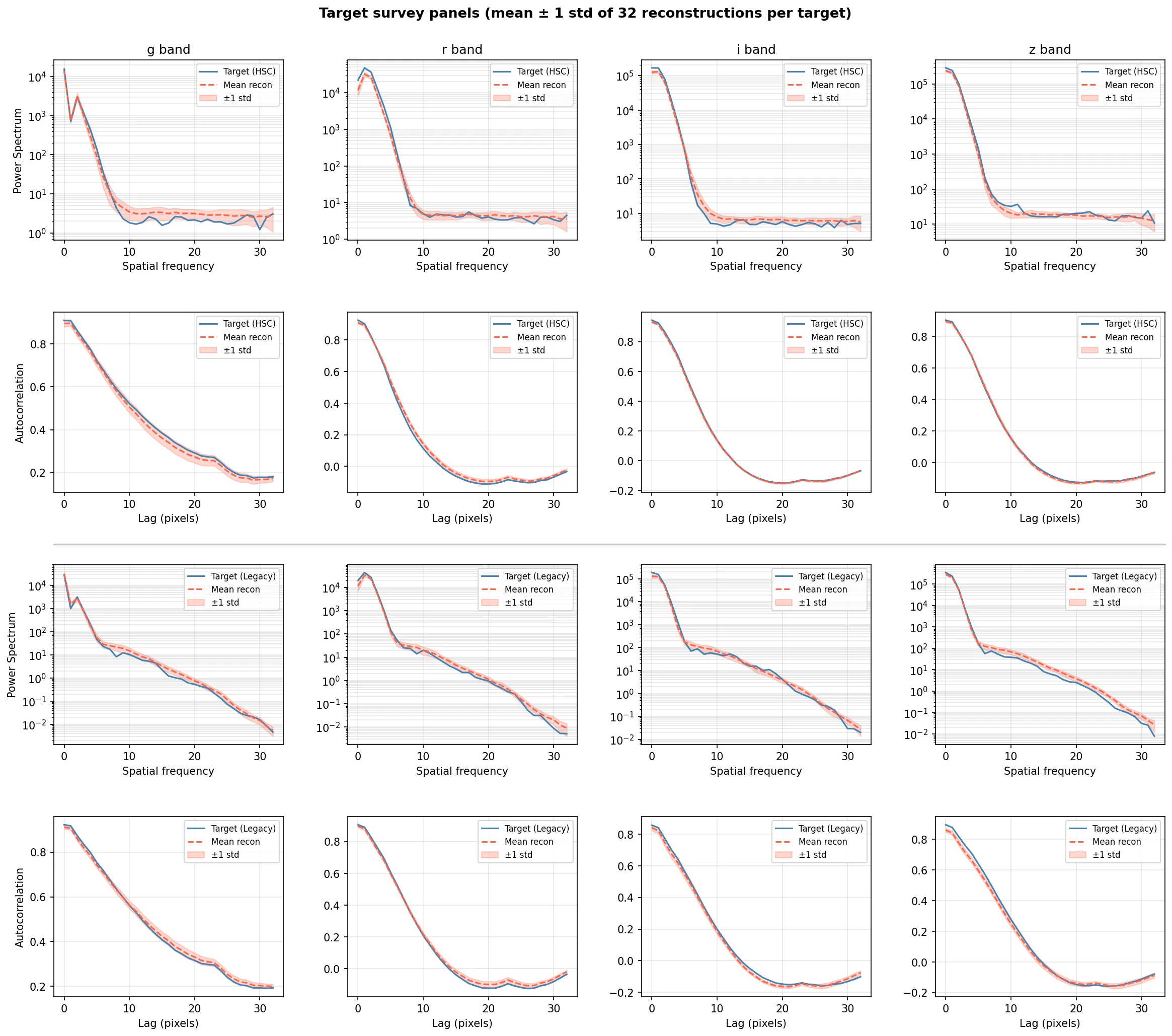
إذا صوّرتَ الجبل نفسه بكاميرا فيلمية وبالهاتف الذكي الحديث، فستحصل على صورتين مختلفتين: في إحداهما تكون الألوان أكثر إشراقًا، وفي الأخرى تكون التفاصيل غير واضحة. وكذلك الأمر مع التلسكوبات: فكل أداة ترى السماء بطريقتها الخاصة، مضيفةً إلى الضوء الحقيقي للمجرات تشوهاتها الخاصة — مثل مرشح ننظر من خلاله.
ويقدم العمل الجديد طريقة لإزالة هذا "المرشح". جمع العلماء أزواجًا من الصور لنفس المجرات، التقطها مسحان سماويان كبيران: مسح DESI Legacy Imaging Survey وHyper Suprime-Cam. دُرِّبت الشبكة العصبية على النحو التالي: تتلقى صورتين ويجب أن تستعيد إحداهما من الأخرى، مع الأخذ في الاعتبار أن الكاميرتين مختلفتان. أثناء التدريب، تجد الشبكة نفسها ما هو مشترك بين الصورتين (وهذه هي المجرة الحقيقية) وما هو مختلف (وهذه هي تشوهات تلسكوب معين).
ونتيجة لذلك، تُخرج الشبكة العصبية تمثيلًا "نقيًا" للمجرة — دون ضوضاء أو تشوهات من الأداة المحددة. وهذا يسمح، على سبيل المثال، بالبحث عن مجرات متشابهة في أرشيفات تلسكوبات مختلفة دون الخوف من أن يتأثر تشابهها بالكاميرات المختلفة. هذا النهج مفيد ليس فقط لعلم الفلك: فهو يقدم وصفة عامة لكيفية تدريب الشبكات العصبية على بيانات من أجهزة مختلفة — من الماسحات الطبية إلى أجهزة الاستشعار في السيارات.
الملخص الأصلي
كما كتبه المؤلفون، بالإنجليزية arXiv:2604.09787
Data collected from the physical world is always a combination of multiple sources: an underlying signal from the physical process of interest and a signal from measurement-dependent artifacts from the sensor or instrument. This secondary signal acts as a confounding factor, limiting our ability to extract information about the physics underlying the phenomena we observe. Furthermore, it complicates the combination of observations in heterogeneous or multi-instrument settings. We propose a deep learning framework that leverages overlapping observations, a dual-encoder architecture, and a counterfactual generation objective to disentangle these factors of variation. The resulting representations explicitly separate intrinsic signals from sensor-specific distortions and noise, and can be used for counterfactual view generation, parameter inference unconfounded by measurement distortions, and instrument-independent similarity search. We demonstrate the effectiveness of our approach on astrophysical galaxy images from the DESI Legacy Imaging Survey (Legacy) and the Hyper Suprime-Cam (HSC) Survey as a representative multi-instrument setting. This framework provides a general recipe for scientific and multi-modal self-supervised pretraining: construct training pairs from overlapping observations of the same physical system, treat sensor- or modality-specific effects as augmentations, and learn invariant representations through counterfactual generation.
كلا التلسكوبين، اللذين استخدم العلماء بياناتهما، يقعان على الأرض، لكن أحدهما (Hyper Suprime-Cam) مثبت في هاواي، والآخر (DESI Legacy) يمسح السماء من مرصد في أريزونا. المسافة بينهما حوالي 4 800 كيلومتر، لكنهما يريان المجرات نفسها.