تنفس التلامس وذاكرة التحلل سريع
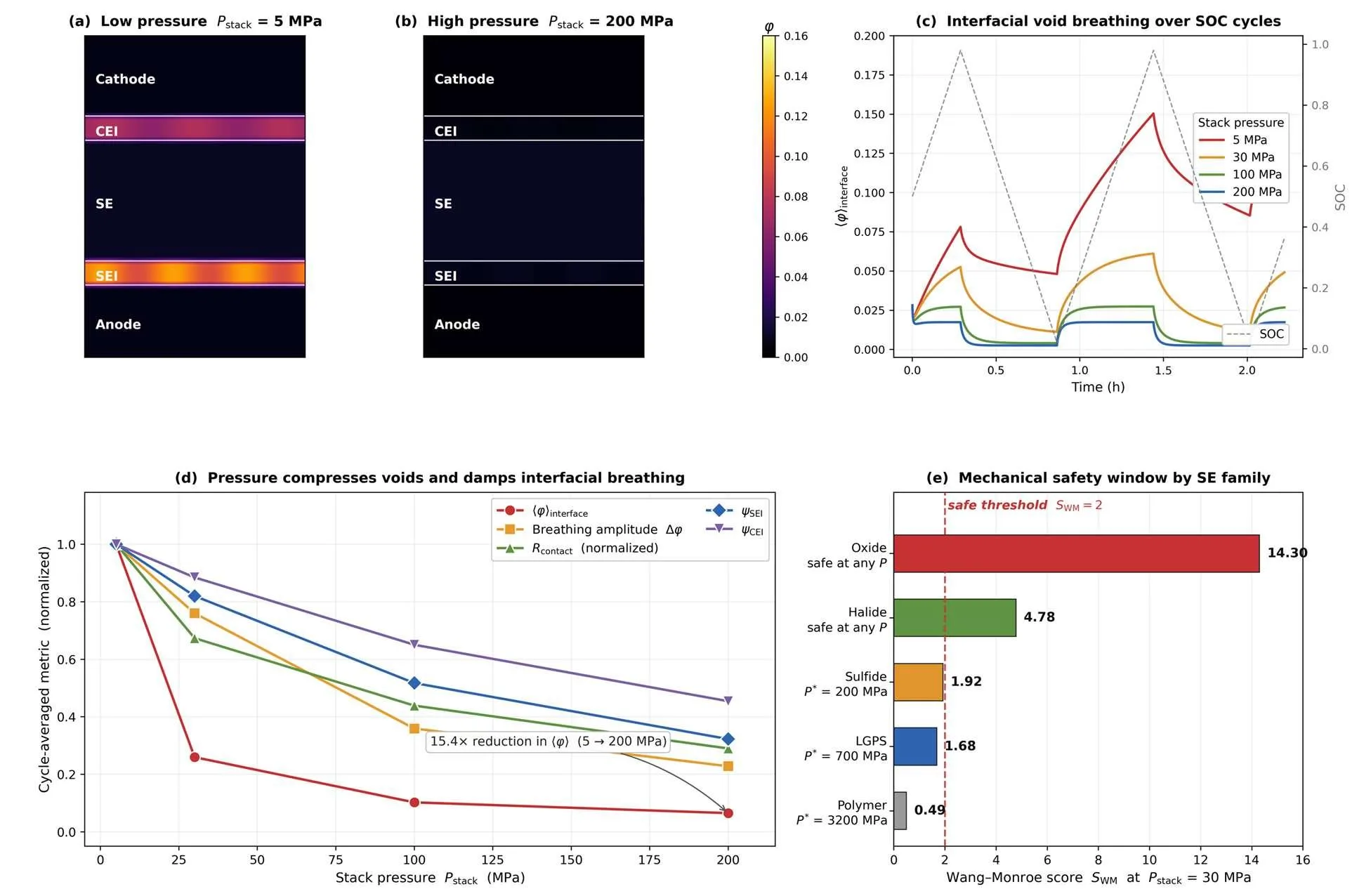
البطارية العادية في الهاتف تتنفس — لكن ليس الهواء، بل التلامس. داخل جسم صلب لا سوائل فيه، يضغط الليثيوم على الإلكتروليت (المادة الموصلة للأيونات) أثناء الشحن، وينسحب عنه أثناء التفريغ، مثل الرئتين عند الشهيق والزفير. هذا «التنفس» ليس شعرًا، بل فيزياء: كل دورة تولد وتقتل نقاط التلامس التي يمر عبرها التيار.
لكن هناك عدو ثانٍ أكثر هدوءًا. عند الحدود حيث يلتقي الليثيوم بالإلكتروليت، تتراكم ببطء «ذاكرة تفاعلية» — طبقة من بقايا الإلكتروليت المتحلل. مثل القشور في الغلاية، لكن بسمك أجزاء من الميكرون. تنمو هذه الطبقة مع كل دورة ولا تختفي حتى لو ضغطت على البطارية بقوة أكبر. استخرج مؤلفو الدراسة أربعة أرقام تصف التنفس، ورقمًا خامسًا لسمك طبقة الذاكرة. اتضح أن الضغط الخارجي (كما لو وضعت ثقلًا على البطارية) يكاد يلغي تذبذبات التلامس تمامًا، لكنه عاجز أمام الذاكرة الكيميائية. طبقة التحلل تنمو بشكل مستقل.
الاستنتاج العملي قاسٍ: لا يكفي تحسين التوصيلية أو تقليل المقاومة. يجب في الوقت نفسه ترويض التنفس (بالضغط أو التصميم) والسيطرة على الكيمياء عند الحدود — حتى لا تخزن الذاكرة الحطام. عندها تتوقف البطارية ذات الحالة الصلبة عن كونها بطلة المختبرات المتقلبة وتنتقل إلى سيارة كهربائية حقيقية.
الملخص الأصلي
كما كتبه المؤلفون، بالإنجليزية arXiv:2604.24075
All-solid-state batteries fail not only by bulk transport limits, but by a reactive interface that evolves during cycling. We show that degradation is governed by two coupled processes: interfacial breathing, the cycle-scale oscillation of lithium contact, and reactive memory, the slow accumulation of electrolyte decomposition. Four descriptors capture breathing, together with a memory metric based on decomposed interphase thickness. A reduced electrochemical benchmark shows that ionic conductivity has little effect on mean discharge voltage, whereas cathode electrolyte interphase resistance causes major voltage and energy losses. A phase-field model of a sulfide-based cell shows that higher stack pressure strongly suppresses breathing-related fluctuations, but leaves reactive memory nearly unchanged. Thus, pressure controls breathing, not memory. The resulting regime map identifies void-growth-dominant, healing-dominant, and interphase-memory-dominant regions. The theory also predicts energy-density rank inversion with C rate, where an initially superior architecture loses advantage at higher rate as breathing intensifies and interphase memory locks in. The design target is therefore not merely higher conductivity or lower resistance, but simultaneous suppression of breathing and independent control of reactive memory through interphase chemistry.
طبقة التحلل عند حدود الليثيوم والإلكتروليت قد تكون أنحف بمئات المرات من شعرة الإنسان، لكنها هي التي تقرر ما إذا كانت البطارية ستعيش ألف دورة أو تموت بعد مائة.