A Mousetrap in the Atomic Nucleus: Reading Thorium with Ejected Electrons ⚡ экспресс
Original: "$$^{229}$$Th Nuclear Spectroscopy in an Opaque Material: Laser-Based Conversion Electron Mössbauer Spectroscopy of $$^{229}$$ThO$$_2$$"
Instead of light, physicists catch kicked-out electrons to see inside thorium's clock-like nucleus.
Links in the knowledge graph 1
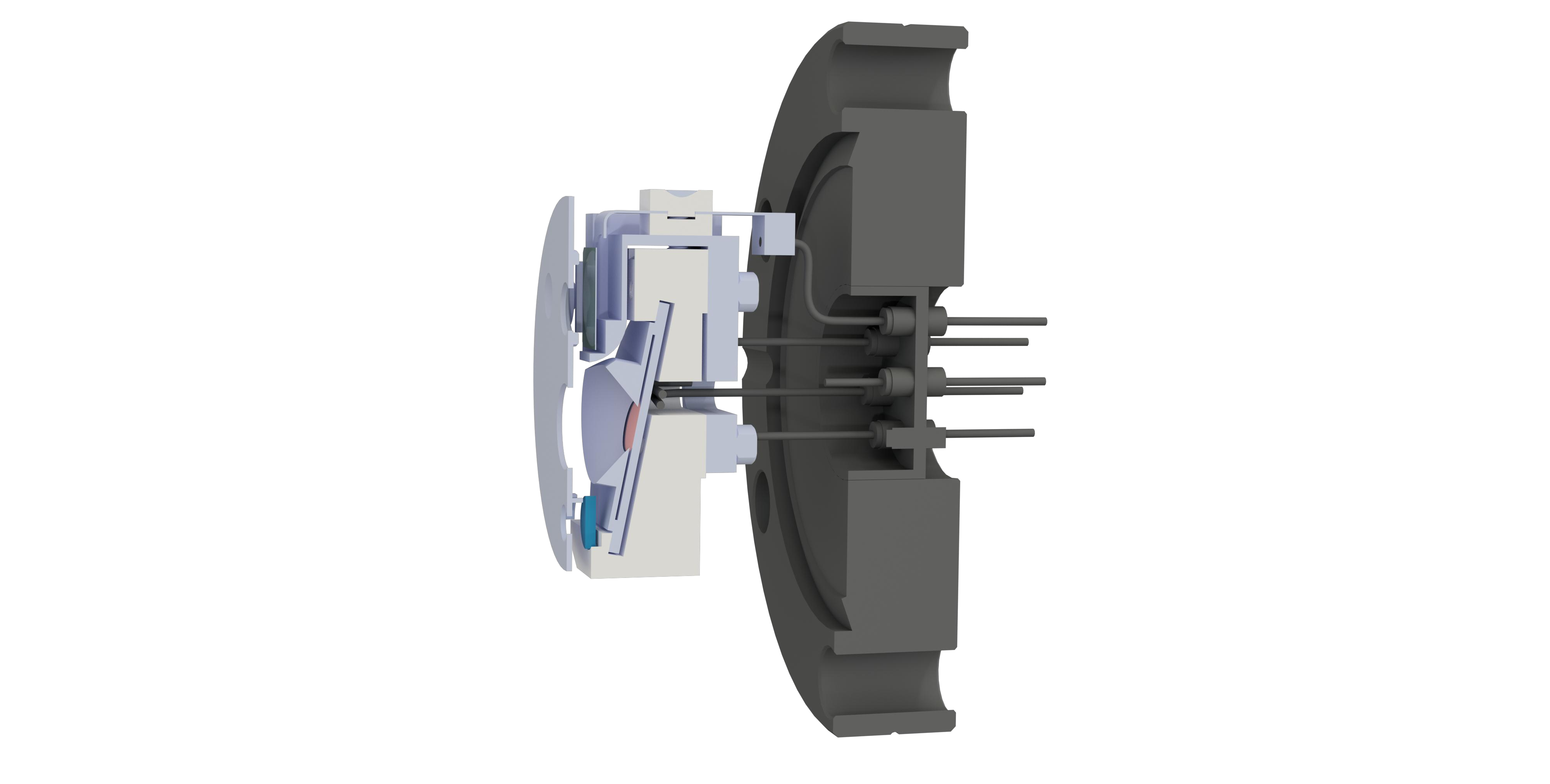
A nuclear clock could become 10,000 times more stable by catching electrons instead of light. When thorium-229’s nucleus is excited, in some materials it kicks out an electron. That’s a new way to read the nuclear ‘tick,’ opening more materials for study and bringing us closer to clocks that could reveal fundamental mysteries of physics.
🎯 The energy needed to spring the mousetrap is a mere 8.4 electron volts, easily delivered by a laser—most nuclear transitions demand monstrous particle accelerators.