Stress in Diamond Becomes Visible express
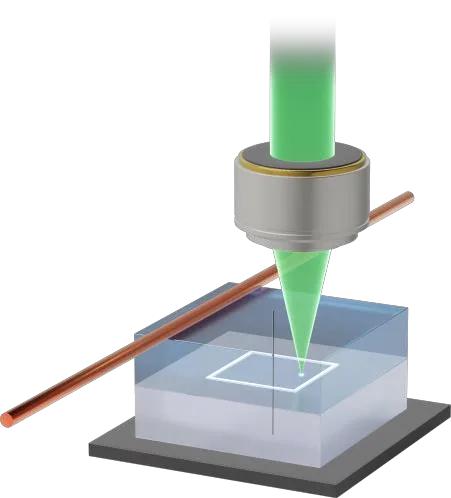
Diamond crystals harbor invisible cracks — dislocations. These are places where rows of atoms are shifted, like a sheet of paper pulled halfway out of a stack. Stress builds up around these spots, affecting how the material breaks, bends, or conducts electricity. Elasticity theory has described this stress for 80 years, but no one had directly observed it.
Now scientists have done just that using tiny sensors embedded in the diamond itself. These are nitrogen-vacancy centers — defects where a carbon atom is replaced by nitrogen, with a vacant spot nearby. Such a defect glows differently depending on how the surrounding material presses on it. The researchers placed these sensors next to a single dislocation and measured how their glow changed. This allowed them to map the stress, like charting every place on a city map where asphalt has cracked and buckled.
This method is like an X-ray for crystals. Now we can check exactly where stress accumulates in a material and predict when it will crack. For diamonds, this matters in electronics and cutting tools, and in the future — for any crystal, from silicon in chips to metals in airplanes.
So the invisible cracks in diamond have become a map you can walk on. And that map says: the old formulas work.
A nitrogen-vacancy center in diamond is so sensitive that it can detect the magnetic field change from a single electron located several nanometers away.