A Trap Separator for Sulfur Batteries express
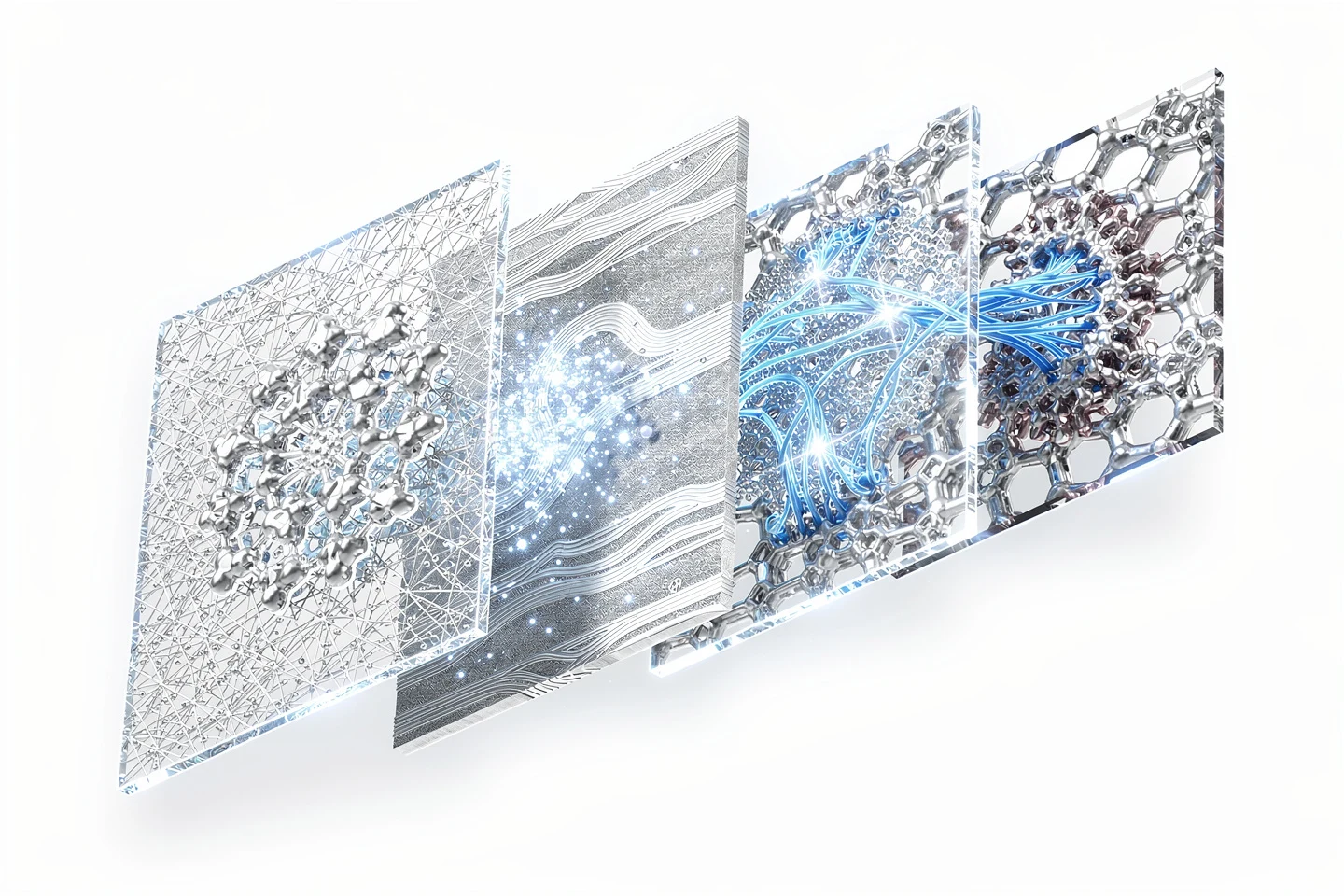
In a lithium-sulfur battery, sulfur tends to dissolve and drift toward the other electrode — the battery loses charge within dozens of cycles. To hold the runaway in check, a separator film is placed between the electrodes. A standard polyethylene film lets lithium ions through, but sulfur molecules slip along with them.
Researchers dressed such a film in thin layers: nickel, cobalt, and LAGP ceramic, which conducts lithium ions like a hallway for couriers. The coatings were applied by ion-beam sputtering, like spray paint, but with atom-sized particles. Then they tested in a cell with liquid electrolyte how well the film holds sulfur.
The best performer was a sandwich of ceramic and cobalt: it trapped sulfur molecules and did not degrade over time. Nickel alone quickly lost ground — likely reacting in side reactions or peeling off. Embedding nickel directly into the polyethylene changed almost nothing.
The film with ceramic and cobalt acts like a turnstile that lets only lithium ions through while blocking sulfur. This extends battery life and brings it closer to mass production.
Original abstract
as written by the authors arXiv:2601.16544
The large - scale commercialization of promising lithium - sulfur (Li - S) batteries remains limited by the polysulfide shuttle effect, which causes rapid capacity fading and poor cycle life. In this study, we present a scalable strategy to mitigate this challenge by modifying polyethylene (PE) separators with ferromagnetic and solid - state ionic coatings. Thin films of nickel (Ni), cobalt (Co), and the Li - ion - conducting ceramic Li1.5Al0.5Ge1.5(PO4)3 (LAGP) were deposited via ion beam sputtering, while Ni ion implantation was also employed to modify the PE substrate. The electrochemical performance of pristine and modified separators was evaluated using electrochemical impedance spectroscopy (EIS) and staircase voltammetry (SV) in liquid electrolyte within H - cell configurations. Surface morphology and elemental composition were characterized by scanning electron microscopy (SEM) and Rutherford backscattering spectroscopy (RBS). The results show that LAGP-based coatings significantly enhance separator stability and effectively suppress polysulfide diffusion, leading to lower redox peak intensities and improved cycling performance. In contrast, Ni coatings exhibited poor long - term stability, likely due to parasitic reactions or delamination during its life time. The combined LAGP/Co architecture provided the most effective suppression of the polysulfide shuttle, attributed to synergistic ionic and catalytic effects that promote interfacial stability and selective ion transport. Ni implantation into PE showed only a negligible effect. This study highlights the potential of integrating solid ionic conductors with ferromagnetic layers to design multifunctional separators for high-performance Li - S batteries.
Sulfur is one of the cheapest battery materials: it is abundant in oil refinery waste, and the lithium-sulfur pair theoretically stores several times more energy per kilogram than a standard lithium-ion battery.