Cosmic Flashes We Don't See in Full express
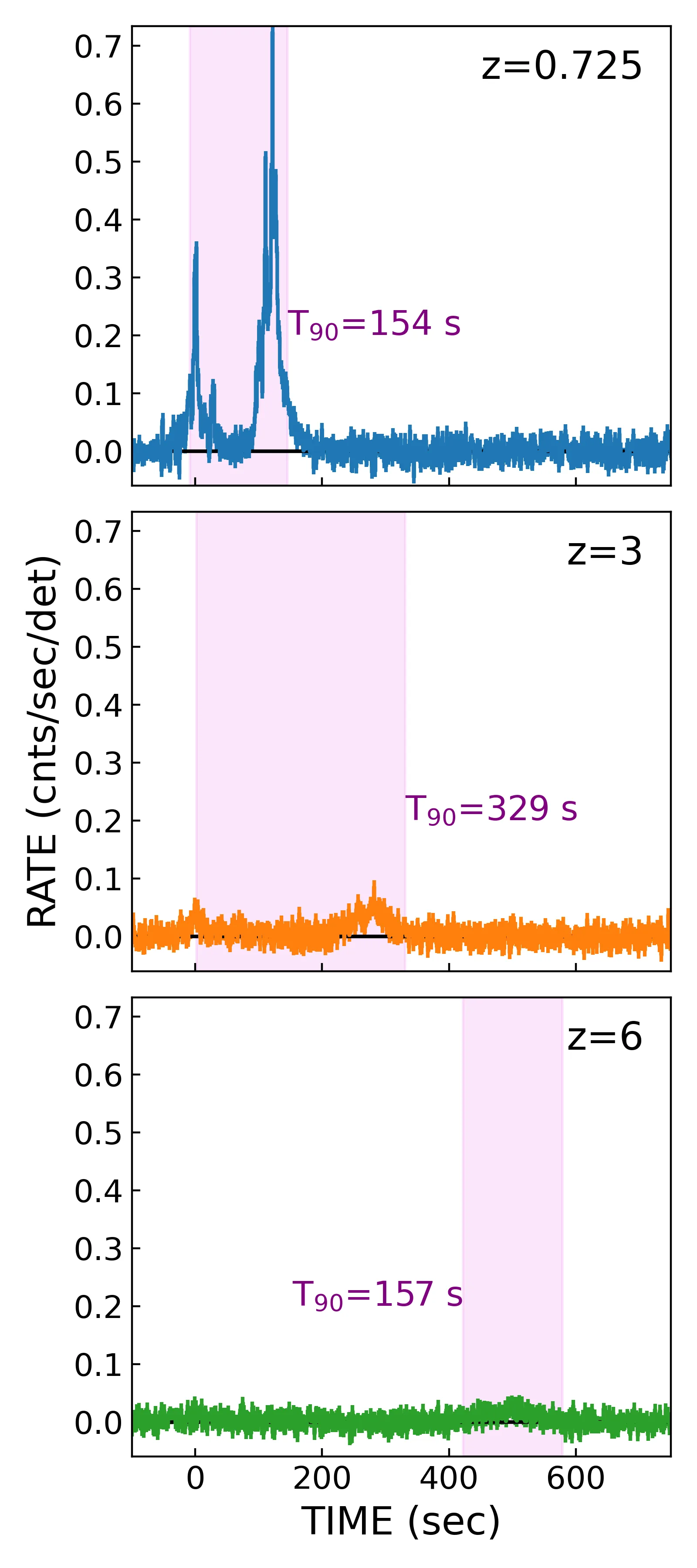
A gamma-ray burst is a short but incredibly powerful explosion in a distant galaxy. In a few seconds, it releases as much energy as the Sun will emit over billions of years. The Neil Gehrels Swift satellite catches such flashes with a special telescope called BAT, which detects gamma rays.
Astronomers decided to test what would happen if the same burst occurred farther away. They took 26 bright bursts with measured distances and, using a computer, 'pushed' them several times farther. This created artificial distant bursts, like watching the same fireworks from a greater distance.
It turned out that for distant bursts, the measured duration becomes shorter than the true one. The energy is also underestimated — sometimes by a factor of two, and the duration even by tens of times. Moreover, each burst behaves differently: it all depends on the shape of its light curve — how exactly the brightness changed over time.
Then the artificial distant bursts were compared with real distant ones already observed by Swift. They turned out to be similar. This means that distant bursts appearing shorter and fainter is not a property of the explosions themselves, but simply an effect of distance. We see only the tip of the iceberg, while most of the flash remains underwater.
The most distant known gamma-ray burst came from a galaxy whose light traveled for more than 13 billion years — almost as long as the Universe has existed.
In Carl Sagan's novel 'Contact,' the protagonist picks up an extraterrestrial signal that at first seems like noise, just as astronomers separate the faint tail of a gamma-ray burst from the background.