How Needles Make Fabric Drink express
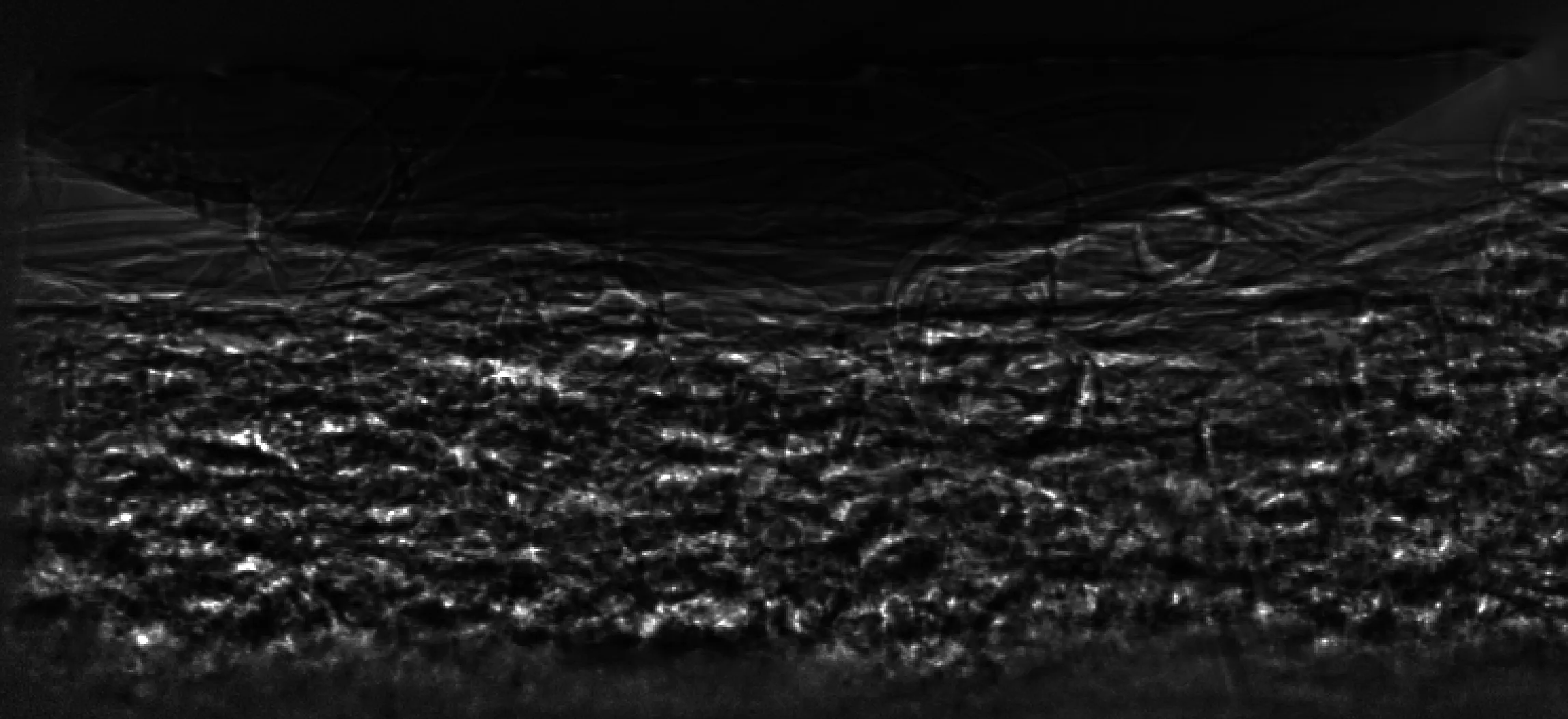
Felt looks like a tangled ball of wool, but under X-rays you can see hidden trails inside. When a water drop lands on such material, it doesn't just spread across the surface — some of the liquid dives deep, like water into blotting paper. Scientists captured this process for the first time with an X-ray camera snapping hundreds of frames per second.
The secret lies in the needles. Felt is made by punching a layer of fibers with barbed needles. Each needle catches fibers and drags them downward, like a knitter's hook. The more punches, the more fibers stand upright — creating 'pillars' that water races down tens of times faster than through ordinary tangled material.
Previously, it was thought that denser felt should be worse at letting water through, since it has fewer voids. But experiments showed the opposite: if needles worked longer, absorption speed increased even as the material became denser. It's all about fiber orientation — vertical channels act like straws, not a maze.
Now manufacturers of filters, insulation, and geotextiles can tune the material's 'thirst' simply by changing the number of needle punches. It's like adjusting a faucet: more needles (faster absorption, fewer) slower.
Felt needles are made with barbs like a fishhook, so they catch and flip fibers rather than just piercing them.